

There’s plenty of new shows and films to stream as we near the end of 2024.
The University of Melbourne

The University of Melbourne is a global leader in higher education. Across our campuses we convene brilliant minds from different disciplines and sectors to come together to address important questions and tackle grand challenges. In a disrupted world, that capacity has never been more important.
Our vision is to equip our students with a distinctive, future-facing education personalised around their ambitions and needs, enriched by global perspectives and embedded in a richly collaborative research culture. As active citizens and future leaders, our students represent our greatest contribution to the world, and are at the heart of everything we do.
We serve society by engaging with our communities and ensuring education and research are inspired from the outset by need and for the benefit of society, while remaining committed to allowing academic freedom to flourish. In this, we remain true to our purpose and fulfil our mission as a public-spirited organisation, dedicated to the principles of fairness, equality and excellence in everything we do.
We strive for an environment that is inclusive and celebrates diversity.
Beyond our campuses we imagine an Australia that is ambitious, forward thinking and increasing its reputation and influence globally. We are committed to playing a part in achieving this – building on our advantageous location in one of the world’s most exciting cities and across the state of Victoria, in a region rapidly becoming a hub for innovative education, research and collaboration.
Links
Articles

Trump has a wafer-thin lead in polling averages in Pennsylvania, which will be all-important in deciding the next US president.

Alarmingly, Earth’s climate will change for many centuries to come. But we must still push to reach net-zero emissions as quickly as possible.

By failing to investigate Robodebt, the National Anti-Corruption Commission forgot its purpose. Now it’s reconsidering its decision.

Have you heard the gruesome tale of flesh-eating fungus known as Cordyceps? It’s a real-life story of ghosts, mummies and zombies that springs to mind every Halloween.

Entre o quinto e o terceiro século a.C., as tribos gaulesas da Europa Central estavam entre os guerreiros mais temíveis do continente. Em 387 a.C., os invasores gauleses saquearam e humilharam profundamente Roma.
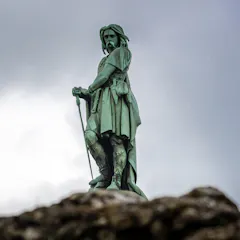
From the fifth to third centuries BCE, the Gallic tribes of central Europe were among the continent’s most fearsome warriors. And in 387 BCE, Gallic raiders sacked and profoundly humiliated Rome.

With the US presidential election just over a week away, the polls remain very close.

New genetic research shows dingoes are not breeding with domestic dogs in the wild. But that could change if lethal control measures continue to decimate populations in Victoria.

The first project to examine Australian Wikipedia entries finds topics such as Australian history and use of First Nations place names are sparking ‘edit wars’, with some serious omissions.
In choosing not to endorse a candidate, the paper - ironically famous for its courage - represents a reckless and cowardly abandonment of its civic responsibility.

While Labor did not suffer the landslide defeat that had been predicted a few months ago, the comeback was not enough to hold on to government.

A more advanced form of radiation may be able to treat early and advanced prostate cancers. Here’s how it works and why it may better preserve erectile function.

Tree and bird diversity has been linked to a number of positive mental health outcomes. It is time that urban planners interested in human well-being take biodiversity into account.

As Queenslanders head to the polls this weekend, Labor gains ground but still looks headed for defeat.
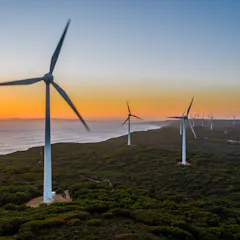
The system operating in Australia from 2012 to 2014 was economically and environmentally efficient.

Human error is responsible for nearly 70% of successful cyber attacks. But three key strategies can help address this problem.

Prabowo’s party wants to revert to Indonesia’s original authoritarian Constitution. Are there enough guardrails in place to protect the country’s fledgling democracy?

The ACT election has yielded yet another Labor win, with the party holding office in the ACT since 2001.
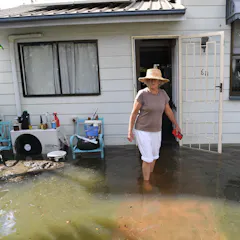
Low-income households are attracted to more affordable housing in areas at higher risk of floods and other extreme events. But many then find they cannot afford soaring insurance premiums.
Authors
-

Election Analyst (Psephologist) at The Conversation; and Honorary Associate, School of Mathematics and Statistics, The University of Melbourne
-
Guest Research Fellow, School of Computing and Information Systems, The University of Melbourne
-
Professor of Sociology of Law and Deviance, Università di Bologna; University of Essex; The University of Melbourne
-
McKenzie Research Fellow, The University of Melbourne
-
PhD Candidate, Creative Writing, The University of Melbourne
-
Senior Research Associate, School of Agriculture, Food and Ecosystem Sciences, The University of Melbourne
-
Paleontologist, The University of Melbourne
-
Professor of Law (consumer protections and credit law), The University of Melbourne
-
Emeritus Professor of Creative Writing, The University of Melbourne
-
Lecturer in World Literature (including Australian literature), The University of Melbourne
-
Deputy Vice-Chancellor (Global, Culture and Engagement), The University of Melbourne
-
Professor of Psychology, The University of Melbourne
-
Emeritus professor, History, The University of Melbourne
-
Professor of Health Economics, The University of Melbourne
-
Associate Professor and Head, Behavioural Neuropharmacology Laboratory, The University of Melbourne