

In our digital age, libraries are spaces for community and connection. The new State Library Victoria proves libaries have an exciting future.
The University of Melbourne

The University of Melbourne is a global leader in higher education. Across our campuses we convene brilliant minds from different disciplines and sectors to come together to address important questions and tackle grand challenges. In a disrupted world, that capacity has never been more important.
Our vision is to equip our students with a distinctive, future-facing education personalised around their ambitions and needs, enriched by global perspectives and embedded in a richly collaborative research culture. As active citizens and future leaders, our students represent our greatest contribution to the world, and are at the heart of everything we do.
We serve society by engaging with our communities and ensuring education and research are inspired from the outset by need and for the benefit of society, while remaining committed to allowing academic freedom to flourish. In this, we remain true to our purpose and fulfil our mission as a public-spirited organisation, dedicated to the principles of fairness, equality and excellence in everything we do.
We strive for an environment that is inclusive and celebrates diversity.
Beyond our campuses we imagine an Australia that is ambitious, forward thinking and increasing its reputation and influence globally. We are committed to playing a part in achieving this – building on our advantageous location in one of the world’s most exciting cities and across the state of Victoria, in a region rapidly becoming a hub for innovative education, research and collaboration.
Links
Articles

Access to early medical abortion is an important part of women’s sexual and reproductive health care. Yet often country GPs don’t offer this service.
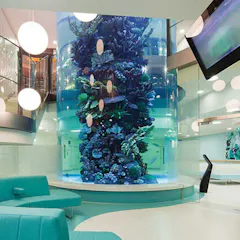
The design of children’s hospitals and other health facilities for young people have come a long way from the institutions of the past. Now, they’re a place to reduce stress and support mental health.
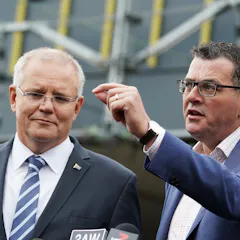
Unsolicited market proposals are not transparently assessed. Infrastructure should be built to serve the public interest, not shaped by its private backers, but the checks to ensure this are broken.

Every school in Australia must be built with the varying needs of students with disabilities in mind. This is a worthy goal but achieving it is complicated. Looking at some examples can help.
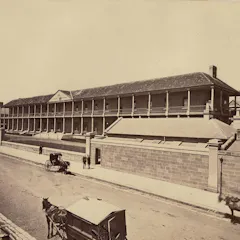
Australia’s hospitals have come a long way from the huts of convict times to the well thought-out spaces we see today.

Hugh Ramsay’s Two girls in white, was painted just two years before he died at the age of 28 in 1906. It is the central work in the National Gallery of Australia’s survey exhibition.

A major investment in renewing the urban centre of Dandenong is starting to pay dividends. But while research has found three keys to success, the benefits haven’t reached everyone.

Russian experiments with VR for cows are unlikely to achieve much, going by past research on how animals interact with computers

People are more likely to disclose information that they’re usually careful about concealing when they’re more awake and alert.

Nous avons demandé à cinq experts si les médias sociaux étaient dommageables pour les enfants et les adolescents. Quatre sur cinq ont répondu oui.

The interim report of Victoria’s mental health royal commission makes some worthwhile recommendations. But if we want to see broad-reaching system change, the state can’t do it alone.

For years, we’ve heard Australia’s spending on tertiary education is some of the lowest in the OECD. This is only true if you ignore GDP growth. Real spending was actually going up, until 2016.
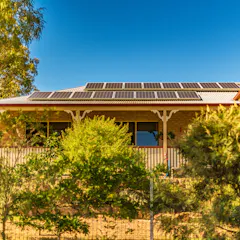
Making better use of existing building space is a neglected but essential way to cut our carbon emissions. The key is human behaviour. Good low-carbon citizens will help create good low-carbon cities.

It’s no wonder corporate wrongdoing occurs when the profits from wrongdoing outweigh the costs of being caught and punished.
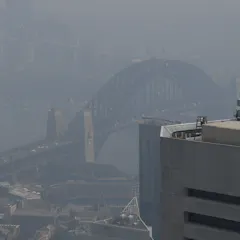
Smoke haze appears to make it hard for participants in financial markets to make the right decisions. The finding has far-reaching implications.
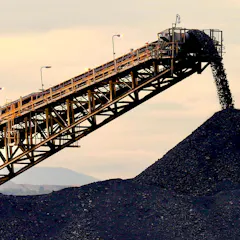
In the same decade we are supposed to be cutting emissions under the Paris goals, our coal production is projected to increase by 34%.
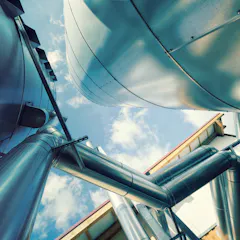
Australia can become a renewable energy exporting superpower, but timidity won’t get us there.

People get angry far more often than they rebel. And rebellions rarely become revolutions. An expert on the French Revolution explains why today’s protest movements are different.
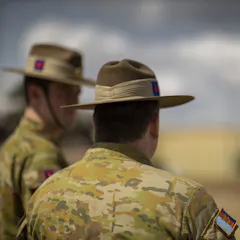
Veterans are at higher risk of mental illness than the rest of the Australian population. Many of them are seeking help, but the way care is provided to this group must consider their unique needs.
Authors
-

Election Analyst (Psephologist) at The Conversation; and Honorary Associate, School of Mathematics and Statistics, The University of Melbourne
-
Research fellow, Faculty of Architecture, Building and Planning, The University of Melbourne
-
Guest Research Fellow, School of Computing and Information Systems, The University of Melbourne
-
Professor of Sociology of Law and Deviance, Università di Bologna; University of Essex; The University of Melbourne
-
McKenzie Research Fellow, The University of Melbourne
-
Research assistant, Movember Institute of Men's Health, The University of Melbourne
-
Professor of Education Futures, The University of Melbourne
-
Senior Research Associate, School of Agriculture, Food and Ecosystem Sciences, The University of Melbourne
-
Senior Lecturer, Centre for Advancing Journalism, The University of Melbourne
-
Research Fellow, Centre for Youth Mental Health, The University of Melbourne
-
Deputy Vice-Chancellor (Global, Culture and Engagement), The University of Melbourne
-
Emeritus professor, History, The University of Melbourne
-
Associate Professor and Head, Behavioural Neuropharmacology Laboratory, The University of Melbourne
-
Lecturer in History, The University of Melbourne
-
Associate Professor, Centre for Youth Mental Health, The University of Melbourne