

The Indiana mayor has enjoyed a huge leap in support in a recent Iowa poll, but whteher that will translate across the country is far less certain.
The University of Melbourne

The University of Melbourne is a global leader in higher education. Across our campuses we convene brilliant minds from different disciplines and sectors to come together to address important questions and tackle grand challenges. In a disrupted world, that capacity has never been more important.
Our vision is to equip our students with a distinctive, future-facing education personalised around their ambitions and needs, enriched by global perspectives and embedded in a richly collaborative research culture. As active citizens and future leaders, our students represent our greatest contribution to the world, and are at the heart of everything we do.
We serve society by engaging with our communities and ensuring education and research are inspired from the outset by need and for the benefit of society, while remaining committed to allowing academic freedom to flourish. In this, we remain true to our purpose and fulfil our mission as a public-spirited organisation, dedicated to the principles of fairness, equality and excellence in everything we do.
We strive for an environment that is inclusive and celebrates diversity.
Beyond our campuses we imagine an Australia that is ambitious, forward thinking and increasing its reputation and influence globally. We are committed to playing a part in achieving this – building on our advantageous location in one of the world’s most exciting cities and across the state of Victoria, in a region rapidly becoming a hub for innovative education, research and collaboration.
Links
Articles
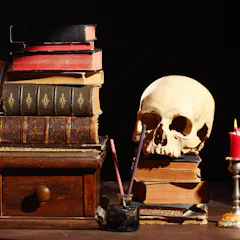
We compiled a list of the 15 most commonly cited books taught by English teachers we surveyed. It contains only two Australian writers, neither of which are Indigenous.

Being out of work is hard: here’s how psychology is helping to make the process of finding a job a little easier.

Australia devotes countless resources to fighting bushfires, but precious little to examining the main cause - humans.

Do you ever find you suddenly need to turn off the radio so you can concentrate on what you’re doing? It’s because you only have a finite amount of attention, for particular types of tasks at least.
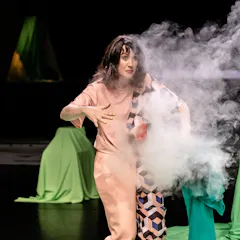
A new show by indie performer Mish Grigor, with Aphids Theatre, explores all the exit opportunities that are available to us - and some doors that are better left closed.
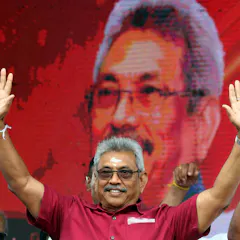
Gotabaya Rajapaksa is the frontrunner in the presidential election. He was defence secretary during his brother Mahinda’s presidency when the government is accused of numerous wartime atrocities.

We asked five experts if social media was damaging to children and teens, and four out of five said yes.
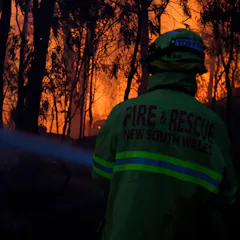
Despite the hype around hazard reduction burning this week, evidence shows the measure does not necessarily reduce the bushfire risk.

Arts criticism in Australia is under threat, writes Melbourne-based novelist, poet and theatre critic Alison Croggon. One solution may be state subsidy of arts criticism.
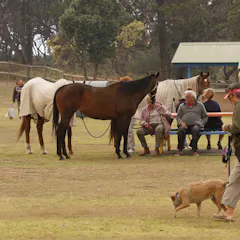
During an emergency it’s vital you know what your animals need, where you can take them and what your local rules are. Fortunately, there are plans in place and guidelines to help.
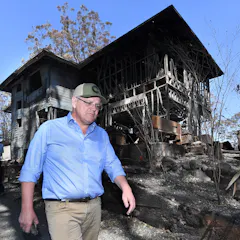
Fire officials warn that this week’s catastrophic fire conditions are “where people die”. Climate change has arrived, and politicians should drop the meaningless rhetoric.

Pressure is mounting on Australia’s dairy farmers, from farm gate prices to animal welfare concerns, and technology that could produce milk without cows.

Don’t expect institutional investors to become activists for change to make corporations more responsible. More direct approaches are urgently needed.
Media companies are mad as hell at tech giants and don’t want to take it anymore. But what choice do they have?
The Conversation64.5 MB (download)
No wonder that, according to a new international survey, media companies are increasingly unhappy with their lot. In this episode we hear from the survey's author, Robert Whitehead.
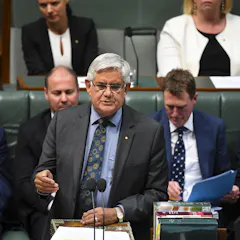
We have welcomed the opportunity to guide the co-design process because we feel this is a once-in-a-generation opportunity to recast how decisions are made in Indigenous affairs.
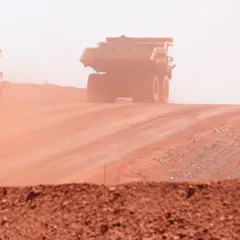
We can use renewable energy to turn raw ore into higher-value processed metals, and that’s good for jobs and exports.

Robots are becoming more common in our lives. And while they may not have “feelings”, perhaps the way we treat them reflects more on our character than we previously thought.
In 2018, domestic numbers for undergraduate courses fell for the first time since 2013 – they will remain stagnant for some years. This and other factors put unis at face financial risk.

The president’s support among non-college educated whites remains strong, and the only thing likely to shift that is a weakened economy.
Authors
-

Election Analyst (Psephologist) at The Conversation; and Honorary Associate, School of Mathematics and Statistics, The University of Melbourne
-
Research fellow, Faculty of Architecture, Building and Planning, The University of Melbourne
-
Guest Research Fellow, School of Computing and Information Systems, The University of Melbourne
-
Professor of Sociology of Law and Deviance, Università di Bologna; University of Essex; The University of Melbourne
-
McKenzie Research Fellow, The University of Melbourne
-
Research assistant, Movember Institute of Men's Health, The University of Melbourne
-
Professor of Education Futures, The University of Melbourne
-
Senior Research Associate, School of Agriculture, Food and Ecosystem Sciences, The University of Melbourne
-
Senior Lecturer, Centre for Advancing Journalism, The University of Melbourne
-
Research Fellow, Centre for Youth Mental Health, The University of Melbourne
-
Deputy Vice-Chancellor (Global, Culture and Engagement), The University of Melbourne
-
Emeritus professor, History, The University of Melbourne
-
Associate Professor and Head, Behavioural Neuropharmacology Laboratory, The University of Melbourne
-
Lecturer in History, The University of Melbourne
-
Associate Professor, Centre for Youth Mental Health, The University of Melbourne