

Writing episodic TV, scriptwriters traditionally work from a principle of having three stories woven together through an episode. These are known as the A story, the B story and the C story.
The University of Melbourne

The University of Melbourne is a global leader in higher education. Across our campuses we convene brilliant minds from different disciplines and sectors to come together to address important questions and tackle grand challenges. In a disrupted world, that capacity has never been more important.
Our vision is to equip our students with a distinctive, future-facing education personalised around their ambitions and needs, enriched by global perspectives and embedded in a richly collaborative research culture. As active citizens and future leaders, our students represent our greatest contribution to the world, and are at the heart of everything we do.
We serve society by engaging with our communities and ensuring education and research are inspired from the outset by need and for the benefit of society, while remaining committed to allowing academic freedom to flourish. In this, we remain true to our purpose and fulfil our mission as a public-spirited organisation, dedicated to the principles of fairness, equality and excellence in everything we do.
We strive for an environment that is inclusive and celebrates diversity.
Beyond our campuses we imagine an Australia that is ambitious, forward thinking and increasing its reputation and influence globally. We are committed to playing a part in achieving this – building on our advantageous location in one of the world’s most exciting cities and across the state of Victoria, in a region rapidly becoming a hub for innovative education, research and collaboration.
Links
Articles
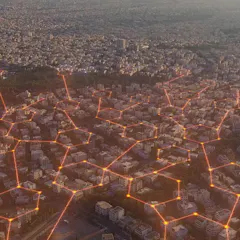
A new movie highlights the importance of radical hope and courageous action in responding to the climate crisis

Policies aimed at reducing youth suicide will fail if they don’t acknowledge the cumulative effects of history, associated intergenerational trauma and ongoing violence towards Indigenous Australians.
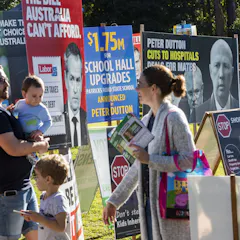
While polls have been patchy for some years, analysis shows they have been particularly out of whack since Morrison became prime minister.
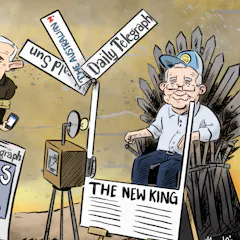
This election showed that Australia is stuck with an increasingly polarised media, a highly concentrated media ownership landscape and no apparent way to do anything about it.

A sigh is the brain’s way of stopping the tiny sacks in your lung from collapsing.
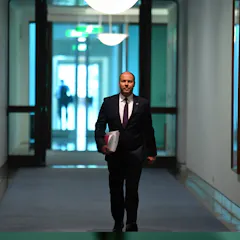
People expect financial institutions to serve them better in the wake of the royal commission. There’s reason to believe they won’t, for long.
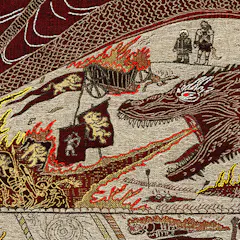
Even in this fantasy world, geological processes like tectonic plate movement, earthquakes and volcanic eruptions would have built the mountains, carved the rivers, and created vast oceans.
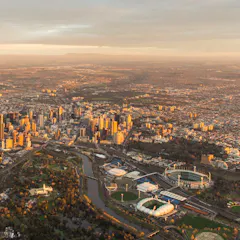
State and local governments can’t do much about the rapid population growth in Melbourne, but they can take steps to reduce the costs of growing disparities between the outer suburbs and inner city.

Now that the Coalition has won the federal election, how will it meet its campaign promises on taxes, the environment, education, health and infrastructure?

This result, which is vastly different from what opinion polls were indicating, shows the probability of “herding” in polls, and also emphasises that betting odds are to be treated with great caution.
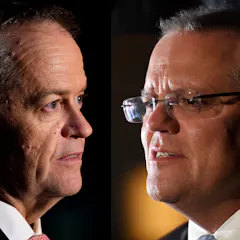
After five long weeks, the campaign is drawing to a close, with the polls still pointing to a narrow Labor win, with lots of unknowns in the detail.
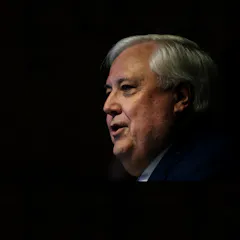
Our tax system helped create Palmer.

Australian cities have a glut of parking, even as politicians move to protect parking spaces or promise even more. There are better ways to keep congestion manageable and our cities liveable.

New research reveals how News Limited was secretly established in the early 1900s by a mining company for the express purpose of disseminating ‘propaganda’.

Australia’s frustrating policy deadlock shows a lack of vision, encouraged by nasty short-term politics.
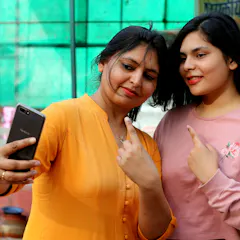
CC BY-ND29.3 MB (download)
Part six of The Anthill podcast's India Tomorrow series focuses on the concerns of young Indians.
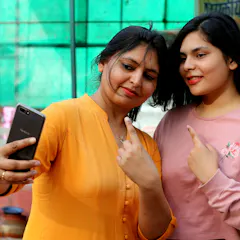
This is a transcript of part 6 of India Tomorrow, focusing on India’s huge population of young people.

The polls are pointing to a narrow Labor victory on May 18, but there is still much in play.
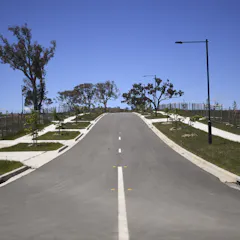
A sense of place matters for people and communities. When a suburb is created from scratch, close attention needs to be paid to the cues from the landscape and meanings people attach to the area.
Authors
-

Election Analyst (Psephologist) at The Conversation; and Honorary Associate, School of Mathematics and Statistics, The University of Melbourne
-
Research fellow, Faculty of Architecture, Building and Planning, The University of Melbourne
-
Guest Research Fellow, School of Computing and Information Systems, The University of Melbourne
-
Professor of Sociology of Law and Deviance, Università di Bologna; University of Essex; The University of Melbourne
-
McKenzie Research Fellow, The University of Melbourne
-
Research assistant, Movember Institute of Men's Health, The University of Melbourne
-
Professor of Education Futures, The University of Melbourne
-
Senior Research Associate, School of Agriculture, Food and Ecosystem Sciences, The University of Melbourne
-
Senior Lecturer, Centre for Advancing Journalism, The University of Melbourne
-
Research Fellow, Centre for Youth Mental Health, The University of Melbourne
-
Deputy Vice-Chancellor (Global, Culture and Engagement), The University of Melbourne
-
Emeritus professor, History, The University of Melbourne
-
Associate Professor and Head, Behavioural Neuropharmacology Laboratory, The University of Melbourne
-
Lecturer in History, The University of Melbourne
-
Associate Professor, Centre for Youth Mental Health, The University of Melbourne