

Labor’s arts election policy includes more funding for the Australia Council and the ABC. But while this is welcome, arts and culture deserve far greater attention.
The University of Melbourne

The University of Melbourne is a global leader in higher education. Across our campuses we convene brilliant minds from different disciplines and sectors to come together to address important questions and tackle grand challenges. In a disrupted world, that capacity has never been more important.
Our vision is to equip our students with a distinctive, future-facing education personalised around their ambitions and needs, enriched by global perspectives and embedded in a richly collaborative research culture. As active citizens and future leaders, our students represent our greatest contribution to the world, and are at the heart of everything we do.
We serve society by engaging with our communities and ensuring education and research are inspired from the outset by need and for the benefit of society, while remaining committed to allowing academic freedom to flourish. In this, we remain true to our purpose and fulfil our mission as a public-spirited organisation, dedicated to the principles of fairness, equality and excellence in everything we do.
We strive for an environment that is inclusive and celebrates diversity.
Beyond our campuses we imagine an Australia that is ambitious, forward thinking and increasing its reputation and influence globally. We are committed to playing a part in achieving this – building on our advantageous location in one of the world’s most exciting cities and across the state of Victoria, in a region rapidly becoming a hub for innovative education, research and collaboration.
Links
Articles

At best, this ‘debate’ is a distraction from political action that could truly make a difference. At worst, it actively reproduces some of the conditions it seeks to disrupt.

The political economy of music distribution goes unchecked. Despite increased digital revenues, also across Africa, music markets remain characterised by bottlenecks between musicians and audiences.

A new production of Cloudstreet - the play adapted from Tim Winton’s literary epic - is visually arresting. But despite a diverse cast, Indigenous characters remain spectral and peripheral.
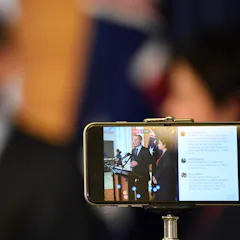
Facebook’s Mia Garlick on how Australian politicians are using social media
The Conversation44.8 MB (download)
Today's Media Files podcast examines the role of social media in election campaigns, including the spread of 'fake news' and foreign political interference.

At some level, democratic societies have had enough of Murdoch and his propaganda operation masquerading as a news service.
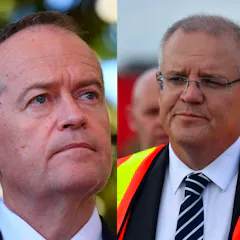
Here’s how the coalition, Labor and the Greens stack up against the Paris targets.
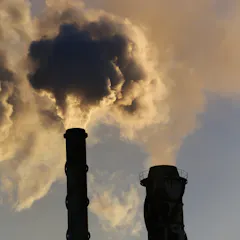
Australia’s international reputation depends on rejecting the use of Kyoto carry-over. More importantly, so does our climate.
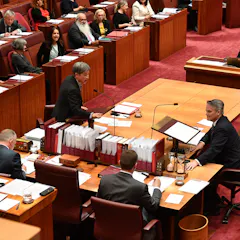
With the higher quota at a half-Senate election, parties probably need at least 5% of the vote to be in contention for a seat at this election.
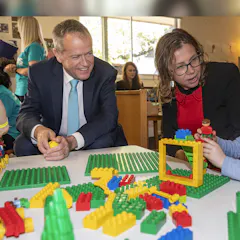
Paying wages directly would be an Australian first, and far from ideal.
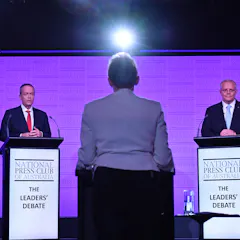
No gaffes, no real surprises – the third leaders’ debate was a fairly predictable affair, save for the testy conclusion

El Niño events can affect millions of people around the world, causing drought in Australia and floods in the Americas.
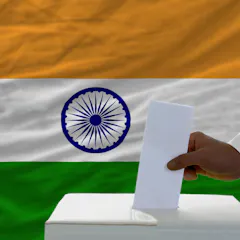
India election 2019: millions of Indian youth are underemployed and going to the polls
The Conversation, CC BY64.4 MB (download)
The world's largest democracy will see its biggest young voter turnout since gaining independence 72 years ago, with millions delivering their verdict on Narendra Modi's BJP government.

Marvel villain Thanos wiped out half the universe’s population to create paradise. But as the Avengers find out in Endgame, solving resource scarcity is not that simple.
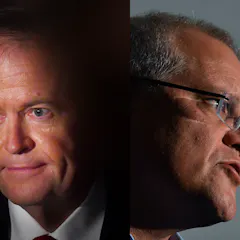
While Ipsos on Newspoll are telling different stories about leaders’ approval ratings, both are still showing a likely victory for Labor at the federal election.

There are several different science ideas around why, but the answer may have something to do with what happens when we cool down the roof of our mouth.
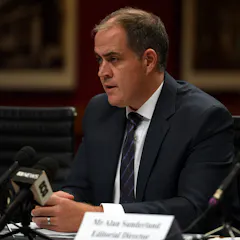
However, the problem of combining the managing director and editor-in-chief roles remains, and these must be separated to preserve editorial independence.
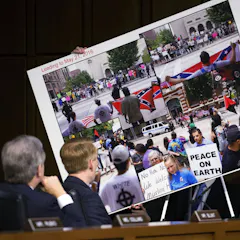
In the face of digital disruption that threatens the very fabric of democratic culture we must refashion Enlightenment oppositions for new times.

Labor’s main election promise for higher education is to restore the demand-driven system of funding, also known as scrapping the “cap” on government funding. Here’s why that would be a good policy.

Countries around the world are taking society’s happiness and well-being into account when formulating policy. So, why is Australia so focused on economics as the sole marker of progress?
Authors
-

Election Analyst (Psephologist) at The Conversation; and Honorary Associate, School of Mathematics and Statistics, The University of Melbourne
-
Research fellow, Faculty of Architecture, Building and Planning, The University of Melbourne
-
Guest Research Fellow, School of Computing and Information Systems, The University of Melbourne
-
Professor of Sociology of Law and Deviance, Università di Bologna; University of Essex; The University of Melbourne
-
McKenzie Research Fellow, The University of Melbourne
-
Research assistant, Movember Institute of Men's Health, The University of Melbourne
-
Professor of Education Futures, The University of Melbourne
-
Senior Research Associate, School of Agriculture, Food and Ecosystem Sciences, The University of Melbourne
-
Senior Lecturer, Centre for Advancing Journalism, The University of Melbourne
-
Research Fellow, Centre for Youth Mental Health, The University of Melbourne
-
Deputy Vice-Chancellor (Global, Culture and Engagement), The University of Melbourne
-
Emeritus professor, History, The University of Melbourne
-
Associate Professor and Head, Behavioural Neuropharmacology Laboratory, The University of Melbourne
-
Lecturer in History, The University of Melbourne
-
Associate Professor, Centre for Youth Mental Health, The University of Melbourne