

Competition policy in Australia is undermined by not knowing if it is right to let the vast majority of corporate mergers go ahead.
The University of Melbourne

The University of Melbourne is a global leader in higher education. Across our campuses we convene brilliant minds from different disciplines and sectors to come together to address important questions and tackle grand challenges. In a disrupted world, that capacity has never been more important.
Our vision is to equip our students with a distinctive, future-facing education personalised around their ambitions and needs, enriched by global perspectives and embedded in a richly collaborative research culture. As active citizens and future leaders, our students represent our greatest contribution to the world, and are at the heart of everything we do.
We serve society by engaging with our communities and ensuring education and research are inspired from the outset by need and for the benefit of society, while remaining committed to allowing academic freedom to flourish. In this, we remain true to our purpose and fulfil our mission as a public-spirited organisation, dedicated to the principles of fairness, equality and excellence in everything we do.
We strive for an environment that is inclusive and celebrates diversity.
Beyond our campuses we imagine an Australia that is ambitious, forward thinking and increasing its reputation and influence globally. We are committed to playing a part in achieving this – building on our advantageous location in one of the world’s most exciting cities and across the state of Victoria, in a region rapidly becoming a hub for innovative education, research and collaboration.
Links
Articles

George Orwell’s dystopian classic can tell us a lot about contemporary politics and power, from Donald Trump to Facebook.

Folau has sought a full code of conduct committee hearing to decide his future with Rugby Australia. Depending on how the tribunal rules, the case could be heading to federal court next.

Vets can often grapple with ‘convenience euthanasia’, where a client brings in a pet because it may, for instance, interfere with their lifestyle.
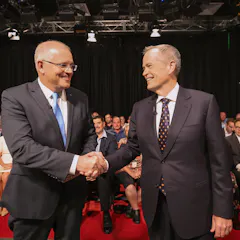
The Conversation’s experts analyse the first Morrison-Shorten debate, with a focus on the key policy issues and the leaders’ performances.

The latest Newspoll shows a further tightening on two-party preferred, but was making some strange assumptions about the slow of preferences.

How will people respond once they realise they can rely on autonomous vehicles to stop whenever someone steps out in front of them? Human behaviour might stand in the way of the promised ‘autopia’.

With a fake news scandal already marking this election campaign, questions remain about how well our democracy can cope with it.

The ancient question ‘Are we alone?’ has graduated from being a philosophical musing to a testable hypothesis. We should be prepared for an answer.
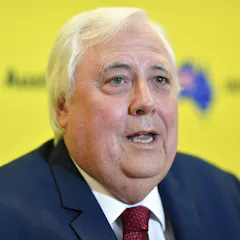
Seat polls are notoriously unreliable, and the support shown for the United Australia Party in recent polls is likely to be overstated.
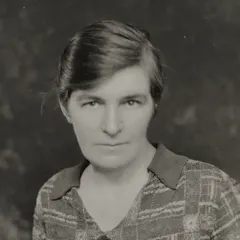
An anthology of Victorian women poets is a window into their thoughts and feelings during the first world war.
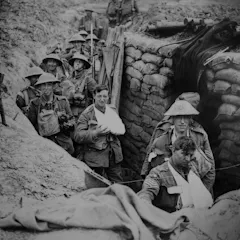
The first world war spurred a host of developments in the fields of science, medicine and architecture. Alongside these came new qualifications and professions, such as physiotherapy.
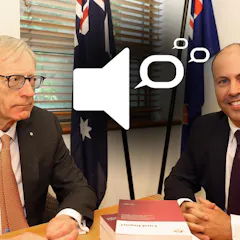
Investigative journalist Adele Ferguson on the ‘disappointing’ banking royal commission and how she works with whistleblowers
The Conversation51.9 MB (download)
Today on Media Files, it's journalism versus the big banks. We're hearing from Adele Ferguson, the celebrated journalist who many credit as the driving force behind the banking royal commission.
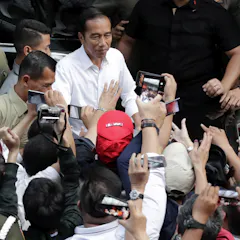
We ask political and human rights experts to analyse what Jokowi’s victory means, based on this early quick count, for civil liberties and the protection of human rights in Indonesia.
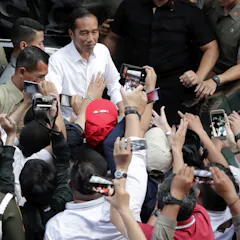
Kami meminta pakar politik dan hak asasi manusia untuk menganalisis apa makna kemenangan Jokowi, berdasarkan hasil hitung cepat awal ini, bagi kebebasan sipil dan perlindungan HAM di Indonesia.
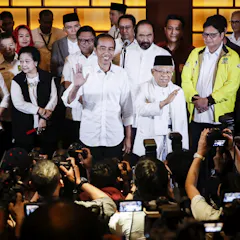
Jokowi’s challenger, Prabowo Subianto, has vowed to contest the result and urged his supporters to the streets – and that win him leverage in the new administration.

Whether in Melbourne or in Paris, African immigrants face social and cultural challenges, which public housing can either add to or help overcome.

The 2018 flu season was mild, while 2017 was a particularly bad year. It’s impossible to predict what the 2019 flu season has in store, but we’ve seen more cases so far this year than usual.

Candida auris is a fungus which breeds most commonly in health-care settings. It’s cause for concern because it’s hard to detect, and is resistant to many anti-fungal drugs.

Pacific island nations are often framed as remote atolls facing rising seas and cyclones. But their cities are growing fast, so are efforts to help the most climate-vulnerable people hitting the mark?
Authors
-

Election Analyst (Psephologist) at The Conversation; and Honorary Associate, School of Mathematics and Statistics, The University of Melbourne
-
Research fellow, Faculty of Architecture, Building and Planning, The University of Melbourne
-
Guest Research Fellow, School of Computing and Information Systems, The University of Melbourne
-
Professor of Sociology of Law and Deviance, Università di Bologna; University of Essex; The University of Melbourne
-
McKenzie Research Fellow, The University of Melbourne
-
Research assistant, Movember Institute of Men's Health, The University of Melbourne
-
Professor of Education Futures, The University of Melbourne
-
Senior Research Associate, School of Agriculture, Food and Ecosystem Sciences, The University of Melbourne
-
Senior Lecturer, Centre for Advancing Journalism, The University of Melbourne
-
Research Fellow, Centre for Youth Mental Health, The University of Melbourne
-
Deputy Vice-Chancellor (Global, Culture and Engagement), The University of Melbourne
-
Emeritus professor, History, The University of Melbourne
-
Associate Professor and Head, Behavioural Neuropharmacology Laboratory, The University of Melbourne
-
Lecturer in History, The University of Melbourne
-
Associate Professor, Centre for Youth Mental Health, The University of Melbourne