

The latest Fairfax-Ipsos and Essential polls give a strong lead to Labor, with some interesting – and variable - detail on the attributes voters see in the leaders of the two major parties.
The University of Melbourne

The University of Melbourne is a global leader in higher education. Across our campuses we convene brilliant minds from different disciplines and sectors to come together to address important questions and tackle grand challenges. In a disrupted world, that capacity has never been more important.
Our vision is to equip our students with a distinctive, future-facing education personalised around their ambitions and needs, enriched by global perspectives and embedded in a richly collaborative research culture. As active citizens and future leaders, our students represent our greatest contribution to the world, and are at the heart of everything we do.
We serve society by engaging with our communities and ensuring education and research are inspired from the outset by need and for the benefit of society, while remaining committed to allowing academic freedom to flourish. In this, we remain true to our purpose and fulfil our mission as a public-spirited organisation, dedicated to the principles of fairness, equality and excellence in everything we do.
We strive for an environment that is inclusive and celebrates diversity.
Beyond our campuses we imagine an Australia that is ambitious, forward thinking and increasing its reputation and influence globally. We are committed to playing a part in achieving this – building on our advantageous location in one of the world’s most exciting cities and across the state of Victoria, in a region rapidly becoming a hub for innovative education, research and collaboration.
Links
Articles
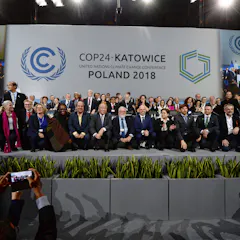
Three years after the Paris Agreement, negotiators have finally agreed (most of) the rules for its implementation. But there is still no way to compel countries to deepen their climate ambitions.

Just because somebody else does something doesn’t mean you have to follow. Or does it?

Many parents decide to have a second child in the expectation that two can’t be more work that one – but new research shows that idea to be mistaken.
An ACCC interim report is one of the most consequential documents for media policy in decades, while a government report finds both public broadcasters are acting in the public interest.

Cutting migration to Australia’s biggest cities would do nothing to ease congestion in those cities and could make it worse.
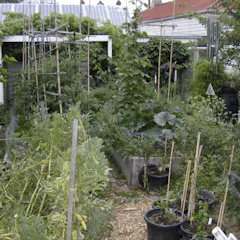
The average consumerist suburban lifestyle is unsustainable. But what if affluent suburbanites and battlers alike ditch the rat race and embrace economic ‘degrowth’? Here’s how it might unfold.
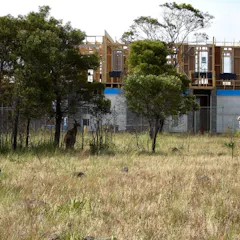
Expanding cities and farmland have created many small, often isolated patches of vegetation. Long seen as having limited ecological value, a new study shows these are vital for endangered species.
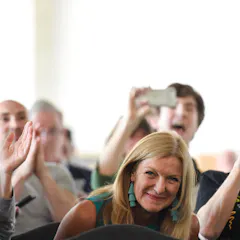
The final results post-election Victorian upper house are not a ringing endorsement for democracy - and provide a strong case for reform.

Having a stressed and depressed father can have serious implications for infants and relationships. And supporting a father who may be experiencing mental ill health means supporting the mother too.

The biggest issues of 2018, with The Guardian’s editor-in-chief Katharine Viner
The Conversation, CC BY58.6 MB (download)
In conversation with Andrew Dodd, Andrea Carson and Matthew Ricketson, The Guardian's editor-in-chief discusses the big stories of 2018 and what she sees as the major challenges of 2019.

The person in charge of your surgery is a consultant surgeon. A consultant is the most qualified doctor in a hospital.
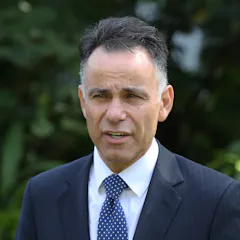
Formerly blue-ribbon Liberal seats such as Hawthorn and Nepean have fallen to Labor in the wash-up of Labor’s thumping state election win.

An energy transmission network between Australia and Indonesia could help both nations achieve 100% renewable electricity by 2050.
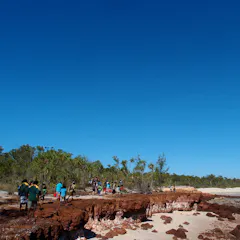
At the Maningrida football Grand Final in 2015, commentary was recorded in nine languages. But elsewhere, the threat of language loss poses a serious risk to our nation’s cultural inheritance.
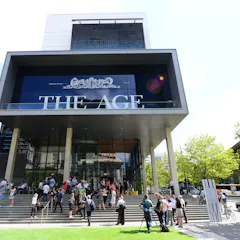
Since leaving secure jobs in newsrooms, employment has been unstable for many former journalists – but job satisfaction has been surprisingly high.
A poster proclaiming “Smash Brahminical Patriarchy” has landed Twitter’s head Jack Dorsey in trouble in India. It shows just how invisible caste is to outsiders.

Hidden slavery is a growing global problem but we continue to turn a blind eye and embrace a seemingly insatiable demand for fast, cheap goods and services.

The science of sleep and the economics of sleeplessness
The Conversation, CC BY52.8 MB (download)
Only about one quarter Australians report getting eight or more hours of sleep. And in pre-industrial times, it was seen as normal to wake for a few hours in the middle of the night and chat or work.

Australians are more aware of domestic violence and sexual assault than before. But a worrying proportion blame victims for abuse, think women are lying, and don’t believe consent is always necessary.
Authors
-

Election Analyst (Psephologist) at The Conversation; and Honorary Associate, School of Mathematics and Statistics, The University of Melbourne
-
Research fellow, Faculty of Architecture, Building and Planning, The University of Melbourne
-
Guest Research Fellow, School of Computing and Information Systems, The University of Melbourne
-
Professor of Sociology of Law and Deviance, Università di Bologna; University of Essex; The University of Melbourne
-
McKenzie Research Fellow, The University of Melbourne
-
Research assistant, Movember Institute of Men's Health, The University of Melbourne
-
Professor of Education Futures, The University of Melbourne
-
Senior Research Associate, School of Agriculture, Food and Ecosystem Sciences, The University of Melbourne
-
Senior Lecturer, Centre for Advancing Journalism, The University of Melbourne
-
Research Fellow, Centre for Youth Mental Health, The University of Melbourne
-
Deputy Vice-Chancellor (Global, Culture and Engagement), The University of Melbourne
-
Emeritus professor, History, The University of Melbourne
-
Associate Professor and Head, Behavioural Neuropharmacology Laboratory, The University of Melbourne
-
Lecturer in History, The University of Melbourne
-
Associate Professor, Centre for Youth Mental Health, The University of Melbourne