

To improve access to locally grown food and help prevent disruptions to supply chains caused by climate change, we need to support farming on the fringes of cities.
The University of Melbourne

The University of Melbourne is a global leader in higher education. Across our campuses we convene brilliant minds from different disciplines and sectors to come together to address important questions and tackle grand challenges. In a disrupted world, that capacity has never been more important.
Our vision is to equip our students with a distinctive, future-facing education personalised around their ambitions and needs, enriched by global perspectives and embedded in a richly collaborative research culture. As active citizens and future leaders, our students represent our greatest contribution to the world, and are at the heart of everything we do.
We serve society by engaging with our communities and ensuring education and research are inspired from the outset by need and for the benefit of society, while remaining committed to allowing academic freedom to flourish. In this, we remain true to our purpose and fulfil our mission as a public-spirited organisation, dedicated to the principles of fairness, equality and excellence in everything we do.
We strive for an environment that is inclusive and celebrates diversity.
Beyond our campuses we imagine an Australia that is ambitious, forward thinking and increasing its reputation and influence globally. We are committed to playing a part in achieving this – building on our advantageous location in one of the world’s most exciting cities and across the state of Victoria, in a region rapidly becoming a hub for innovative education, research and collaboration.
Links
Articles
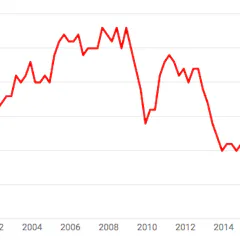
Wage growth has been at near depression levels for half a decade. It needs a push.
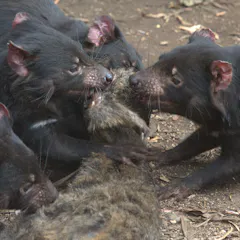
A new study involving leaving animal carcasses strewn across Tasmania shows that in places where devils have dwindled, other scavengers are stepping up to fill the gap, with nasty knock-on effects.

As recent events show, we might get better media reporting if journalists questioned authorities more closely on the relevance of ethnicity and religion in crime reporting.
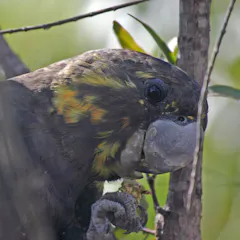
New research has shown how to measure conservation progress for Australia’s 238 endangered bird species
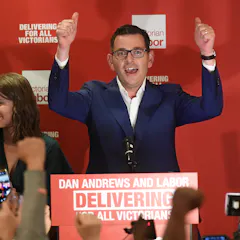
Meanwhile, Labor’s strong win means it will unlikely have an incentive for desperately-needed upper house reform.
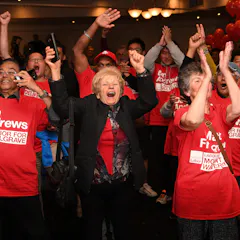
With counting still underway, the projected primary votes are 44.1% Labor (up 6.0% since the 2014 election), 34.8% Coalition (down 7.2%) and 10.4% Greens (down 1.1%).
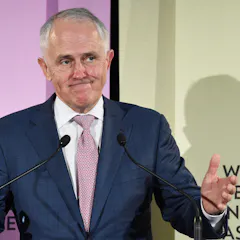
Innovation should mean solutions that work for everyone, not just economists.
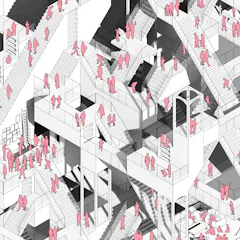
The cities we build in turn shape our society. So when so many of us feel lonely, we should aim to apply what we know about the social impacts of design to help people connect with each other.

Most international students who study overseas feel positive about their experiences. But universities could be actively working with businesses in home countries to help secure jobs for graduates.

We’ve been in the dark about how we use our time for more than a decade. It’s the decade that saw the rise of the smartphone, streaming and social media.
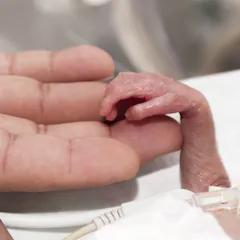
Science is creating new living matter – like stem cells grown to create brain tissues in the lab. With power comes responsibility and what matters is an ethical question, not a scientific one.
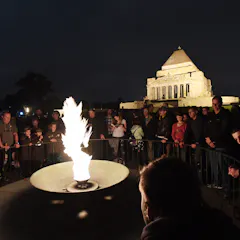
Australia is spending cast amounts of money commemorating the war dead, but it’s time we took better care of ex-servicepeople who are still living.
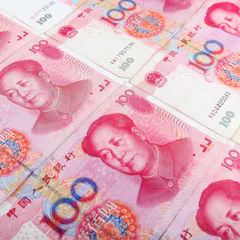
Victoria’s decision to sign up to China’s Belt and Road Initiative opens it up to the same sort of risks as other signatories.

The government will take heart from the latest polls showing a bounce in their support, while the micro parties are likely to take seats in the Victorian election.
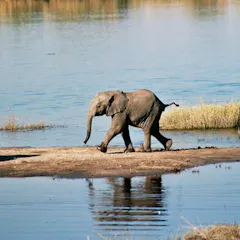
At an international summit in Egypt this month, nations will hopefully make progress towards recognising the economic value of wildlife and other environmental assets.

If symptoms of thrush persist despite treatment, you may have an entirely different condition that would not be helped by anti-fungal creams or tablets.
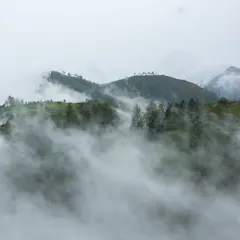
Despite its global importance, the rainy ‘Maritime Continent’ around Indonesia is hard to capture using global climate models. But fear not - new research shows how to improve our forecasts.
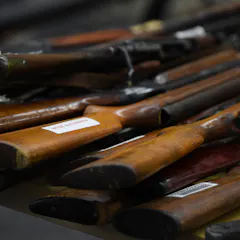
SIFA claims it wants to ‘simplify, not weaken’ gun control laws in Australia. But it’s following the same playbook as the NRA in America – and hoping for similar results.
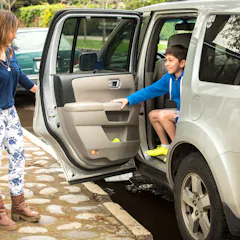
The private car is the default transport option for many families. This reduces physical activity and increases greenhouse gas emissions, with unhealthy results for their children and the environment.
Authors
-

Election Analyst (Psephologist) at The Conversation; and Honorary Associate, School of Mathematics and Statistics, The University of Melbourne
-
Research fellow, Faculty of Architecture, Building and Planning, The University of Melbourne
-
Guest Research Fellow, School of Computing and Information Systems, The University of Melbourne
-
Professor of Sociology of Law and Deviance, Università di Bologna; University of Essex; The University of Melbourne
-
McKenzie Research Fellow, The University of Melbourne
-
Research assistant, Movember Institute of Men's Health, The University of Melbourne
-
Professor of Education Futures, The University of Melbourne
-
Senior Research Associate, School of Agriculture, Food and Ecosystem Sciences, The University of Melbourne
-
Senior Lecturer, Centre for Advancing Journalism, The University of Melbourne
-
Research Fellow, Centre for Youth Mental Health, The University of Melbourne
-
Deputy Vice-Chancellor (Global, Culture and Engagement), The University of Melbourne
-
Emeritus professor, History, The University of Melbourne
-
Associate Professor and Head, Behavioural Neuropharmacology Laboratory, The University of Melbourne
-
Lecturer in History, The University of Melbourne
-
Associate Professor, Centre for Youth Mental Health, The University of Melbourne