

The easy win for John Alexander in the Bennelong byelection restores the Coalition’s two-seat majority in the House of Representatives.
The University of Melbourne

The University of Melbourne is a global leader in higher education. Across our campuses we convene brilliant minds from different disciplines and sectors to come together to address important questions and tackle grand challenges. In a disrupted world, that capacity has never been more important.
Our vision is to equip our students with a distinctive, future-facing education personalised around their ambitions and needs, enriched by global perspectives and embedded in a richly collaborative research culture. As active citizens and future leaders, our students represent our greatest contribution to the world, and are at the heart of everything we do.
We serve society by engaging with our communities and ensuring education and research are inspired from the outset by need and for the benefit of society, while remaining committed to allowing academic freedom to flourish. In this, we remain true to our purpose and fulfil our mission as a public-spirited organisation, dedicated to the principles of fairness, equality and excellence in everything we do.
We strive for an environment that is inclusive and celebrates diversity.
Beyond our campuses we imagine an Australia that is ambitious, forward thinking and increasing its reputation and influence globally. We are committed to playing a part in achieving this – building on our advantageous location in one of the world’s most exciting cities and across the state of Victoria, in a region rapidly becoming a hub for innovative education, research and collaboration.
Links
Articles

If there are more directors with common skills on boards, then they are more likely to communicate effectively.
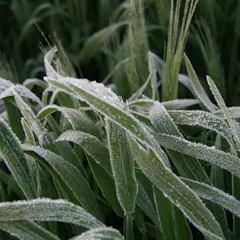
We already know that climate change makes heatwaves hotter and longer. But a new series of research papers asks whether there is also a climate fingerprint on frosty spells and bouts of wet weather.
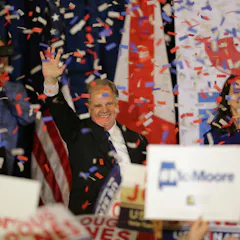
Doug Jones has won a tough battle to represent Alabama in the US Senate; meanwhile, the crucial byelection in Bennelong is neck-and-neck, with huge implications for the government if it loses.
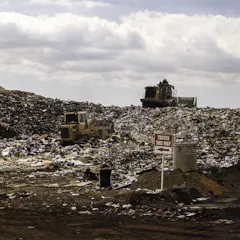
A review of the Emissions Reduction Fund has found it’s performing well – but new research raises serious credibility issues.
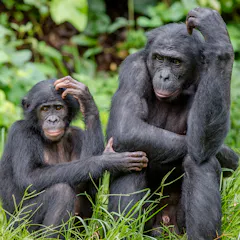
Scientists say humans are pretty similar to chimpanzees, gorillas and orangutans. So why don’t we have fur like they do?
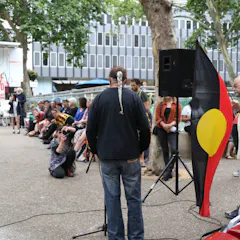
That the Cashless Debit Card continues to be pursued exposes a dogged obsession with implementing punitive policy at the expense of vulnerable people.

There has been a substantial improvement compared to 15 years ago, when the incidence of poverty among the elderly was 32.4%.
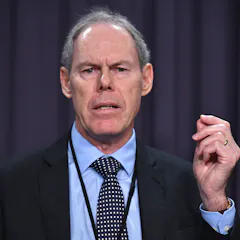
Australians have reason to be apprehensive that some civil voices are not being heard in our liberal democracy.

Governor Arthur Phillip regarded sodomy as one of the worst offences that convicts under his charge could commit. But sex between men and between women flourished in convict Australia.

We often hear reports of the effect of social media on teens’ mental health. So what does the science say about it?
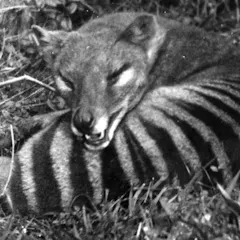
The new Tasmanian tiger genome reveals some fascinating facts about this extinct marsupial, including why they were so similar to dogs, and how they were growing more vulnerable to genetic disease.
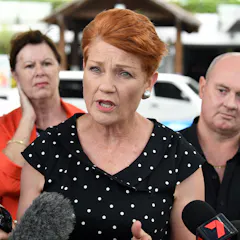
The seemingly disproportionate media attention given to One Nation is the result of a potent news-making brew.
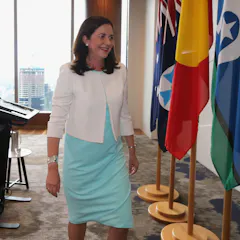
With 45 seats held by parties other than Labor, Labor has won a three-seat majority in Queensland.
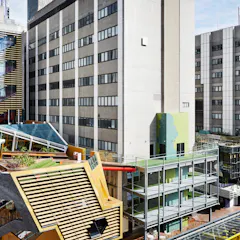
European ideas of the campus as a place apart shaped Australia’s “sandstone” universities. Now universities are adopting urban regeneration strategies, bringing the city to the campus and vice versa.

The ban on Russia competing in the 2018 Winter Olympics is unique: it is directly linked to the country’s lack of sporting integrity.

Speaking with: Emrys Westacott on the virtue of frugal living
CC BY-ND32.9 MB (download)
William Isdale speaks with Emrys Westacott about how living simply can bring happiness in an increasingly complex world.

The Indian higher education system faces challenges like underfunding, lack of research work and poor curricula.
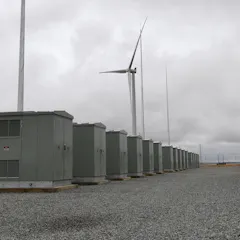
Last week in SA the “world’s largest” lithium ion battery was launched. Will its storage capacity and versatility be a game-changer for Australia’s energy market?
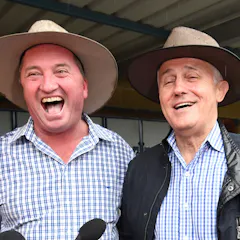
Unlike Tony Windsor in 2016, none of Barnaby Joyce’s New England byelection opponents had the resources to run a strong campaign.
Authors
-

Election Analyst (Psephologist) at The Conversation; and Honorary Associate, School of Mathematics and Statistics, The University of Melbourne
-
Research fellow, Faculty of Architecture, Building and Planning, The University of Melbourne
-
Guest Research Fellow, School of Computing and Information Systems, The University of Melbourne
-
Professor, School of Psychological Sciences, The University of Melbourne
-
McKenzie Research Fellow, The University of Melbourne
-
Research assistant, Movember Institute of Men's Health, The University of Melbourne
-
Professor of Education Futures, The University of Melbourne
-
Senior Research Associate, School of Agriculture, Food and Ecosystem Sciences, The University of Melbourne
-
Senior Lecturer, Centre for Advancing Journalism, The University of Melbourne
-
Research Fellow, Centre for Youth Mental Health, The University of Melbourne
-
Deputy Vice-Chancellor (Global, Culture and Engagement), The University of Melbourne
-
Emeritus professor, History, The University of Melbourne
-
Associate Professor, Complex Human Data Hub, Melbourne School of Psychological Sciences, The University of Melbourne
-
Lecturer in History, The University of Melbourne
-
Associate Professor, Centre for Youth Mental Health, The University of Melbourne