

Young and old job seekers use the same methods to look for work, but young people have the highest unemployment rates.
The University of Melbourne

The University of Melbourne is a global leader in higher education. Across our campuses we convene brilliant minds from different disciplines and sectors to come together to address important questions and tackle grand challenges. In a disrupted world, that capacity has never been more important.
Our vision is to equip our students with a distinctive, future-facing education personalised around their ambitions and needs, enriched by global perspectives and embedded in a richly collaborative research culture. As active citizens and future leaders, our students represent our greatest contribution to the world, and are at the heart of everything we do.
We serve society by engaging with our communities and ensuring education and research are inspired from the outset by need and for the benefit of society, while remaining committed to allowing academic freedom to flourish. In this, we remain true to our purpose and fulfil our mission as a public-spirited organisation, dedicated to the principles of fairness, equality and excellence in everything we do.
We strive for an environment that is inclusive and celebrates diversity.
Beyond our campuses we imagine an Australia that is ambitious, forward thinking and increasing its reputation and influence globally. We are committed to playing a part in achieving this – building on our advantageous location in one of the world’s most exciting cities and across the state of Victoria, in a region rapidly becoming a hub for innovative education, research and collaboration.
Links
Articles

Women in minimum wage jobs earn 10% less than their male peers. Wages are systematically lower in jobs more commonly held by women.

With an ever-increasing cost to extract dwindling raw materials, it’s time to look at cities as urban mines. We’re developing the tools to do that.
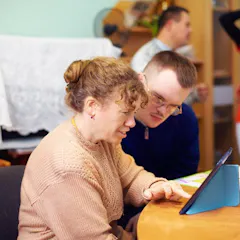
Instead of trying to help people with disability overcome their limitations, we should be harnessing their strengths in the workplace. This will improve their health and mental well-being.
Labor looks set to win the Queensland election with a bare majority. And while same-sex marriage has passed the Senate, the strong support in regional areas has surprised some commentators.

Pinching musical phrases and stylistic approaches has always been a part of art making and can be a respectful exchange. But shallow, ill-informed appropriation only perpetuates tired stereotypes.

Appearing to co-operate is the best way to try to influence the terms of an inquiry and manage the bad press.
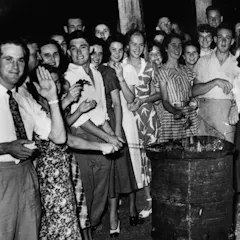
The federal government could restore its commitment to creating full employment in Australia, using its spending power to make up for any shortfall in private jobs as it did during the post-war boom.

The allegations of sexual harassment against Don Burke have exposed a media culture rife with misogyny. But what will it take to change?
A couple of years ago while writing about autism and Asperger’s in film and TV, I came across a quote from a psychologist. I’m paraphrasing, but the gist was that there isn’t a woman alive who hasn’t…

We need to rethink how we frame discourse about Chinese students who speak out at universities – we seem to have forgotten that argument is a normal part of university study.

Despite evidence to the contrary, we still view technological change today as being more rapid and dramatic in its consequences than ever before.
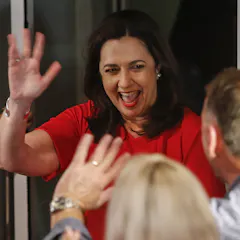
Labor is still shy of the 47 seats it needs to form government in Queensland, but it is best placed to do so in the coming days.
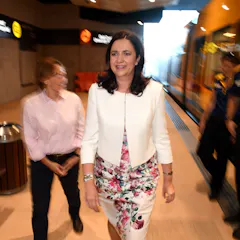
With the results now hours away, much attention will also be on the performance of One Nation.
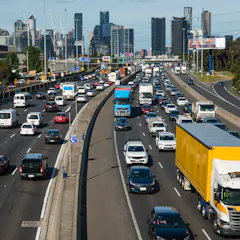
A city-wide experiment suggests well-designed road use charges could ease congestion by encouraging people to drive at different times, take other routes or use other transport.

Ferns came along more than 200 million years before the dinosaurs walked the Earth. They were food for plant-eating dinosaurs and they’re really great survivors. Heather, age 8, wants to know more.
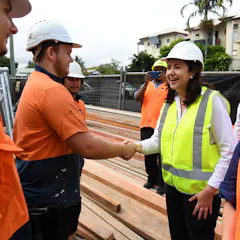
If the predicted strong preferences from One Nation to the LNP occur at the Queensland election, it would be bad news not just for state Labor, but also federal Labor.
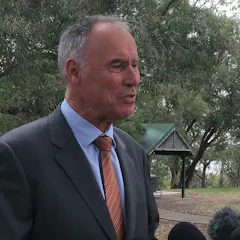
The polls are showing a close contest in the Bennelong byelection between the Liberals’ John Alexander and Labor’s Kristina Keneally.

Low-density suburbs can cause social isolation that’s harmful for individual and community well-being. But research confirms we can plan neighbourhood centres so they become vibrant social hubs.
In this space recently, I wrote about the mad and bad masturbation portrayals so common on screen. In the days following, Hot Octopuss – a London-based sex toy retailer – posted a response, identifying…
Authors
-

Election Analyst (Psephologist) at The Conversation; and Honorary Associate, School of Mathematics and Statistics, The University of Melbourne
-
Research fellow, Faculty of Architecture, Building and Planning, The University of Melbourne
-
Guest Research Fellow, School of Computing and Information Systems, The University of Melbourne
-
Professor, School of Psychological Sciences, The University of Melbourne
-
McKenzie Research Fellow, The University of Melbourne
-
Research assistant, Movember Institute of Men's Health, The University of Melbourne
-
Professor of Education Futures, The University of Melbourne
-
Senior Research Associate, School of Agriculture, Food and Ecosystem Sciences, The University of Melbourne
-
Senior Lecturer, Centre for Advancing Journalism, The University of Melbourne
-
Research Fellow, Centre for Youth Mental Health, The University of Melbourne
-
Deputy Vice-Chancellor (Global, Culture and Engagement), The University of Melbourne
-
Emeritus professor, History, The University of Melbourne
-
Associate Professor, Complex Human Data Hub, Melbourne School of Psychological Sciences, The University of Melbourne
-
Lecturer in History, The University of Melbourne
-
Associate Professor, Centre for Youth Mental Health, The University of Melbourne