

Researchers from a range of disciplines need to work together if we are to predict and prepare for the next thunderstorm asthma event.
The University of Melbourne

The University of Melbourne is a global leader in higher education. Across our campuses we convene brilliant minds from different disciplines and sectors to come together to address important questions and tackle grand challenges. In a disrupted world, that capacity has never been more important.
Our vision is to equip our students with a distinctive, future-facing education personalised around their ambitions and needs, enriched by global perspectives and embedded in a richly collaborative research culture. As active citizens and future leaders, our students represent our greatest contribution to the world, and are at the heart of everything we do.
We serve society by engaging with our communities and ensuring education and research are inspired from the outset by need and for the benefit of society, while remaining committed to allowing academic freedom to flourish. In this, we remain true to our purpose and fulfil our mission as a public-spirited organisation, dedicated to the principles of fairness, equality and excellence in everything we do.
We strive for an environment that is inclusive and celebrates diversity.
Beyond our campuses we imagine an Australia that is ambitious, forward thinking and increasing its reputation and influence globally. We are committed to playing a part in achieving this – building on our advantageous location in one of the world’s most exciting cities and across the state of Victoria, in a region rapidly becoming a hub for innovative education, research and collaboration.
Links
Articles

Chronic gum disease is the biggest cause of tooth loss in people over 30 years old, and affects 10 to 15% of the population on average.
This week’s Newspoll, conducted Thursday to Sunday from a sample of 1630, has Labor leading by 52-48, but this is a one point gain for the Coalition. Primary votes are 39% for the Coalition (up 1), 36…

Pornography is having negative impacts on children and young people. And increased sexual violence among children is only the tip of the iceberg.
Here are five more suggestions on how to experience Christmas vicariously, all from the comfort of your own couch. Just the way Santa/Jesus/Krampus always intended it to be. Enjoy! 21. The Bishop’s Wife…
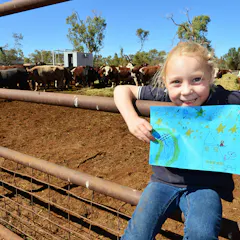
A new coalition of bodies representing regional Australia is calling on the government to help guarantee better access to the internet and the networked economy.
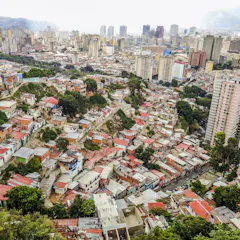
Informal settlements are often undocumented or hidden on official maps, but they house about a billion people worldwide. Their existence demands a more sophisticated approach to urban development.
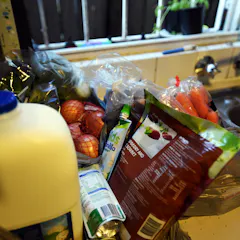
New research shows the harsh realities of getting by on a low income and highlights how help for those doing it tough needs to change.
Another December day, another batch of festive gems. Welcome to Part 4 of my Christmas Film recommendations. 16. A Christmas Snow (2010) Workaholic Grinch restauranteur, Kathleen (Catherine Mary Stewart…

Common warts can be hard to treat. No wonder people turn to home remedies, like duct tape and vinegar. But do they really work?
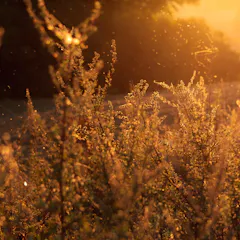
Irrespective of whether climate change contributed to the thunderstorm in Melbourne last week, we can be sure Australia’s climate projections herald new risks to health that cannot be ignored.
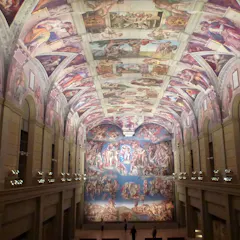
Increasingly sophisticated technology allows us to make close-to-perfect copies of everything from paintings to burial chambers. Can a replica bring artefacts to new audiences?

Somehow we need to grow more food to feed an expanding population while minimising the problems associated with nitrogen fertiliser use.
Welcome to Part 3 of my list of Christmas film recommendations. If you’re looking to add some new gems to your festive rotation, here’s another batch of recommendables. In no order other than thorough…

Despite worries about a new Asian Financial Crisis, much has changed since the last one in 1997. Even if a crisis were to materialise, it would look quite different from that of two decades ago.
Another December day and another batch of Christmas movie recommendations. Following on from Part 1, here are another 5 festive ways to distract you from spending time with your relatives. You’re very…
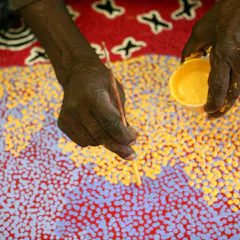
Waves of policies from successive Coalition and Labor governments have followed a paternalistic lead. This has created further impediments to thousands of Indigenous peoples who are doing plenty.

Batteries aren’t the only type of storage, and all types of storage have their role to play in the future grid.
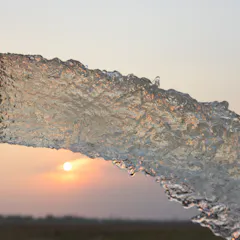
The market for water entitlements is worth tens of billions, encouraging investors to raise funds and get involved. But the data shows they aren’t having a big impact on prices.
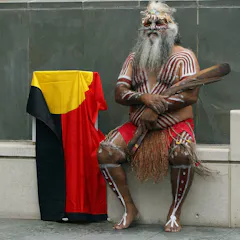
The question of repatriating objects is clearly more complex than returning human remains. It needs more debate, and more creative interventions to move beyond the current impasse.
Authors
-

Professor in Geomatics and SDI, The University of Melbourne
-
Election Analyst (Psephologist) at The Conversation; and Honorary Associate, School of Mathematics and Statistics, The University of Melbourne
-
Research fellow, Faculty of Architecture, Building and Planning, The University of Melbourne
-
ARC Future Fellow & Associate Professor, Mechanical Engineering, The University of Melbourne
-
Professor, School of Psychological Sciences, The University of Melbourne
-
McKenzie Research Fellow, The University of Melbourne
-
Research assistant, Movember Institute of Men's Health, The University of Melbourne
-
Professor of Education Futures, The University of Melbourne
-
Research Fellow, Department of Infrastructure Engineering, The University of Melbourne
-
Research Fellow, Centre for Youth Mental Health, The University of Melbourne
-
Associate Professor and Principal Fellow in Urban Risk and Resilience, The University of Melbourne
-
Associate Professor in Transport Engineering, Department of Infrastructure Engineering, The University of Melbourne
-
Associate Professor, Complex Human Data Hub, Melbourne School of Psychological Sciences, The University of Melbourne
-
Lecturer in History, The University of Melbourne
-
Associate Professor, Centre for Youth Mental Health, The University of Melbourne