
January this year, my best friend was pottering around my apartment, readying for work. “So what’s on for today?” he asked me. I rolled my eyes. “What is it that you think I do all day?” I asked. He gestured…
The University of Melbourne

The University of Melbourne is a global leader in higher education. Across our campuses we convene brilliant minds from different disciplines and sectors to come together to address important questions and tackle grand challenges. In a disrupted world, that capacity has never been more important.
Our vision is to equip our students with a distinctive, future-facing education personalised around their ambitions and needs, enriched by global perspectives and embedded in a richly collaborative research culture. As active citizens and future leaders, our students represent our greatest contribution to the world, and are at the heart of everything we do.
We serve society by engaging with our communities and ensuring education and research are inspired from the outset by need and for the benefit of society, while remaining committed to allowing academic freedom to flourish. In this, we remain true to our purpose and fulfil our mission as a public-spirited organisation, dedicated to the principles of fairness, equality and excellence in everything we do.
We strive for an environment that is inclusive and celebrates diversity.
Beyond our campuses we imagine an Australia that is ambitious, forward thinking and increasing its reputation and influence globally. We are committed to playing a part in achieving this – building on our advantageous location in one of the world’s most exciting cities and across the state of Victoria, in a region rapidly becoming a hub for innovative education, research and collaboration.
Links
Articles

Our cities need to become much more efficient not just to conserve precious resources but to improve the economy, wellbeing and resilience to environmental change and disasters.

Australia’s electricity and climate agendas aren’t on the same page.
The first Ipsos phone poll conducted since the election has primary votes of Coalition 36% (down 6 since the election). Labor 30% (down 5) and Greens 16% (up 6). Labor leads by 51-49 after preferences…

Changes in how we live and work call into question current planning regulations relating to mixed-use development.

Violence against women is a national priority, and Aboriginal women are disproportionately affected. This must be reported on appropriately in the media.

It’s possible to alter the make-up of a species such as a mosquito’s ability to pass on the deadly malaria parasite. But we need to consider the pros and cons of such gene editing technology.

Australia’s city foodbowls are an important part of the nation’s food supply, but they’re under increasing pressure from growing populations.
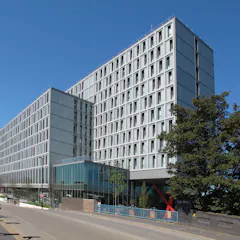
While some forms of co-living seek to match modern lifestyles and a desire to downsize, other profit-driven models simply exploit a lack of affordable housing alternatives.

Mixing alcohol with energy drinks is all part of a big night out, according to new research.
This week’s Newspoll, conducted Thursday to Sunday from a sample of 1850, has Labor leading by an unchanged 53-47, from primary votes of 38% Coalition (down 1), 38% Labor (steady) and 10% Greens (steady…
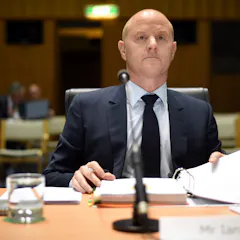
Business Briefing: fixing culture in banking and finance
The Conversation19.7 MB (download)
"Banking culture" has drawn a lot of scrutiny this year, after several high-profile scandals. But Professor Paul Kofman says there isn't much evidence for how to intervene if there's a problem.

Being a good critical thinker is a desirable and highly-sought after trait for getting a job in today’s economy. But are universities actually teaching this skill effectively?

The next Star Wars film, which opens on December 15, will be a prequel to the first one, made in 1977. Just how much Star Wars can the world stomach? And is looking backwards to move forwards such a good idea?

People given taurine had significantly improved overall mental health symptoms, including those of psychosis, compared to those given placebo.

There are currently far too few vacant academic jobs in Australia each year to employ all our PhD students. It’s time to rethink the training of doctoral students.

The government has announced it will accept recommendations to make the university admissions process more transparent. But that alone isn’t enough.
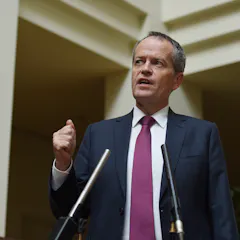
Former Deputy Prime Minister Brian Howe says Bill Shorten must channel the abilities of his colleagues in parliament and the broader progressive movement if he is to lead the ALP back to government.

Here are three key areas the Democratic Party must reform if they’re to fix fundamental problems revealed by the shock election result.

Changes to the pension will affect the way people plan and behave.
Authors
-

Professor in Geomatics and SDI, The University of Melbourne
-
Election Analyst (Psephologist) at The Conversation; and Honorary Associate, School of Mathematics and Statistics, The University of Melbourne
-
Research fellow, Faculty of Architecture, Building and Planning, The University of Melbourne
-
ARC Future Fellow & Associate Professor, Mechanical Engineering, The University of Melbourne
-
Professor, School of Psychological Sciences, The University of Melbourne
-
McKenzie Research Fellow, The University of Melbourne
-
Research assistant, Movember Institute of Men's Health, The University of Melbourne
-
Professor of Education Futures, The University of Melbourne
-
Research Fellow, Department of Infrastructure Engineering, The University of Melbourne
-
Associate Professor and Principal Fellow in Urban Risk and Resilience, The University of Melbourne
-
Associate Professor in Transport Engineering, Department of Infrastructure Engineering, The University of Melbourne
-
Professor of Psychology, The University of Melbourne
-
Associate Professor, Complex Human Data Hub, Melbourne School of Psychological Sciences, The University of Melbourne
-
Lecturer in History, The University of Melbourne
-
Professor of Health Economics, The University of Melbourne