

Stone artifacts and a fossil tooth point to Homo sapiens living at Grotte Mandrin 54,000 years ago, at a time when Neanderthals were still living in Europe.
Stony Brook University (The State University of New York)

Since its founding, Stony Brook University has been characterised by innovation, energy and progress, transforming the lives of people who earn degrees, work and make groundbreaking discoveries here. A dramatic trajectory of growth has turned what was once a small teacher preparation college into an internationally recognised research institution that is changing the world.
Stony Brook’s reach extends from its 1,039-acre campus on Long Island’s North Shore–encompassing the main academic areas, an 8,300-seat stadium and sports complex and Stony Brook Medicine–to Stony Brook Manhattan, a Research and Development Park, four business incubators including one at Calverton, New York, and the Stony Brook Southampton campus on Long Island’s East End. Stony Brook also co-manages Brookhaven National Laboratory, joining Princeton, the University of Chicago, Stanford, and the University of California on the list of major institutions involved in a research collaboration with a national lab.
And Stony Brook is still growing. To the students, the scholars, the health professionals, the entrepreneurs and all the valued members who make up the vibrant Stony Brook community, this is a not only a great local and national university, but one that is making an impact on a global scale.
Links
Articles
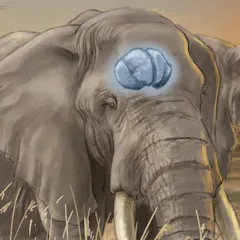
Some animals, such as California sea lions, have small brains relative to their body size, but are still impressively intelligent, showing brain evolution is even more complex than it appears.
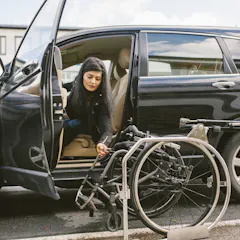
A household earning the US median income needs an additional $17,690 per year – on top of current government disability benefits programs.

Partially protected areas don’t have more wildlife than unprotected areas. They consume conservation resources and occupy space that could otherwise be allocated to more effective protection.

Frogs are harvested as food by the millions every year. A new study shows that uncontrolled frog hunting could drive some populations to extinction by midcentury.
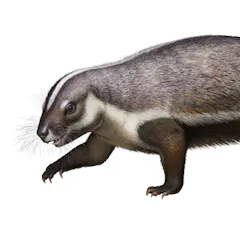
This ancient cat-sized animal lived millions of years ago and had features not found in any of today’s mammals.
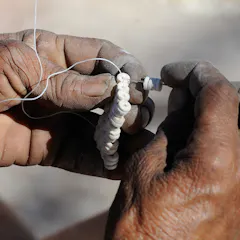
Un estudio de abalorios de cáscara de huevo de avestruz, un hallazgo común en las excavaciones arqueológicas, muestra una panorámica cultural cambiante de las traiciones de las comunidades cazadoras-recolectoras y las pastorales.

Hace solo 20 años, nadie podría haber imaginado lo que los científicos saben dos décadas después sobre el pasado de la humanidad.

20 years ago, who could predict how much more researchers would know today about the human past – let alone what they could learn from a thimble of dirt, a scrape of dental plaque, or satellites in space.

A survey of San ostrich eggshell beads - a common find at archaeological sites - paints a bigger picture of hunter-gatherers, herders and shifting cultural tradition.
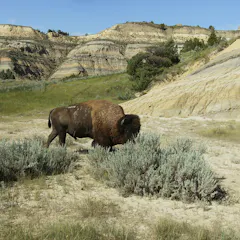
Scientists have tracked endangered species for years. Now they’re figuring out how to highlight animals and plants that have recovered – but what does that mean?
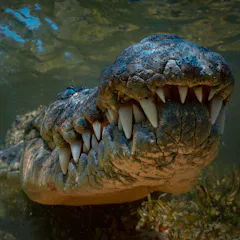
Paleontologists created an evolutionary map of how croc body size changed over the last 200 million years – with some interesting implications for today’s species.

Nigeria’s highly mobilized efforts to eliminate polio, and even tackle measles and other vaccine-preventable diseases along the way, may have lessons for the US.
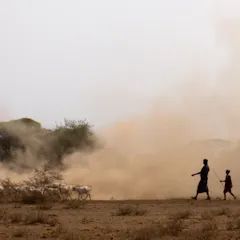
Pastoralism is a central part of many Africans’ identity. But how and when did this way of life get started on the continent? Ancient DNA can reveal how herding populations spread.

People who are 65 and up can expect to live longer than ever before. Does it make sense to keep classifying everyone in this group as old? A pair of demographers argue for ‘age inflation.’

Ancient DNA allows scientists to learn directly from the remains of people from the past. As this new field takes off, researchers are figuring out how to ethically work with ancient samples and each other.

Research on the psychology of politics reveals that when issues are framed in terms of moral right and wrong, the possibility of compromise becomes very small.

Data gathered from EPA reports, staffers and retirees show the Trump administration has brought fewer environmental enforcement actions to conclusion and deferred more to states.

Most researchers use the UN’s Human Development Index to measure each country’s progress, but that system has flaws. A new, simplified index aims to do it better.
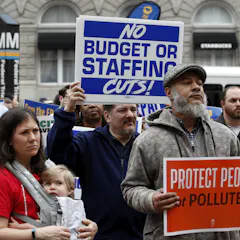
Government agencies are supposed to listen to the industries they regulate, but what if they tune out everyone else? Scholars call this regulatory capture, and some staffers see it happening at EPA.
Authors
-

Director of Strategic Communications, Office of Diversity, Inclusion and Intercultural Initiatives, Stony Brook University (The State University of New York)
-
PhD Candidate, Women's, Gender, and Sexuality Studies, Stony Brook University (The State University of New York)
-
Professor and Chair, Stony Brook University (The State University of New York)
-
Senior Researcher at Swiss Federal Institute for Forest, Snow and Landscape Research and Adjunct Associate Professor of Ecology and Evolution, Stony Brook University (The State University of New York)
-
SUNY Distinguished Professor of History, Stony Brook University (The State University of New York)
-
Curator of Human Evolution of the Cleveland Museum of Natural History and Research Assistant Professor of Anthropology, Stony Brook University (The State University of New York)
-
Professor of Social Welfare, Stony Brook University (The State University of New York)
-
Clinical Professor of Periodontics and Endodontics, Stony Brook University (The State University of New York)
-
Lecturer of Anthropology and Assistant Director of the Turkana Basin Institute, Stony Brook University (The State University of New York)
-
Assistant Professor of Anthropology, Stony Brook University (The State University of New York)
-
Assistant Professor of Ecology and Evolution, Stony Brook University (The State University of New York)
-
Harvard MCZ Biodiversity Postdoctoral Fellow, Harvard University; Stony Brook University (The State University of New York)
-
Adjunct Lecturer, Department of Political Science, Stony Brook University (The State University of New York)
-
Professor of Technology and Society, Stony Brook University (The State University of New York)
-
Associate Professor of Social Welfare, Stony Brook University (The State University of New York)