

Five years after Superstorm Sandy, we see how disadvantaged social groups suffered more from the storm before and after – much as we’re seeing in Hurricanes Harvey and Maria.
Stony Brook University (The State University of New York)

Since its founding, Stony Brook University has been characterised by innovation, energy and progress, transforming the lives of people who earn degrees, work and make groundbreaking discoveries here. A dramatic trajectory of growth has turned what was once a small teacher preparation college into an internationally recognised research institution that is changing the world.
Stony Brook’s reach extends from its 1,039-acre campus on Long Island’s North Shore–encompassing the main academic areas, an 8,300-seat stadium and sports complex and Stony Brook Medicine–to Stony Brook Manhattan, a Research and Development Park, four business incubators including one at Calverton, New York, and the Stony Brook Southampton campus on Long Island’s East End. Stony Brook also co-manages Brookhaven National Laboratory, joining Princeton, the University of Chicago, Stanford, and the University of California on the list of major institutions involved in a research collaboration with a national lab.
And Stony Brook is still growing. To the students, the scholars, the health professionals, the entrepreneurs and all the valued members who make up the vibrant Stony Brook community, this is a not only a great local and national university, but one that is making an impact on a global scale.
Links
Articles

There is typically no fever, no broken bone, no lesion to examine under a microscope when evaluating mental illness. Diagnosing disorders therefore is hard. A new way to classify disorders could help.

A culture focused on youth may lead us to believe that older people do not enjoy sex. A new study shows why that is not true, and how the notion of ‘sexual wisdom’ may explain why.
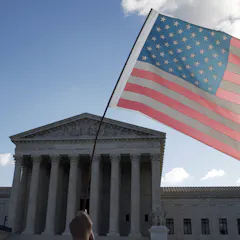
You’re not imagining it: the Supreme Court has gotten more polarized politically than in years past, thanks to fewer moderates in the Senate.

Turning 65 in 2016 doesn’t mean the same thing as hitting 65 in 1916. So why are we still using a population aging measure that was developed a century ago?
NH’s election laws allow people to vote in the primaries even if they are not registered with one of the parties. How pivotal are these unenrolled voters? We look beyond the exit polls for answers.

A wake-up call from Flint: the U.S. has made great gains in reducing lead exposure, but the country is still saddled with millions of miles of water-carrying lead pipes.

Nobel Prize-winning science is almost by definition arcane and complex. While these esoteric fields have their moment in the spotlight, does it matter if the rest of us understand?

With advances in technology and changes in the demographics of people attending university, the campus experience is changing.
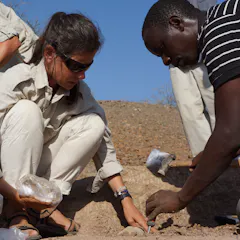
Stone tools excavated in Kenya date back 3.3 million years – making them about a million years older than the oldest known fossils from our own hominid genus Homo. Who made and used these tools?

New research says we should discard conventional ways of analyzing what it means to age. It’s how well people function that counts.

As digital connectivity increases, personal connectedness can lose out. What is that doing to children?

The idea of raising the retirement age is not popular – most people resent being told they must work for longer. But with life expectancies increasing and people enjoying higher quality of life at older…
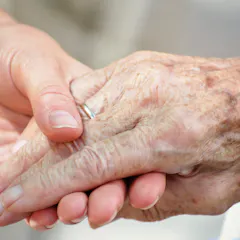
New research we’ve done into ageing shows that the strength of your grasp may also be one of the most useful ways to measure your true age. Different measures of physical abilities can be assessed to determine…
Authors
-

Director of Strategic Communications, Office of Diversity, Inclusion and Intercultural Initiatives, Stony Brook University (The State University of New York)
-
PhD Candidate, Women's, Gender, and Sexuality Studies, Stony Brook University (The State University of New York)
-
Professor and Chair, Stony Brook University (The State University of New York)
-
Senior Researcher at Swiss Federal Institute for Forest, Snow and Landscape Research and Adjunct Associate Professor of Ecology and Evolution, Stony Brook University (The State University of New York)
-
SUNY Distinguished Professor of History, Stony Brook University (The State University of New York)
-
Curator of Human Evolution of the Cleveland Museum of Natural History and Research Assistant Professor of Anthropology, Stony Brook University (The State University of New York)
-
Professor of Social Welfare, Stony Brook University (The State University of New York)
-
Clinical Professor of Periodontics and Endodontics, Stony Brook University (The State University of New York)
-
Lecturer of Anthropology and Assistant Director of the Turkana Basin Institute, Stony Brook University (The State University of New York)
-
Assistant Professor of Anthropology, Stony Brook University (The State University of New York)
-
Assistant Professor of Ecology and Evolution, Stony Brook University (The State University of New York)
-
Harvard MCZ Biodiversity Postdoctoral Fellow, Harvard University; Stony Brook University (The State University of New York)
-
Adjunct Lecturer, Department of Political Science, Stony Brook University (The State University of New York)
-
Professor of Technology and Society, Stony Brook University (The State University of New York)
-
Associate Professor of Social Welfare, Stony Brook University (The State University of New York)