

A Kentucky woman was arrested for ordering abortion meds online. Her case shows how bad policy can trap people just trying to cope with an unintended pregnancy.
Stony Brook University (The State University of New York)

Since its founding, Stony Brook University has been characterised by innovation, energy and progress, transforming the lives of people who earn degrees, work and make groundbreaking discoveries here. A dramatic trajectory of growth has turned what was once a small teacher preparation college into an internationally recognised research institution that is changing the world.
Stony Brook’s reach extends from its 1,039-acre campus on Long Island’s North Shore–encompassing the main academic areas, an 8,300-seat stadium and sports complex and Stony Brook Medicine–to Stony Brook Manhattan, a Research and Development Park, four business incubators including one at Calverton, New York, and the Stony Brook Southampton campus on Long Island’s East End. Stony Brook also co-manages Brookhaven National Laboratory, joining Princeton, the University of Chicago, Stanford, and the University of California on the list of major institutions involved in a research collaboration with a national lab.
And Stony Brook is still growing. To the students, the scholars, the health professionals, the entrepreneurs and all the valued members who make up the vibrant Stony Brook community, this is a not only a great local and national university, but one that is making an impact on a global scale.
Links
Articles
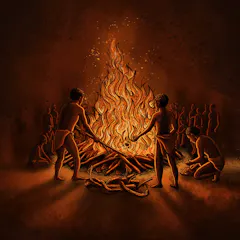
Cremação antiga teria sido um espetáculo comunitário em um local ao qual se retornava e se reacendiam fogueiras ao longo de muitas gerações. O que estava por trás desse ritual fúnebre?
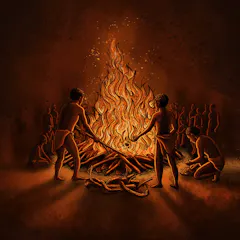
An ancient cremation would have been a community spectacle in a place returned to and reignited over many generations. What was behind this unexpected funeral ritual?
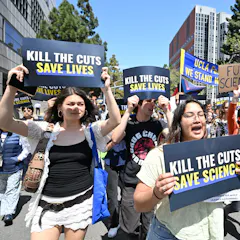
While headlines focus on Harvard and Columbia, state universities train far more STEM students, power the nation’s research engine and have fewer resources to weather sweeping cuts.

Careful research into public information and in-depth interviews has shown the scale of personnel cuts at the Environmental Protection Agency.

About 1 in 4 of the people with blindness or low vision who were surveyed said they spent less on food to be able to afford expenses associated with their disability.
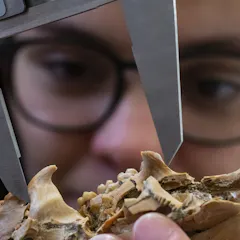
Modern North American porcupines are at least twice the size of their southern cousins and have stronger jaws. But how long have they looked that way?

There is ample evidence that poor oral health plays a role in many chronic diseases.

Vague definitions and heavy penalties mean that legislation could be used to stifle a free press.

Estudo com participação de cientista brasileiro revela como a geografia do clima, e não apenas o clima em si, influencia nos padrões de diversidade das espécies.

A new study reveals how the geography of global climates influences the rich patterns of species diversity in an ever-changing world.

In a study with people as young as 4 years old, participants underestimated how much others would appreciate their good deeds.

More than half of working-age adults over 50 with a work-limiting disability didn’t receive any benefits from Social Security in 2016.

In 2022 we detailed the discovery of 1,500 stone points in France’s Madrin cave. Experiments now show that they could were used as arrowheads, pushing back evidence of archery in Eurasia by 40,000 years.

Une toute nouvelle étude montre qu’Homo sapiens maîtrisait déjà le tir à l’arc il y a plus de 50 000 ans, grâce à des fouilles archéologiques dans la Grotte Mandrin.
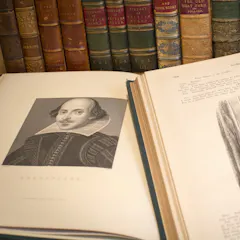
An English professor takes a critical look at why today’s students are assigned the same books that were assigned decades ago – and why American school curricula are so difficult to change.

Putin has been consumed with presenting a hyper-macho image throughout his presidency. And in recent years, he’s ramped up sexist and LGBTQ-phobic rhetoric.

The Asian American actress rose to fame in an era when white actors in yellowface were more likely to play Asian characters than Asian ones.

Los artefactos de piedra y un diente fósil señalan que el Homo sapiens vivió en la Gruta Mandrin hace 54.000 años, en una época en la que los neandertales aún vivían en Europa.

Des artefacts en pierre et une dent fossile indiquent qu’Homo sapiens vivait à la Grotte Mandrin il y a 54 000 ans, à une époque où les Néandertaliens vivaient encore en Europe.
Authors
-

Director of Strategic Communications, Office of Diversity, Inclusion and Intercultural Initiatives, Stony Brook University (The State University of New York)
-
PhD Candidate, Women's, Gender, and Sexuality Studies, Stony Brook University (The State University of New York)
-
Professor and Chair, Stony Brook University (The State University of New York)
-
Senior Researcher at Swiss Federal Institute for Forest, Snow and Landscape Research and Adjunct Associate Professor of Ecology and Evolution, Stony Brook University (The State University of New York)
-
SUNY Distinguished Professor of History, Stony Brook University (The State University of New York)
-
Curator of Human Evolution of the Cleveland Museum of Natural History and Research Assistant Professor of Anthropology, Stony Brook University (The State University of New York)
-
Professor of Social Welfare, Stony Brook University (The State University of New York)
-
Clinical Professor of Periodontics and Endodontics, Stony Brook University (The State University of New York)
-
Lecturer of Anthropology and Assistant Director of the Turkana Basin Institute, Stony Brook University (The State University of New York)
-
Assistant Professor of Anthropology, Stony Brook University (The State University of New York)
-
Assistant Professor of Ecology and Evolution, Stony Brook University (The State University of New York)
-
Harvard MCZ Biodiversity Postdoctoral Fellow, Harvard University; Stony Brook University (The State University of New York)
-
Adjunct Lecturer, Department of Political Science, Stony Brook University (The State University of New York)
-
Professor of Technology and Society, Stony Brook University (The State University of New York)
-
Associate Professor of Social Welfare, Stony Brook University (The State University of New York)