

A four-year record from the heart of the Ross Ice Shelf shows how subtle changes could shape future sea level rise, ocean ecosystems – and even our weather.
National Institute of Water and Atmospheric Research (NIWA)

NIWA, the National Institute of Water and Atmospheric Research, is a Crown Research Institute established in 1992. It operates as a stand-alone company with its own Board of Directors and Executive.
NIWA’S purpose is to enhance the economic value and sustainable management of New Zealand’s aquatic resources and environments, to provide understanding of climate and the atmosphere and increase resilience to weather and climate hazards to improve safety and wellbeing of New Zealanders.
Links
Articles

When sea ice forms later, the communities of tiny algae that live within it change too. Detecting these early signals now could help us adapt to a changing world.

Snow and ice loss warms the land surface and air, setting off a feedback loop of further ice loss. This destabilises the landscape, with potentially hazardous impacts.
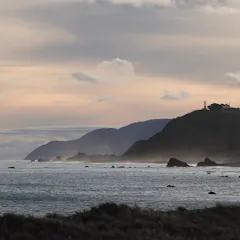
Hydroxyl scrubs the potent greenhouse gas methane from the atmosphere. But its production is linked with emissions of other pollutants.
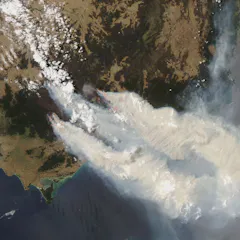
More frequent wildfires, emissions from rocket launches and more satellite debris burning up in the atmosphere all contribute to ozone depletion and could slow the recovery of the ozone layer.
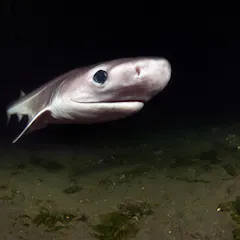
A longa expectativa de vida e baixa taxa de reprodução tornam os tubarões e as arraias de águas profundas tão vulneráveis à exploração excessiva quanto as baleias
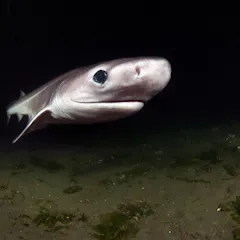
Long lifespans and slow reproduction rates make deep-water sharks and rays as vulnerable to overexploitation as whales once were. We must place them under protection to avoid extinctions.
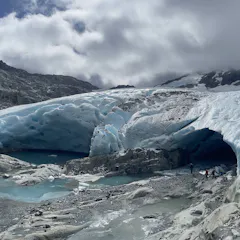
An estimated 13 trillion litres of ice has already been lost from glaciers in New Zealand’s Southern Alps since 1978. Several are now approaching extinction.
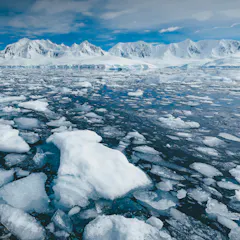
The rapid changes in the Southern Ocean and Antarctica highlight the urgency of better direct observations and measurements, beyond satellite monitoring and modelling.
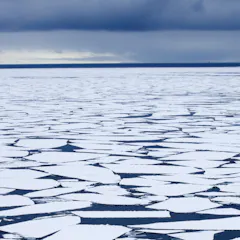
The world’s oceans regulate our climate, but they are entering uncharted territory, with record surface warming and changes to Antarctica’s deep meltwater which drives global currents.
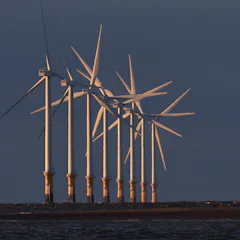
Building offshore wind farms is complex and expensive. But with plenty of wind coming in from the sea, New Zealand could harness the renewable resource as it aims to decarbonise the energy sector.

Rocks deposited by vanishing glaciers in the Southern Alps thousands of years ago hold climate clues about the past, painting a bleak picture about the long-term survival of alpine ice in New Zealand.
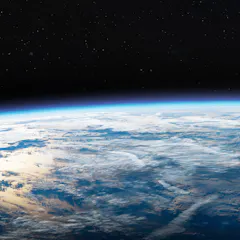
The current estimate is that Earth would warm by 1.5°C to 4.5°C if emissions were to double on pre-industrial levels. The range has remained stubbornly wide, despite improved climate modelling.
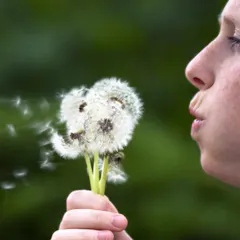
Imagine if every meal you ate included food previously chewed by someone else. That’s what’s happening to the air we breathe in shared indoor spaces.
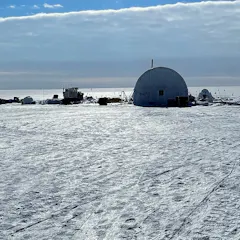
Researchers have surveyed an Antarctic under-ice river for the first time directly, and their observations support the idea that such sub-glacial rivers form estuaries as they flow into the ocean.

The ocean has been buffering us from the impacts of climate change, but it is reaching the limit of this capacity. Integrating ocean and climate policy will be crucial.
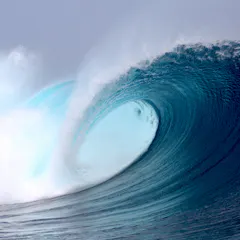
Ocean waves are a massive source of energy, but it’s challenging to design power generators for the harsh environment. Allowing marine organisms to grow on engineered structures could help.
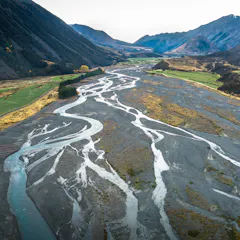
Given climate change predictions of more extreme floods in New Zealand, it’s time to change management practices to work with a river, allowing it room to move and its channels to adjust.
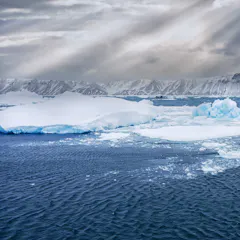
Lautan Selatan (Antarktika) merupakan penyimpanan utama panas dan karbon di Bumi, serta rumah bagi kehidupan laut yang menakjubkan seperti penguin, alga, dan paus.
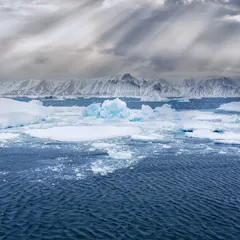
El Océano Austral (Antártico) es el principal almacén de calor y carbono de nuestro planeta, y es hogar de extraordinarias formas de vida, desde pequeñas algas y criaturas sin espinas hasta pingüinos, focas y ballenas.
Authors
-

Principal Scientist & Programme Leader of Southern Hemisphere Climates and Environments, National Institute of Water and Atmospheric Research (NIWA)
-
Meteorologist/forecaster, National Institute of Water and Atmospheric Research (NIWA)
-
Fisheries Scientist, National Institute of Water and Atmospheric Research (NIWA)
-
Atmospheric Scientist, National Institute of Water and Atmospheric Research (NIWA)
-
Research Scientist Trace Gases, National Institute of Water and Atmospheric Research (NIWA)
-
Principal Air Quality Scientist, National Institute of Water and Atmospheric Research (NIWA)
-
River Geomorphologist, National Institute of Water and Atmospheric Research (NIWA)
-
Marine Physicist, National Institute of Water and Atmospheric Research (NIWA)
-
Principal Scientist -- Atmosphere and Climate, National Institute of Water and Atmospheric Research (NIWA)
-
Emeritus, National Institute of Water and Atmospheric Research (NIWA)
-
National Institute of Water and Atmospheric Research (NIWA)
-
Microbial Ecologist, National Institute of Water and Atmospheric Research (NIWA)
-
Glaciologist, National Institute of Water and Atmospheric Research (NIWA)