

The early childhood years, particularly ages 0-3, are the building blocks of life.
London School of Hygiene & Tropical Medicine

The London School of Hygiene and Tropical Medicine aims to improve health and health equity in the UK and worldwide; working in partnership to achieve excellence in public and global health research, education and translation of knowledge into policy and practice.
The School’s multidisciplinary expertise includes clinicians, epidemiologists, statisticians, social scientists, molecular biologists and immunologists. They work with partners worldwide to support the development of teaching and research capacity, and their alumni work in more than 180 countries.
Links
Articles
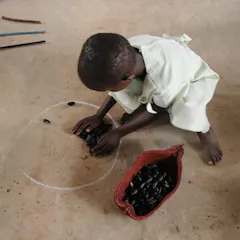
The early years are when a child is most vulnerable, but it is also the time when effective interventions can deliver the biggest returns.
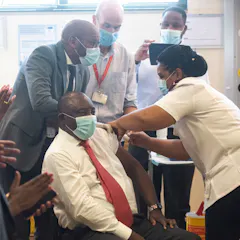
Recent uncertainty over blood clots and vaccine expiration dates have taken a toll on public confidence.

By prioritising vaccination for the elderly, Indonesia may optimally reduce the hospital burden and COVID-19 deaths amid a limited vaccine supply during the first vaccination phase.
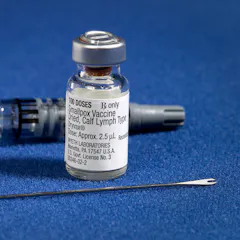
Too much hope is being pinned on the vaccine alone to get us out of the current pandemic. But ‘low-tech’ solutions are needed, too.
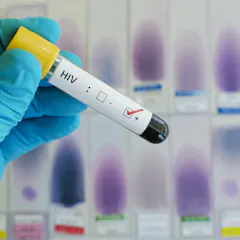
The evidence shows that keeping girls in school not only reduces HIV risk, but also delays marriage and pregnancy, and improves mental health.

The new coronavirus strain probably is more infectious – but even if not, case numbers desperately needed controlling.

There have been some shockingly bad graphs circulating during the pandemic.

Here’s what the west can learn from South Korea, Taiwan, Vietnam and more.
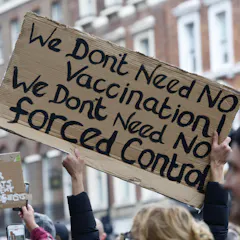
A safe, effective COVID-19 vaccine is expected to be developed in record time and may be approved for production, distribution and acceptance some time in 2021.
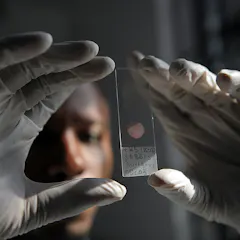
Having the right equipment is not enough – getting health workers to use it is also a challenge.

New Zealand has managed it, but densely populated, highly infected countries face a bigger challenge.
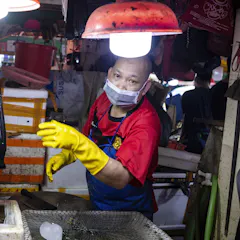
A full ban on eating wildlife in China probably isn’t possible, and could encourage unregulated underground markets.

While identical twins are seen more as an accidental splitting of a single egg, there could be a good reason mothers produce non-identical twins from two separate eggs.
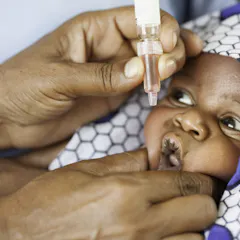
Coronavirus is a stark reminder of what a world without vaccines would look like.
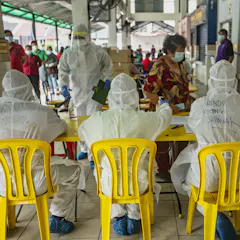
Are criticisms that governments should have done more fair?

From China and South Korea to Italy and the US, different countries are taking very different approaches to COVID-19 – with varying degrees of success.
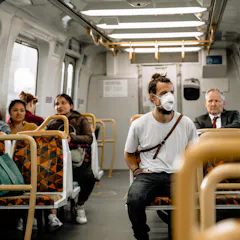
The risks to individuals vary hugely with age.
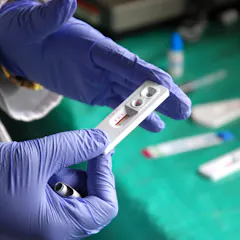
The key to ending the HIV epidemic is a vaccine that will provide long-lasting protection and alleviate the need for prevention methods.
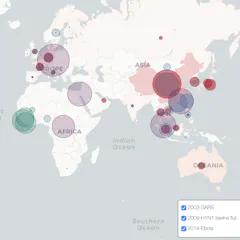
A new tool has been developed to track the history of the novel coronavirus and other recent outbreaks.
Authors
-

Associate professor, London School of Hygiene & Tropical Medicine
-
Professor in Health Systems and Policy, London School of Hygiene & Tropical Medicine
-
Associate Professor in Anthropology and Public Health, London School of Hygiene & Tropical Medicine
-
Professor Infectious Diseases and International health, London School of Hygiene & Tropical Medicine
-
PhD Candidate, Agriculture and Infectious Disease, London School of Hygiene & Tropical Medicine
-
Professor of Social Epidemiology, London School of Hygiene & Tropical Medicine
-
Associate Professor, London School of Hygiene & Tropical Medicine
-
Lecturer in Biomedical Science, University of East London; London School of Hygiene & Tropical Medicine
-
Associate Professor, Environment and Health (MRCG@LSHTM); Senior Lecturer (Ecological Health, Imperial College London), London School of Hygiene & Tropical Medicine
-
Research Fellow, London School of Hygiene & Tropical Medicine
-
Professor of European Public Health, London School of Hygiene & Tropical Medicine
-
Assistant Professor of Nutrition-Sensitive Agriculture, London School of Hygiene & Tropical Medicine
-
Professor of Climate Change, Food Systems and Health and Director of The Lancet Countdown in Africa, London School of Hygiene & Tropical Medicine
-
Assistant professor, London School of Hygiene & Tropical Medicine
-
Professor of Health Economics, Global Health Economics Centre, London School of Hygiene & Tropical Medicine