
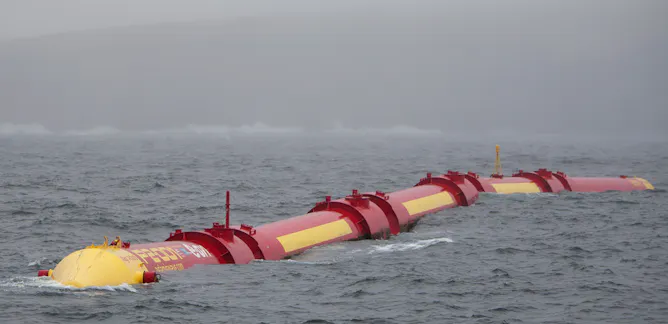
Renewable ocean energy harnesses the power of the oceans to produce electricity. This can be done in several ways, but the resources that have the most immediate potential in terms of energy production…
CSIRO

As Australia’s national science agency, CSIRO is solving the greatest challenges through innovative science and technology.
CSIRO - unlocking a better future for everyone.
Links
Articles
A new solar cell printer at CSIRO enables researchers to print organic photovoltaic cells around the size of an A3 sheet…
Last week the greenhouse gas monitoring site at Mauna Loa in Hawaii recorded daily levels of atmospheric carbon dioxide that approached the 400 parts per million molar (ppm) benchmark. Annual mean Southern…
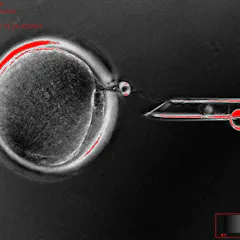
Scientists have successfully reprogrammed human skin cells to become embryonic stem cells capable of transforming into any other cell type in the body. While researchers have previously been able to make…

Imagine having a wafer-thin touchscreen on your sleeve which, like a scene out of a Philip K. Dick novel, gives you all the functionality of a smartphone without the awkwardness of a cumbersome battery…
Phosphorus is an important, life-giving element and is often used for plant growth in an agricultural setting. Scientists…
Recent research suggests only a minority of mining companies are preparing for the biophysical impacts of climate change. Those that are preparing are going it alone: there is little collaboration on planning…
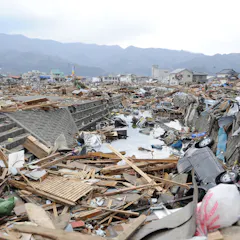
Imagine you’re a disaster manager and a large earthquake has just struck off the Australian coast. You know that part of the Australian coastline is about to be inundated by a tsunami but you need more…
Much attention has been paid to sea-level rises, but variations in wave types may also have a big effect on coastal areas…
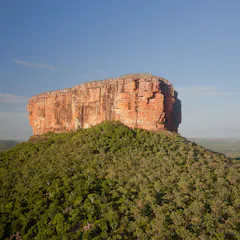
We have just returned from a month collecting insects in the National Heritage-listed Kimberley region of Western Australia. Together with the Wunambal Gaambera and Dambimangari Aboriginal Corporations…

The federal Coalition’s new A$30 billion plan for “fast, affordable” broadband is a quick-fix strategy, which is likely to cost more and be less reliable long-term, according to experts. Launching the…
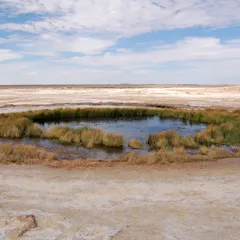
The Great Artesian Basin is huge and ancient underground “water tank” big enough to fill Sydney Harbour 130,000 times. It streches from Cape York down to Dubbo and further west than Coober Pedy and has…
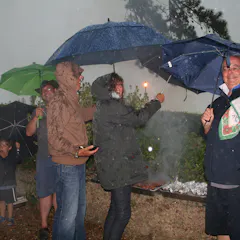
Tea-leaves, entrails, cockatoos: we all want to forecast the future. Weather forecasts have become so commonplace we rarely think about the technology, research, computing power and millions of observations…
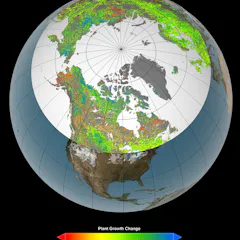
Climate change is creating warmer growing conditions in parts of the Earth’s northern regions, a new study has found, but experts warn that drought and heat wil soon cancel out the agricultural benefits…
Planning for our future can be a heated topic, as the many people affected may have competing or conflicting objectives. The tension, frustration and bewilderment that can accompany such an exercise can…

Just as 40 years ago Australia was a very different place from the Australia of today, the Australia of 2050 will be different again. If there are aspects of Australian life that we’d like to hang on to…
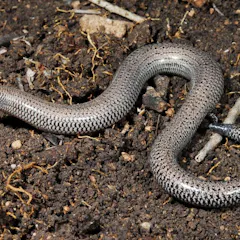
When asked to name an Australian lizard, most Australians would probably pick the familiar blue-tongue, stumpy lizard or bearded dragon, or perhaps the iconic thorny devil, frill-neck lizard or a goanna…

Australians want a future of sustainable self-sufficiency and a healthy environment supporting a robust democracy – free of poverty and inequity. That was one of our projections, as part of the Australia…
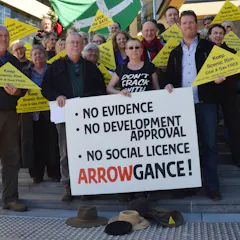
The concept of a ‘social licence to operate’ (SLO) is not new. It has been used widely in the mining and minerals industry for some 15 years where it has generally described the informal acceptance or…
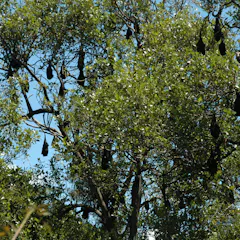
The last 30 years have seen a rise in emerging infectious diseases in humans, of which more than 70% are zoonotic. Zoonoses are diseases that normally exist in animals but have the potential to transmit…
Authors
-

SKA-Low Commissioning Scientist, Square Kilometre Array Observatory; and Affiliate, Space and Astronomy, CSIRO
-
Chief Research Scientist - Environment, CSIRO
-
Research Lead, Carbon Dioxide Removal, CSIRO
-
Principal Research Scientist in Aquatic Ecology, CSIRO
-
Behavioural Scientist, CSIRO
-
Professor, Senior Principal Research Scientist, CSIRO
-
Molecular Virologist, CSIRO
-
Postdoctoral Research Fellow, Marine Carbon Dioxide Removal, CSIRO
-
Senior Research Scientist, Team Leader Rabbit Biocontrol, CSIRO
-
Radio Astronomy Research Scientist, CSIRO
-
Research Director, CSIRO
-
Research scientist, CSIRO
-
Principal Research Scientist, CSIRO
-
Principal Research Scientist in Ecosystem Ecology, CSIRO
-
Senior Principal Research Scientist, CSIRO