
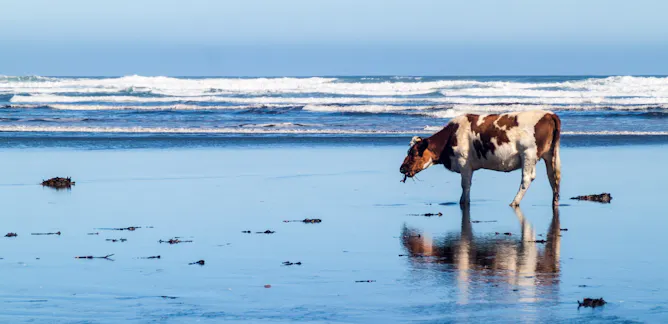
Feeding seaweed to cows might just help solve two of our biggest problems: climate change, and feeding the world.
CSIRO

As Australia’s national science agency, CSIRO is solving the greatest challenges through innovative science and technology.
CSIRO - unlocking a better future for everyone.
Links
Articles

For most of us, the form of stool we excrete can vary widely depending, in part, on what we’ve been doing.
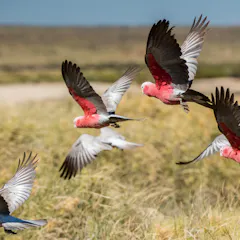
When is a galah not a galah? That depends on which scientific name is attached to the Australian bird. There’s been some confusion over this, which DNA testing has finally solved.

The black soldier fly, Hermetia illucens, could help solve global food shortages by feeding livestock. It can even be used to make diesel fuel.

Eradicating feral animals from islands can be expensive, but new research shows where to get the biggest bang for our buck.
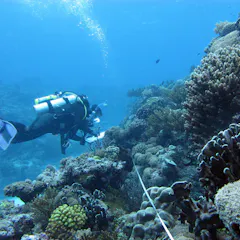
Marine parks need to cover large swathes of ocean, but they also need to cover the right areas if they are to deliver the best conservation. New research off Australia’s northwest suggests how.

A scenario analysis of the construction industry in 2036 paints an interesting picture for workers.

Artificial intelligence gives technology the ability to learn and adapt. But they can learn a lot more if they can share their learning with other smart devices.

When temperatures dipped between 1500 and 1750, the world’s landscapes responded by storing more carbon. Now, with temperatures climbing, it’s possible they will do the opposite and release even more.

The world’s use of finite resources continues to rise as global development continues. Can we help poorer nations raise their standard of living without exhausting all of our raw materials?

Two Tesla cars running on autopilot have crashed this year, and one driver was killed. It raises the question of whether the company’s autonomous driving system is safe for our roads.

Artificial intelligence gives us machines that can beat humans at games such as chess and go. How long before we see AI surpass human intelligence?

You can’t just buy a radio telescope receiver off the shelf. So CSIRO has been hard at work building receivers for the world’s largest telescopes using the very latest technology.
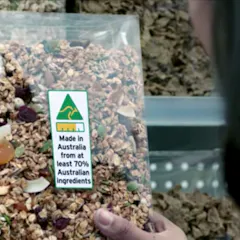
Australia’s new country of origin food labelling will indicate if food is grown or made in Australia and the proportion of Australian ingredients.
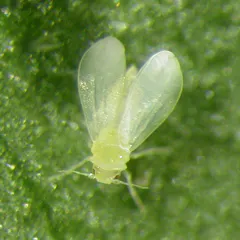
Invasive species and diseases pose a major threat to agriculture – particularly in the countries that can least afford it.
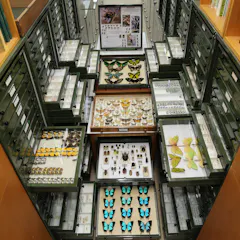
At least 100,000 insects are among the many Australian species still to be formally identified. That’s a problem for any biosecurity experts who need to be able to spot potentially invasive bugs.

We’re just at the beginning of working out the tasks machines will make us better at.

Human communication is complex, rich in nuances and frequently includes non-verbal signs. That’s a challenge if you want an intelligent machine to be part of the conversation.
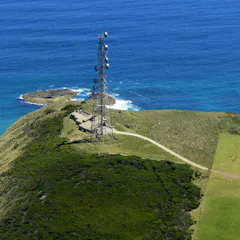
Atmospheric carbon dioxide measurements at Tasmania’s Cape Grim and Antarctica’s Casy Station have now officially passed 400 parts per million and are likely to stay above that for decades to come.

While Bitcoin gets all the attention, the blockchain technology it’s based on could have applications across business and government.
Authors
-

SKA-Low Commissioning Scientist, Square Kilometre Array Observatory; and Affiliate, Space and Astronomy, CSIRO
-
Chief Research Scientist - Environment, CSIRO
-
Research Lead, Carbon Dioxide Removal, CSIRO
-
Principal Research Scientist in Aquatic Ecology, CSIRO
-
Behavioural Scientist, CSIRO
-
Professor, Senior Principal Research Scientist, CSIRO
-
Molecular Virologist, CSIRO
-
Postdoctoral Research Fellow, Marine Carbon Dioxide Removal, CSIRO
-
Senior Research Scientist, Team Leader Rabbit Biocontrol, CSIRO
-
Radio Astronomy Research Scientist, CSIRO
-
Research Director, CSIRO
-
Research scientist, CSIRO
-
Principal Research Scientist, CSIRO
-
Principal Research Scientist in Ecosystem Ecology, CSIRO
-
Senior Principal Research Scientist, CSIRO