
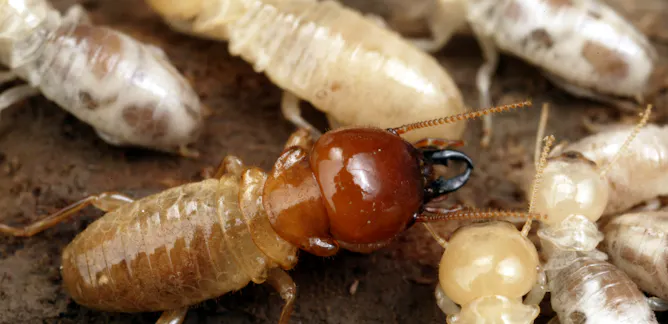
Insects are largely hidden from view or maligned unfairly, but they make a tremendous contribution to the Australian economy.
CSIRO

As Australia’s national science agency, CSIRO is solving the greatest challenges through innovative science and technology.
CSIRO - unlocking a better future for everyone.
Links
Articles
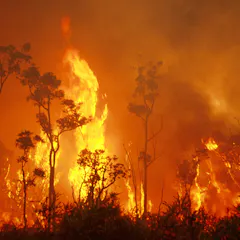
Bushfires can be deadly and destroy homes and properties. But knowing where they are likely to spread next can help emergency services.
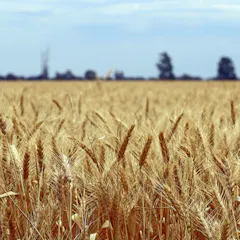
The world’s population is set to double by the end of the century. But there is only so much land available for food production.
Climate and weather models have come far in recent decades, and Australia has one of the best.

There are very few jobs that are can’t be done in principle by robots and artificial intelligence. What will you do when a robot takes your job?
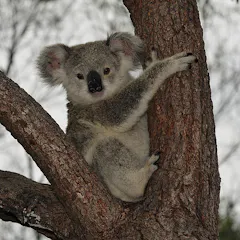
With bids open today for the government’s Emissions Reduction Fund, experts explain how storing carbon can be a win for wildlife too.
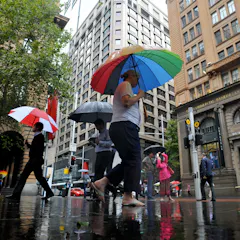
Depending on what model you use, climate change could make Sydney a little bit warmer, much hotter, wetter, or drier. Which one should we use? When it comes to planning for climate change, it’s important to look at all the possible futures.
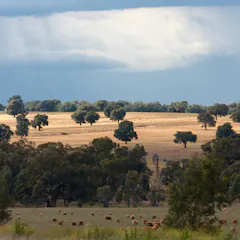
Melbourne to Adelaide, Sydney to Brisbane: climate change could move the climate of Australia’s towns and cities, as revealed by a new website.

The Queensland government wants companies to use waste water from coal seam gas extraction for useful purposes such as recharging aquifers. New CSIRO research shows that, with careful monitoring, it can be done.
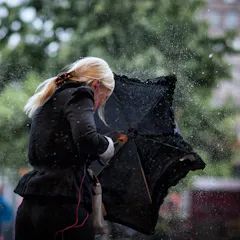
Are you one of those people who can smell when the rain is coming? Ever wondered then what you’re actually smelling?
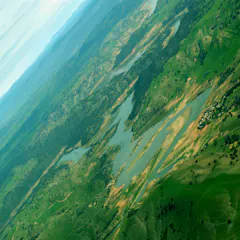
A new investigation of satellite records reveals that the Earth is getting greener, despite ongoing deforestation in Indonesia and South America.
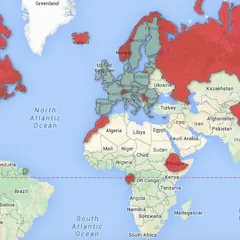
In the lead up to climate meetings in Paris at the end of the year, countries will release draft targets - the framework of a possible global climate deal. Follow our interactive map as we track these targets.

Most science communication appeals to those who already love science. It’s harder, but important, to reach out to the disengaged too.
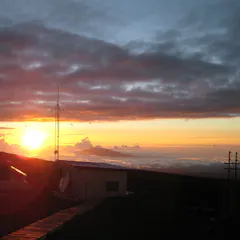
We have hit a new milestone in carbon dioxide levels: the average for February topped 400ppm. It’s the first time this has happened in the northern winter, when levels are typically lower than in summer.

Amateurs and experts worked together to unravel the mystery of a new moth, the first discovery of its kind in 40 years.

Tech companies are investing big in artificial intelligence research that allows machines to learn things from scratch, with no pre-programmed rules. So what’s the potential for this new technology?
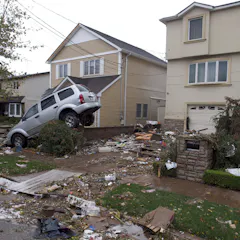
You may think your social media friends are only good for keeping you up with all the latest gossip and trends but research published today has found they can also help save you in the event of any natural…
Dr Mike Raupach died earlier this week after a brief illness. He passed away peacefully at home with his family in Canberra, Australia. He was 64. Mike was a brilliant and outstanding scientist. He was…
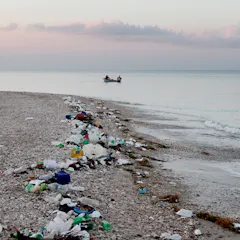
You might have heard the oceans are full of plastic, but how full exactly? Around 8 million metric tonnes go into the oceans each year, according to the first rigorous global estimate published in Science…
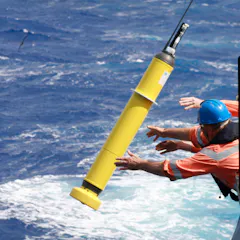
The oceans are continuing to warm steadily despite an apparent slowdown in global warming at the earth’s surface, according to data collected by thousands of floating robots published today in Nature Climate…
Authors
-

SKA-Low Commissioning Scientist, Square Kilometre Array Observatory; and Affiliate, Space and Astronomy, CSIRO
-
Chief Research Scientist - Environment, CSIRO
-
Research Lead, Carbon Dioxide Removal, CSIRO
-
Principal Research Scientist in Aquatic Ecology, CSIRO
-
Behavioural Scientist, CSIRO
-
Professor, Senior Principal Research Scientist, CSIRO
-
Molecular Virologist, CSIRO
-
Postdoctoral Research Fellow, Marine Carbon Dioxide Removal, CSIRO
-
Senior Research Scientist, Team Leader Rabbit Biocontrol, CSIRO
-
Radio Astronomy Research Scientist, CSIRO
-
Research Director, CSIRO
-
Research scientist, CSIRO
-
Principal Research Scientist, CSIRO
-
Principal Research Scientist in Ecosystem Ecology, CSIRO
-
Senior Principal Research Scientist, CSIRO