

Australia is on track for up to 1.7C of warming this century if the world curbs its greenhouse emissions, but under a worst-case scenario could see anything from 2.8C to 5.1C of warming by 2090, according…
CSIRO

As Australia’s national science agency, CSIRO is solving the greatest challenges through innovative science and technology.
CSIRO - unlocking a better future for everyone.
Links
Articles

Some of the biggest players in Artificial Intelligence (AI) have joined together calling for any research to focus on the benefits we can reap from AI “while avoiding potential pitfalls”. Research into…
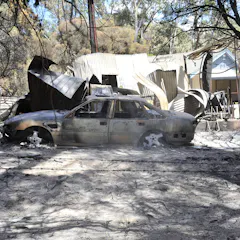
The latest round of bushfires, which claimed 27 homes in the Adelaide Hills, has once again highlighted the importance of planning for the worst. Mercifully, no human lives were lost, and it will be important…

Milk is a highly nutritious food, and an important source of amino acids and minerals such as phosphorus and calcium, which contributes to bone health. Historically, milk was prone to contamination by…
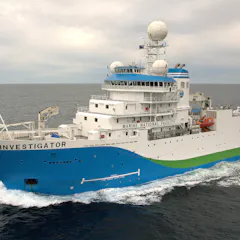
We know more about the surface of the moon than we do about our deepest oceans, and only 12% of the ocean floor within Australia’s Exclusive Economic Zone has so far been mapped. The reason for this is…
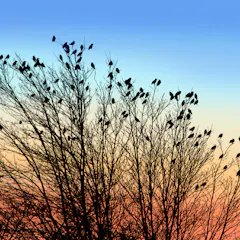
Today’s land birds, from ducks to eagles, shared a common ancestor after dinosaurs went extinct – just one finding from bird gene studies published in journals, including Science and GigaScience…

How many times have you been looking for information online, only to find yourself going round and round in circles? Or you’ve spent too long poking around a website trying to find what you need, only…
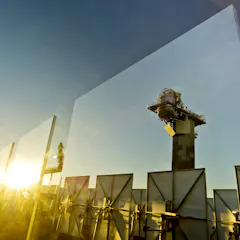
As climate negotiators meet at the United Nations’ Lima summit, which comes hot on the heels of the landmark US-China climate deal, there is a renewed focus on how the world can move to a lower-emissions…
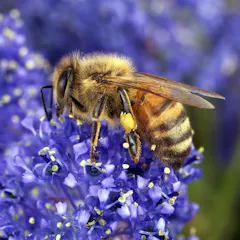
A nationwide outbreak of foot and mouth disease; an invasion of a devastating wheat disease; our honeybees completely wiped out. These are just three possible disastrous scenarios facing Australia; they’re…
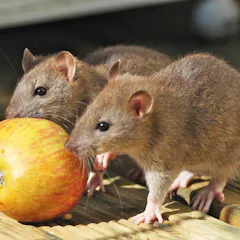
Our world is becoming increasingly urbanised. In 1950, just 30% of the world’s population lived in urban areas. This number is now over 50% and rising. By 2050, two-thirds of the world’s population are…

New technology to tackle biosecurity challenges down the track is one of the five megatrends identified in today’s CSIRO report Australia’s Biosecurity Future: preparing for future biological challenges…

Imagine an environmental crisis caused by a colourless, odourless gas, in minute concentrations, building up in the atmosphere. There is no expert consensus, but in the face of considerable uncertainty…

Occasional erratic bursts southward of the East Australian Current (EAC) are thought to have moderated the weather of south-east Australia this autumn and winter and they continue to introduce tropical…

Picture a device that can produce electricity using nothing but the ambient heat around it. Thanks to research published in the Proceedings of the National Academy of Science today, this scenario is a…

A groundbreaking climate deal between the US and China will put pressure on the international community to broker a global treaty at next year’s United Nations talks, but experts say it still might not…
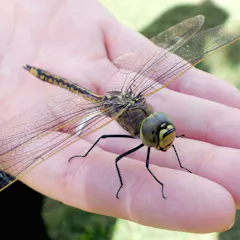
The time and date of the origin of insects and their pattern of evolution and survival over millions of years is revealed in a new study, published today in Science magazine. Insect relationships have…

Last week, Elon Musk warned an audience at MIT that: we should be very careful about artificial intelligence. If I had to guess at what our biggest existential threat is, it’s probably that. Musk is the…
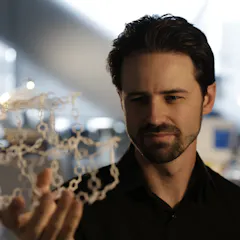
The Prime Minister’s Prizes for Science – awarded at Parliament House in Canberra tonight – recognise excellence in science and science teaching. This year, we asked four prizewinners to reflect on…
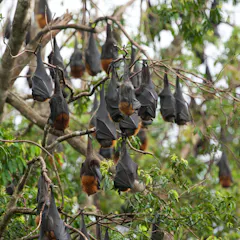
Bats are the natural host species for Ebola and a variety of viruses, many of which can be fatal when transmitted to humans. More than 100 viruses have been identified in bats and this number is rising…

Through burning fossil fuels, humans are rapidly driving up levels of carbon dioxide in the atmosphere, which in turn is raising global temperatures. But not all the CO2 released from burning coal, oil…
Authors
-

SKA-Low Commissioning Scientist, Square Kilometre Array Observatory; and Affiliate, Space and Astronomy, CSIRO
-
Chief Research Scientist - Environment, CSIRO
-
Research Lead, Carbon Dioxide Removal, CSIRO
-
Principal Research Scientist in Aquatic Ecology, CSIRO
-
Behavioural Scientist, CSIRO
-
Professor, Senior Principal Research Scientist, CSIRO
-
Molecular Virologist, CSIRO
-
Postdoctoral Research Fellow, Marine Carbon Dioxide Removal, CSIRO
-
Senior Research Scientist, Team Leader Rabbit Biocontrol, CSIRO
-
Radio Astronomy Research Scientist, CSIRO
-
Research Director, CSIRO
-
Research scientist, CSIRO
-
Principal Research Scientist, CSIRO
-
Principal Research Scientist in Ecosystem Ecology, CSIRO
-
Senior Principal Research Scientist, CSIRO