
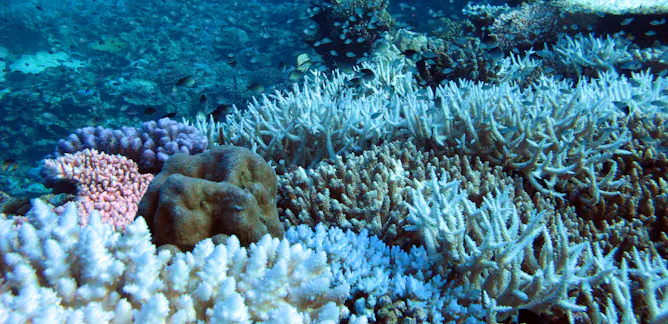
They’re more used to taking visitors to the reefs, but COVID-19 gave tour operators time to help check the condition of the corals. What they found doesn’t bode well.
Australian Institute of Marine Science

The Australian Institute of Marine Science (AIMS) is a leader in tropical marine science.
The Institute is consistently ranked among the top one per cent of specialist research institutions internationally and is known for its unique capacity to investigate topics from broad-scale ecology to microbiology.
AIMS is committed to the protection and sustainable use of Australia’s marine resources. Its research programs support the management of tropical marine environments around the world, with a primary focus on the Great Barrier Reef World Heritage Area, the pristine Ningaloo Marine Park in Western Australia and northwest Australia.
Links
Articles
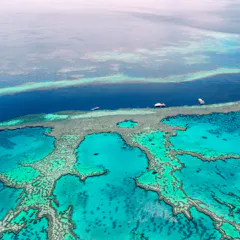
Restoring the reef represents one of the most significant science and technology challenges in the history of nature conservation.
The findings will help determine the age of whale sharks, protecting the endangered animals into the future.

The Western Australian coral reefs may not be as well known as the Great Barrier Reef, but they’re just as large and diverse. And they too have been devastated by cyclones and coral bleaching.
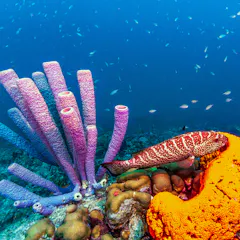
Marine sponges are ancient organisms that have survived mass extinctions. Many are more tolerant of climate change and may dominate over corals in future reef systems.
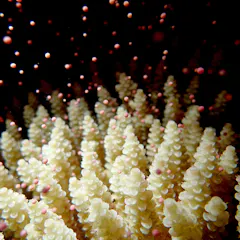
Every year buoyant bundles rise from a spawning coral, giving the impression of an upside-down snowstorm.
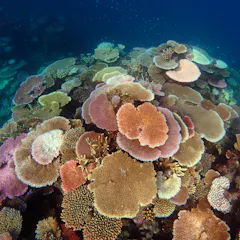
Corals on the Great Barrier Reef that are tolerant to warmer waters can be used to help repair other parts of the reef damaged by recent coral bleaching events.
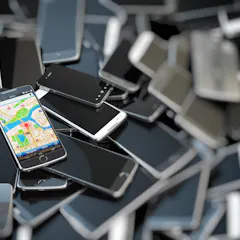
You can learn a lot about the movement of people and animals if you tap into the tracking data from many of today’s mobile phones.
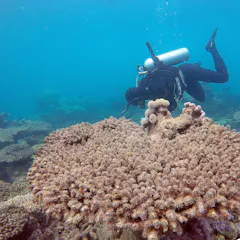
Two-thirds of the corals in the northern part of the Great Barrier Reef have died on in the reef’s worst-ever bleaching event, according to the latest underwater surveys.
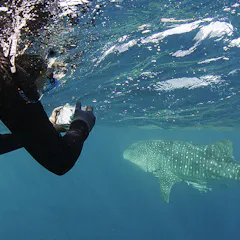
How you tell one whale shark from another? Spots and stripes.
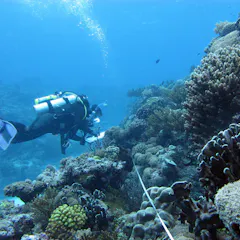
Marine parks need to cover large swathes of ocean, but they also need to cover the right areas if they are to deliver the best conservation. New research off Australia’s northwest suggests how.
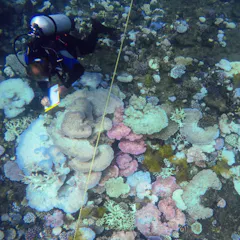
Bleaching has hit a huge swathe of the Great Barrier Reef, with many corals in the reef’s remote northern reaches now expected to die as a result of warm waters linked to this summer’s El Niño.
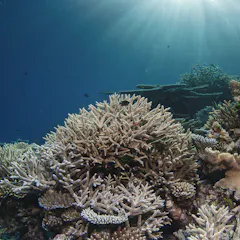
Banning fishing helps fish, but it also helps reef recover from cyclones, disease, and coral bleaching.
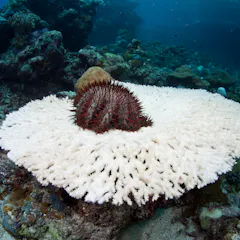
To fix pollution on the Great Barrier Reef, some farming practices will have to change.
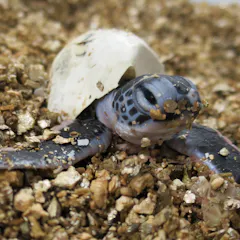
Immersion in seawater kills sea turtle eggs, suggesting that sea turtles are increasingly at risk from rising seas, according to research published today in Royal Society Open Science.
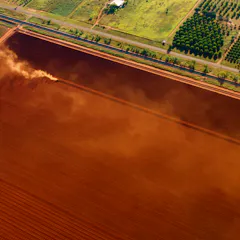
There will be increasing demands placed on our soil and water in coming years, so we need greater research into how to preserve and maintain these precious resources.
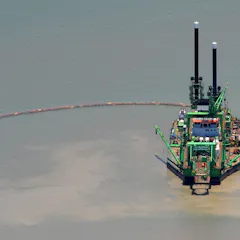
A new report aims to establish exactly what we do and don’t know about the effects of dredging on the Great Barrier Reef, and suggests that managing fine sediments will be one of the biggest challenges.
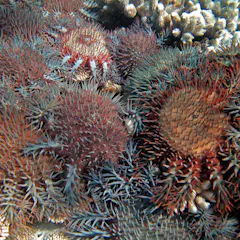
Crown-of-thorns starfish are one of the biggest threats to the Great Barrier Reef. Since 1985, the Great Barrier Reef has lost half its coral cover, with almost half of this coral loss due to the crown-of-thorns…
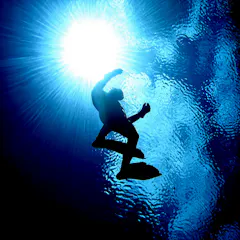
In many ways, Australia is defined by the oceans surrounding us. We have the world’s third largest ocean territory, most of our trade travels by sea, and we have vast offshore resources.
An increase of carbon dioxide (CO2) in the ocean will not only have detrimental impacts on corals, but also the biodiversity…
Authors
-

Manager International Partnerships and Co-ordinator of the Global Coral Reef Monitoring Network (GCRMN), Australian Institute of Marine Science
-
Senior Research Scientist, Benthic and Restoration Ecology, Australian Institute of Marine Science
-
PhD Candidate, Marine Movement Ecology, Murdoch University; Australian Institute of Marine Science
-
Physical Oceanographer, Australian Institute of Marine Science
-
Reef Fish Ecologist, Australian Institute of Marine Science
-
Research scientist, Australian Institute of Marine Science
-
Executive Director of Strategic Development at Australian Institute of Marine Science, Australian Institute of Marine Science
-
Research Program Director – Reef Ecology and Monitoring, Australian Institute of Marine Science
-
Research Scientist, Australian Institute of Marine Science
-
Research Scientist: Coral Ecology, Australian Institute of Marine Science
-
Physical Oceanographer, Australian Institute of Marine Science
-
Research Program Director, Australian Institute of Marine Science
-
Research Scientist, Australian Institute of Marine Science
-
Senior Research Scientist in Reef Ecology, Australian Institute of Marine Science
-
Chief executive officer, Australian Institute of Marine Science; James Cook University