

The global effort to achieve zero hunger in 2030 is facing a gradual challenge. After the world hunger decreased from around 19% to 11% of the worldwide population (1990) in 2014, there were occasional setbacks in the past five years.
To make matters worse, there has been an increase in diabetes case in the developing countries. This potentially hinders the ideal development outcome to get rich without getting fat.
According to the Global Hunger Index (GHI), even though the 2023 global GHI score has decreased from 19.1 (2015) to 18.3, the number of undernourished surged. The share of globally malnourished people increased from 7.5% in 2017 to 9.2% in 2022, reaching approximately 735 million persons.
The famine is getting even worse amidst global challenges, including such as climate change, conflicts, global pandemic, economic turnmoils and the Russian-Ukraine war. The Food Agriculture Organization reported that during 2011-2016, drought and climate-related disasters had led to food scarcity in 51 countries, affecting 124 million people.
Another challenge faced by both developed and developing countries is obesity. According to The Lancet), over 1 billion people worldwide lived with obesity in 2022. Since 1990, adult obesity rates have at least doubled, while the rates among children and adolescents (ages 5 to 19) have quadrupled. The data also indicates that 43% of adults were classified as overweight in 2022.
Both stunting and obesity create costly burdens to the economy. Stunting lower human productivity which then leads to economic underperform. Meanwhile, obesity puts a strain on the national health expenditure.
As developing countries, Indonesia and Mexico face double problems since hunger and obesity exist like two sides of a coin. We observed our respective countries to find out how these problems affecting the economy.
The World Obesity Observatory reported that in 2019, the economic impact of overweight and obesity in Indonesia was US$17.47 billion, representing 1.6% of the country’s GDP. This number is projected to reach 4.7% by 2060.
A similar trend happened in Mexico, where the cost of the obesity issues in 2019 was estimated at US$23.17 billion or 1.8% of GDP. By 2060, these expenses are forecasted to reach 5%.
To address these problems, both Indonesia and Mexico can learn from Japan, the only country to get rich without its population getting fat, due to the country’s policies in preventing obesity.
Problems in Indonesia and Mexico
The Ministry of Health of Indonesia recorded the trend of increasing the proportion of obesity in adults from 2007 to 2018. Obesity in 2007 reached 10.5% and increased to 14.8% 2017. At the end of the period, the percentage rose to 21.8%.
There is also a nutrition problem in Indonesia, especially among children. While the prevalence of stunting in Indonesia has decreased from 27.7% in 2019 to 21.6% in 2022, it is still far from the government target of 14% in 2024.
The stunting prevalence in Mexico is lower than in Indonesia. The National Health and Nutrition Survey (ENSANUT) 2022 reveals that in 2021, 12.6% of children under five suffer from stunting at the national level.
While Mexico has been part of the OECD for two decades, there has been a rise in overweight and obesity prevalence, with men’s rates increasing from 50% to 65.4% and women’s from 56.5% to 67.6% between 1994 and 2016, according to the Pan American Health Organization.
Mexico is one of the world’s leading consumers of sweetened beverages that could lead to obesity. Also, economic development and free trade agreements have reshaped the food landscape in the country. Over the last four decades, Mexico has had a significant dietary transition from primarily fresh and unprocessed products to an increased consumption of heavily processed foods high in sugar, salt, and fats.

In Indonesia, sugary foods are also sold cheaply and are widely available throughout the country.
Two cents for the two countries
Indonesia’s government should consider policies addressing the malnutrition and obesity challenges in Indonesia. The policy must address both the supply and demand perspectives. Encouraging local food, for one, is essential to address the food supply regarding malnutrition issues.
Eastern part of Indonesia faces problems in rice production due to its climate and topography. Getting rice from the western part of Indonesia leads to high prices. Sagoo, as local food, can thus be an alternative.
On the demand side, the government should boost society’s purchasing power. When people have a high income, they can alternate their dietary by consuming healthy food and low-sugar products despite the price.
Regarding obesity issues, the Indonesian government can add a sugar tax for food and beverage products with high-sugar ingredients. They could also encourage the food and beverage industry to produce low-sugar products. At the very least, the government can require a label of sugar composition on food and beverage products to support smart buying.
In Mexico, from 1992 to 2016 , households allocated a smaller share of their budgets to vegetables and fruits, likely because these items tend to be more expensive than processed foods. Meanwhile, spending on sugary beverages rose as their prices declined.

In light of these trends, further public policy measures may be necessary. For instance, although Mexico’s government introduced a 10% tax on sugary beverages in 2014 to reduce their consumption, the continued increase in purchases suggests that alternative or additional taxation strategies might be needed.
Lesson learnt from Japan
According to the 2017 OECD obesity update, Japan exhibited the lowest obesity prevalence at 4% among OECD countries.
Some of the critical policies that Japan has implemented to combat lifestyle-related diseases include Healthy Japan 21, which serves as the cornerstone preventive policy. This initiative focuses on promoting changes in nutrition and eating habits, encouraging physical activity and exercise, and emphasizing the importance of mental health care and adequate rest.
For example, some cities in Japan encourage citizens to travel by walking or cycling. In particular, a person who wants to use the train or subway must go through stairs, which indirectly helps a healthy lifestyle.
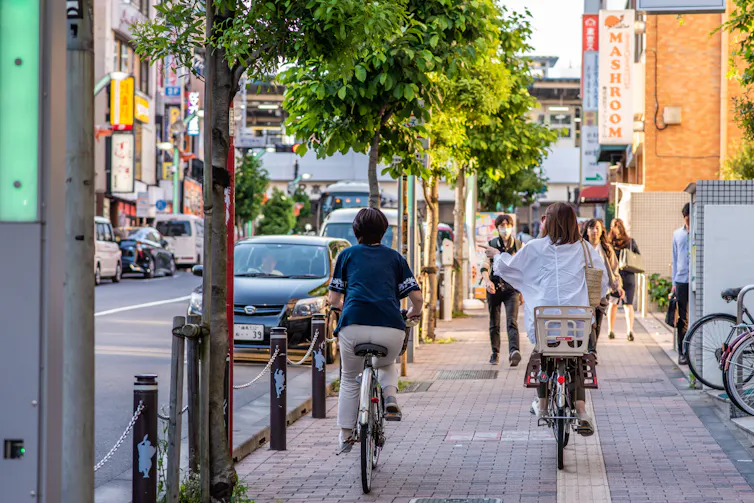
Japan also enacted the Basic Law on Dietary Education (Shokuiku) in 2005. This law aims to educate the public about the significance of proper meals to address issues such as inappropriate eating habits, dietary problems, and other lifestyle-related diseases.
This proves that in addition to government policies, it is essential for healthcare and educational systems in Indonesia and Mexico to play a fundamental role—not only in resolving nutrition problems, but in preventing them. Throughout every stage of life, and especially from early childhood, individuals must have access to nutrition education and effective systems for implementing healthy lifestyles. These efforts should be guided and supported by healthcare professionals who can provide ongoing guidance and oversight.