
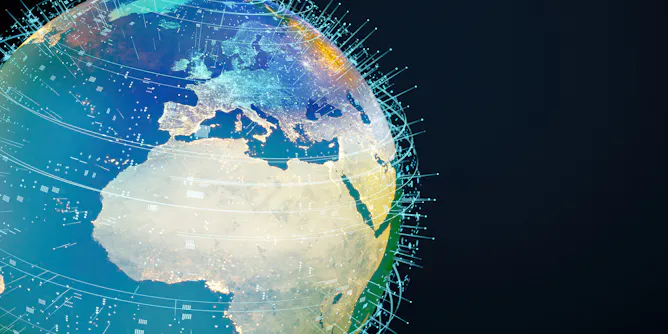
The weather would get wild and windy if one side of the planet was always cold and dark and the other side always hot and light.
Articles on Astronomy
Displaying 1 - 20 of 1001 articles
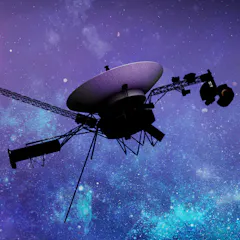
The spacecraft is travelling through interstellar space, around 16 billion miles from Earth.
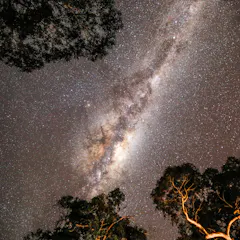
In ancient Aboriginal traditions, we see the traces of important intellectual achievements.
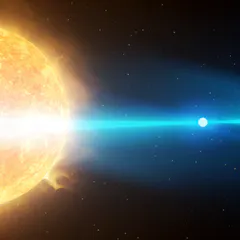
Slowly blinking radio signals from space have puzzled astronomers since 2022.
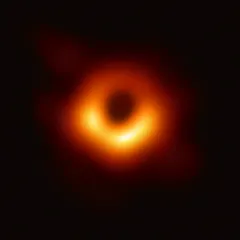
New results provide a fresh perspective on the iconic ring structure of the M87 black hole.
The Swift Observatory allowed astronomers to study events that happen quickly in the universe, such as stars exploding.
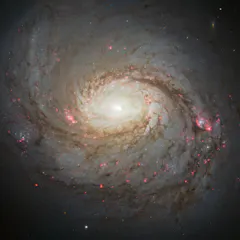
Galaxies act a little bit like figure skaters twirling on the ice – but at an astronomical scale.
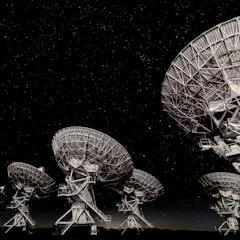
A researcher just won a Nobel Prize for detecting tiny particles from space. Scientists now want to get better at figuring out where in the cosmos they come from.
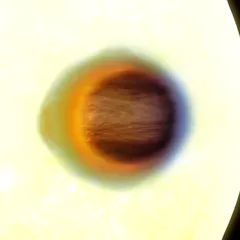
A new method reveals the skewed shape of a distant planet’s atmosphere.
Love the idea of exploring the night sky but not sure where to start? Read this handy guide to getting started – and get ready to embrace autumn’s darker nights.
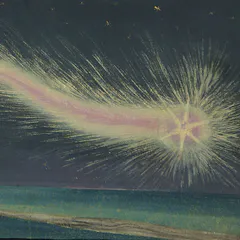
The sudden appearance of such a bright comet must have made a deep impression on those who witnessed it.
If you think about leap years, it may seem like humans have a very odd way of measuring time. Sometimes, timekeepers have even added extra seconds to clocks.
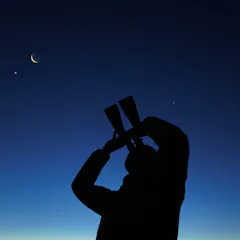
A look at the night sky forecast to motivate you to dust off your telescope for the darker nights of autumn.
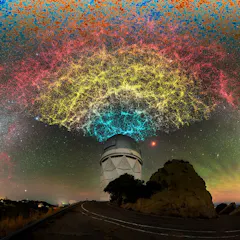
Sometimes, mapping the whole universe starts with getting thousands of tiny robots to move in exactly the right way.
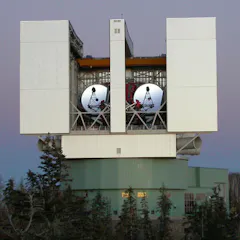
The early universe was kind of like a big game of musical chairs – scientists are figuring out how many particles were able to find ‘seats’ to understand the cosmos.

Massive objects bend light around them, a quirk that opens up unique opportunities for astronomical surveys.
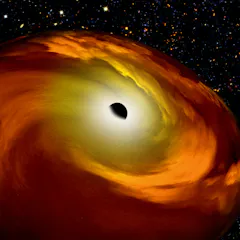
Some stars turn into black holes at the end of their lifespans, once they stop burning the fuel in their cores.
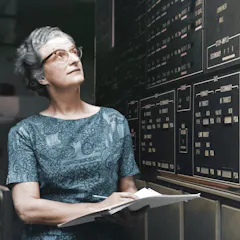
In August 2018, just four months before she died, I had the great fortune to interview Nancy Grace Roman about her extraordinary life studying the stars.
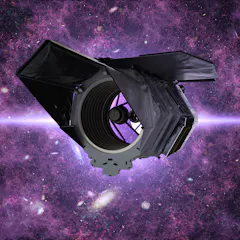
The Nancy Grace Roman Space Telescope will take a broad survey of space and use it to create a map of the universe.
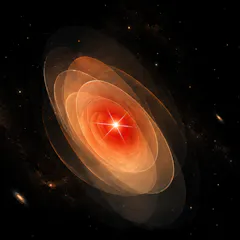
It turns out these little red dots might actually be evidence of supermassive black holes.
Top contributors
-

Professor (Astrophysics), University of Southern Queensland
-
Senior Curator (Astronomy), Museums Victoria Research Institute; The University of Melbourne
-
Associate Professor in Astronomy, Monash University
-
University Distinguished Professor of Astronomy, University of Arizona
-
Associate Professor, School of Physics, The University of Melbourne
-
Professor of Astrophysics, University of Sydney
-
Honorary Fellow, Space and Astronomy, CSIRO; Western Sydney University
-
Professor, Radio Astronomy, University of Sydney
-
John Curtin Distinguished Professor (Radio Astronomy), Curtin University
-
Pro Vice-Chancellor Flagship Initiatives, Swinburne University of Technology
-
Postdoctoral Researcher in Radio Astronomy, University of Sydney
-
Senior Lecturer in Physics, Nottingham Trent University
-
Associate Dean of Innovation and Engagement, Swinburne University of Technology
-
Lecturer in Astronomy, Nottingham Trent University
-
Dean of Science, University of California, Santa Cruz