

From the Black Death to the COVID-19 pandemic, combining the genetic data of a pathogen with historical records, archaeological artifacts and epidemiological studies can uncover its origins.
Articles on Yersinia pestis
Displaying all articles
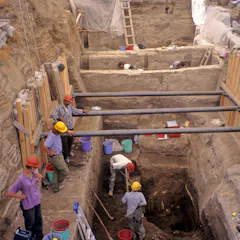
Whether intentional or not, the way mega-settlements in southeastern Europe from 6,000 years ago were laid out would have cut down on the spread of disease.

Public health officials in Colorado recently confirmed that a man has plague.

As ready as you are to be done with COVID-19, it’s not going anywhere soon. A historian of disease describes how once a pathogen emerges, it’s usually here to stay.
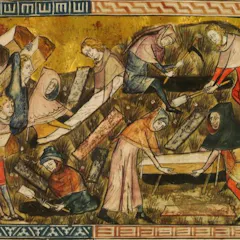
People caught and died from plague long before it caused major epidemics like the Black Death in the middle ages. Could what scientists call cultural resistance be what kept the disease under control?

It’s a deadly bacterium that can spread like wildfire. New research suggests Yersinia pestis first developed its ability to cause lung infection and then evolved to be highly infectious.
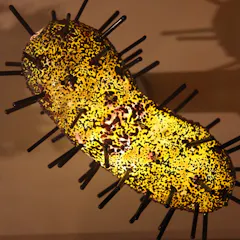
Cases of plague have been reported in the Chinese city of Yumen, where a man has died of the disease. Control measures taken by the authorities include travel restrictions in and out of the city, and 151…
Top contributors
-

Associate Professor of History, Rutgers University - Newark
-
Assistant Professor of Microbiology-Immunology, Northwestern University
-
MPhil Candidate in Bioscience Enterprise, University of Cambridge
-
Associate Professor of Microbial Bioinformatics, Nottingham Trent University
-
Professor of Infectious Diseases, Monash University
-
Lecturer, California State University, Long Beach
-
Postdoctoral Fellow in Bacteriology, Northwestern University
-
Professor of Anthropology, University of Tennessee
-
Professor of Chemistry, Connecticut College