
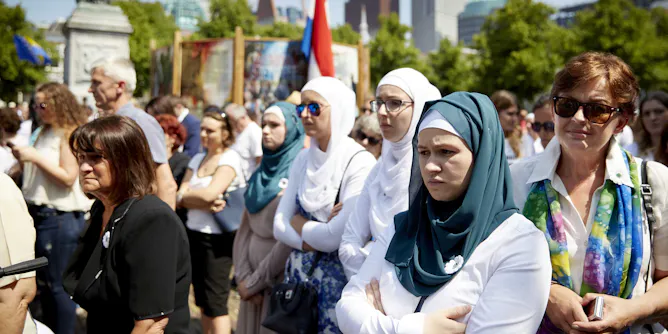
Genocide has occurred throughout history, from the very beginnings of the social organisation of human communities until the present. But working out what do about it is no easy task.
Articles on World War I
Displaying 281 - 300 of 371 articles
Rupert Brooke was commissioned in the Royal Navy Volunteer Reserve as a Sub-Lieutenant. Without seeing combat, he died aboard a French hospital ship, from a mosquito bite that turned septic.
The torpedoing of the passenger liner in 1915 was abhorrent but the story behind the story reveals one of the first effective government propaganda campaigns
Never has the Anzac tradition been more popular and yet never have its defenders been more chauvinistic, bellicose and intolerant of other viewpoints.
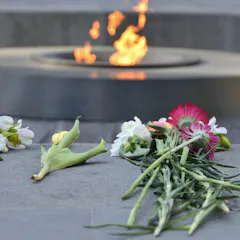
A century on, the murder of 1.5m Armenians by the Ottoman Empire must be recognised as genocide.
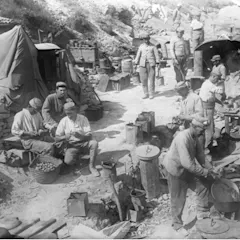
As Australians commemorate the Anzacs who died at Gallipoli, spare a thought for the 10,000 French soldiers who also died on the Dardanelles in the first world war.
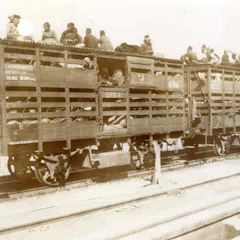
In 1915 and 1916, the Ottoman Armenians were destroyed as an organised community and more than one million of their number were killed – just as the Allies’ failed invasion of Gallipoli took place.
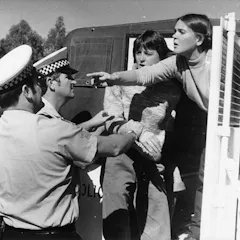
Protests on Anzac Day, rather than being ‘utterly alien to Australians’, have a long tradition and embody the democratic right to dissent for which the troops fought.
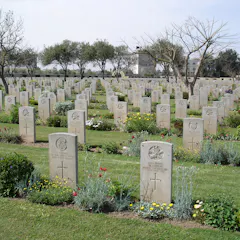
We are used to thinking of Gaza as a war-torn stretch of ground. A place where life goes grimly on in the face of an intractable conflict. A graveyard not only for civilians caught in the crossfire, but…
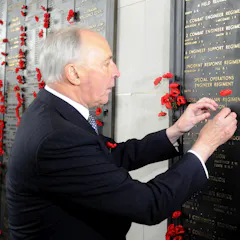
There is a complicated story involving the Anzac legend and the left between the 1920s and the 1960s which historians have barely begun to untangle.
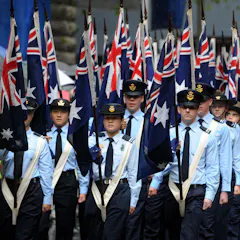
When Australian soldiers fought at Gallipoli, they did so under the Union Jack. Our flag has changed since then and debates about national identity have shifted. Is it now time for a new flag?
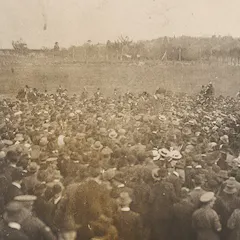
The democratic freedoms Australians hold dear today – freedom of the press, assembly and speech – were won on home soil by courageous women and men who sacrificed much, but rarely recognised for it.
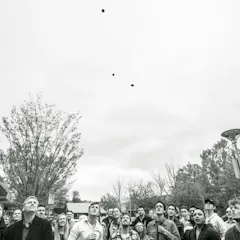
Anzac Day is the one day of the year it’s legal to play two-up. If we want to retain the thrill that was so important to the diggers, we’d keep it illegal rather than sanitising the practice.

For contemporaries and later for historians, shell shock came to encapsulate all the horror of a new form of industrialised warfare.
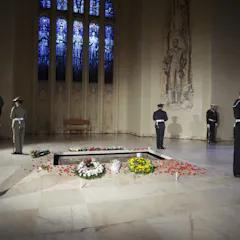
Why did it take three-quarters of a century beyond the first world war for Australians to build our own tomb of the unknown soldier, remembering the 23,000 Australians who died with no known grave?

The appalling conditions at Gallipoli indicate the wholly inadequate planning and response of the British and Allied military authorities to basic human needs.

What is rare in Australia is an adequate explanation and understanding of the Turkish perspective of the Gallipoli campaign.
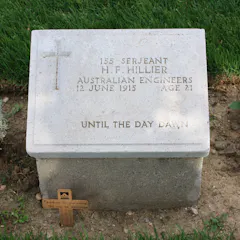
It was not the excitement but the seriousness of the first world war that captured the imaginations of Australians. The experience of 1915 had a marked effect on local commitment to winning the war.
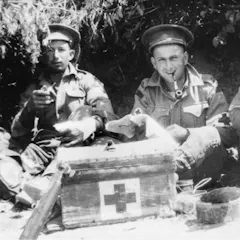
War history used to be brought to TV audiences by donnish lecturers but historical reconstructions now hold sway. Two recent docos about Gallipoli are hybrid examples of the form that help us better understand the past.
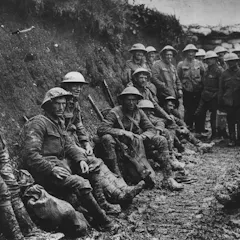
Local loyalties, differences and antagonisms were everywhere affected and often amplified by the advent of the first world war.
Top contributors
-

Chancellor's Professor of Medicine, Liberal Arts, and Philanthropy, Indiana University
-
Principal Lecturer in History, Manchester Metropolitan University
-
Professor, University of Leeds
-
Senior Lecturer, School of Humanities and Social Sciences, Deakin University
-
Lecturer in History, University of Auckland, Waipapa Taumata Rau
-
SEACAMS R&D Project Manager, Centre for Applied Marine Sciences, Bangor University
-
Professor of Economics, University of Warwick
-
Associate Professor in Politics and International Relations, Monash University
-
Associate Professor, School of History, ANU / Chercheur Associé at the Centre d’Histoire de Sciences Po, Australian National University
-
Assistant Professor of Literature and History, University of Warwick
-
Reader in Modern Political History, Loughborough University
-
Senior Lecturer in Sociology, Adelaide University
-
Senior Lecturer in Modern European History, Cardiff University
-
Professor in German Studies, The University of Melbourne
-
Professor of Creative Arts, Griffith University