
The recovery of Medellín in Colombia depended on a city government that could combine security, investment and capable utilities.
Articles on World Cities Day 2026
Displaying all articles
Urbanisation is experienced through growing tensions within families over precious yet meagre plots of land.

Chinese-funded infrastructure projects in African cities are driven by the national elites and therefore do not necessarily lead to community-level improvements.
Rural people mostly grew their own food. But in the city, the daily meal became a commodity to be bought and sold.
African cities need institutions that can adapt, transparent decision making, and collaboration with civil society and the private sector.
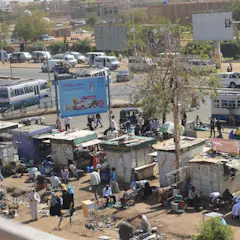
It’s time to rethink how Africa’s public spaces are defined and designed – by listening to how people already make cities public.

There’s an opportunity for Africa’s cities to learn from the successes and challenges faced by cities in other parts of the world.
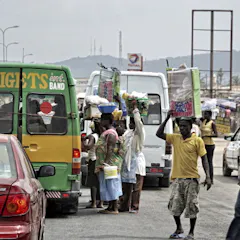
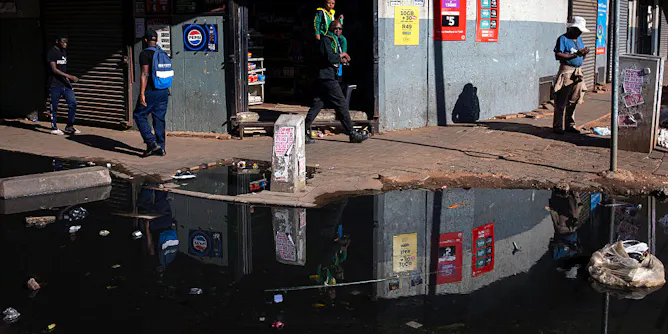
Walking is a common way of getting around in most African cities.
Top contributors
-

Research associate at African Centre for Cities, University of Cape Town
-
Senior Lecturer, University of Environment and Sustainable Development
-
Associate professor, UCL
-
Teaching Assistant Professor, University of Pittsburg and Visiting Associate Professor, The University of Osaka, University of Pittsburgh
-
Assistant Professor, Department of History, West Virginia University
-
Postdoctoral fellow, Georg-August-Universität Göttingen
-
Associate Professor of Urban & Environmental Design, University of Khartoum
-
Assistant Professor, Cornell University
-
Project Manager/Researcher (Urbanisation in Developing Countries), University of Oxford
-
Professor, Federal University, Oye Ekiti
-
Associate lecturer, University of Pretoria
-
Research Active Lecturer, Discipline of Psychology, Charles Darwin University, Charles Darwin University
-
PhD Candidate, University of Memphis