

How many days you spend in the office matters less if your colleagues are not there with you.
Articles on Work-life balance
Displaying 1 - 20 of 174 articles

Getting into a tenured position in higher education and research can be likened to an obstacle course – this is particularly true when women add motherhood into the mix.

A more sustainable approach sees careers as one part of a meaningful life, not the entire foundation of it.

A typical weekday in Denmark and the UK looks similar on the surface, but hour by hour, the differences tell an interesting story.

Feeling in control is not always good for us.

On-call work doesn’t always mean responding to an emergency. But you typically have to switch into work mode very quickly – so it can be hard to fully switch off.
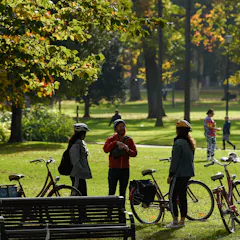
All but one of the companies researchers studied decided to continue with a four-day work week. And none reported a loss of productivity.

Reduced working hours could lead to important changes in how society is organised.

Flex work is proving a nightmare for HR managers in France. A new study carried out in Kazakhstan offers insight for negotiating the grey areas of “telework” legislation.
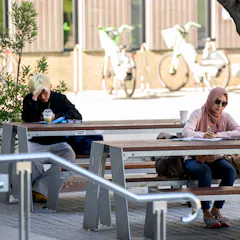
To protect against the ups and downs of student life, focus on the things you can control and set clear goals.

It’s a time when professional and personal responsibilities often rise rapidly.

Thinking about what makes work worth doing and what you would do with your time if you weren’t spending it at work are useful questions to pose this and every year.

Managers can feel isolated as they move up the professional ladder – and it has implications for how well a workplace functions.

But homeworking throws up tricky paradoxes that need to be understood.

Faculty members say they are worried about job security but also whether they should be introducing certain topics, like gender, in their class or with colleagues.

For leaders, sleep isn’t just a health issue, it’s a performance issue. Sleep-deprived leaders are less inspiring and they can lose moral clarity.

Workers who get time off to relax, learn new skills or connect meaningfully with their friends and relatives have more energy, are in better moods and can do their jobs better.

More free time for younger people might be more efficient.

When boundaries around working hours grow increasingly blurred, this can lead to terse online exchanges that sap recipients’ wellbeing.

Recent research shows it can help with creativity and confidence.
Top contributors
-

Associate Professor Leeds University Business School, University of Leeds
-
Professor of Sociology and Founding Director of The Future of Work Lab, Podcast at MissPerceived, The University of Melbourne
-
Dean's Chair in Management and Māori Business, Te Kunenga ki Pūrehuroa – Massey University
-
Professor of Management, Deakin University
-
Professor and Lincoln Professor of Ethics in Public Affairs, Arizona State University
-
Professor of Organisational Psychology and Health, University of Manchester
-
Emeritus Professor University of South Australia, Adelaide University
-
PhD Candidate in Anthropology, UCL
-
Director of the King's Global Institute for Women's Leadership, Professor of Work and Employment, King's College London
-
Professor of Quantitative Social Science, UCL
-
Professor of Organizational Behaviour, University of Guelph
-
Professor and Head, Department of Marketing, Griffith University
-
Adjunct Professor, Business School, University of Technology Sydney
-
Associate Head of School (Research), UniSQ School of Business, University of Southern Queensland
-
Associate Professor in Marketing, Griffith University