

As people flock back to offices and pack public transport, we’re seeing more cases of the flu than in recent years. The flu shot isn’t perfect but it cuts your chance of being hospitalised.
Articles on Winter health
Displaying 41 - 60 of 91 articles

Children aged under six years shouldn’t have cough syrup. It’s not only ineffective, it can be harmful.
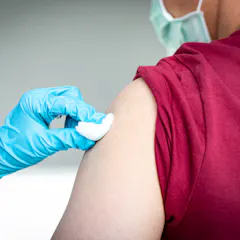
Flu vaccinations protect against four subtypes of influenza. But we don’t know what subtypes will circulate this flu season.

If you’re over 65, you’ll likely get an immune-boosting flu shot. And there are options for those who don’t want a vaccine made with eggs – though the standard shots are safe for those with allergies.

Far from a mild disease, the flu can cause serious illness and death, particularly among children and older age groups. The flu vaccine isn’t perfect, but it’s the best way to protect yourself.

Your rapid antigen tests say you’re COVID-negative but you still have cold symptoms. Generally, you should stay away from others until you’re well again.

It’s much more likely your child’s symptoms are caused by a common respiratory virus than COVID-19. But it’s important to follow testing guidelines and keep them home if they’re unwell.

Keeping kids active in winter can be a challenge, as cold temperatures and icy conditions often mean more time indoors. Here’s how to maintain a healthy activity level throughout Canadian winters.

Shovelling snow is excellent exercise that works the upper and lower body. However, it’s important to remember that digging out from a storm pushes many people to their maximal fitness capacity.

The headlines paint a picture of a frightening flu season. While this season set in earlier than usual, it’s not necessarily more severe than previous years.

Washing your hands helps protect against the flu. So it makes sense for governments to make hand sanitisers available in public places.

Headlines about this year’s flu season have been alarming. It’s true, we are having a serious season – but the data doesn’t indicate it’s the worst one we’ve ever had.

The flu vaccine is built on the strains expected to circulate in a given year. While the majority of strains circulating this year are matched in the vaccine, there’s one strain we didn’t predict.

Research into our brain, gut and childhood memories tells us why we reach for macaroni cheese rather than salad in winter.
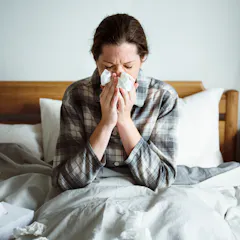
The flu vaccine takes about two weeks to start working and only protects against influenza, so you can still get sick from other viruses after your flu shot.

The adjuvanted flu vaccine is free for over-65s and offers better protection than the standard vaccine. Here’s what the research says.

Protection wanes after four or five months, so for most people, it makes sense to get a flu shot in mid to late May or early June so you’re protected when the flu season peaks in August or September.
Winter comes with colder temperatures. You and your body can work together to stay comfortable.

Illness often strikes when you’re stressed at work, not sleeping properly, or you’ve been out partying a little too much. Here’s why.

From vitamin C to chicken soup, there are many supposed remedies for treating a cold. Here’s what the evidence says.
Top contributors
-

Professor of Infectious Diseases, Monash University
-
Professor of Medicine, Monash University
-
Specialist General Practitioner, and Conjoint Senior Lecturer, UNSW
-
Paediatrician, Infectious Diseases Physician and Clinical Microbiologist, The Kids Research Institute Australia, The University of Western Australia
-
Paediatrician & Infectious Diseases Physician; Senior Lecturer & NHMRC Fellow, Faculty of Medicine, University of Sydney
-
Professor of Biostatistics and Epidemiology, Adelaide University
-
Lecturer in Pharmacy and Pharmacology, Adelaide University
-
Professor of Infectious Diseases and Microbiology, Australian National University
-
Senior Lecturer; MD, Victoria University
-
Professor Emerita, Nursing, School of Nursing and Midwifery, Griffith University
-
Distinguished Professor, Professor of Immunology, RMIT University
-
Deputy Director, WHO Collaborating Centre for Reference and Research on Influenza
-
Associate Professor and Research Leader in Virology and Infectious Disease, Griffith University
-
Conjoint Associate Lecturer, Faculty of Medicine, UNSW
-
Professor of Infectious Diseases and Global Health, University of Sydney