
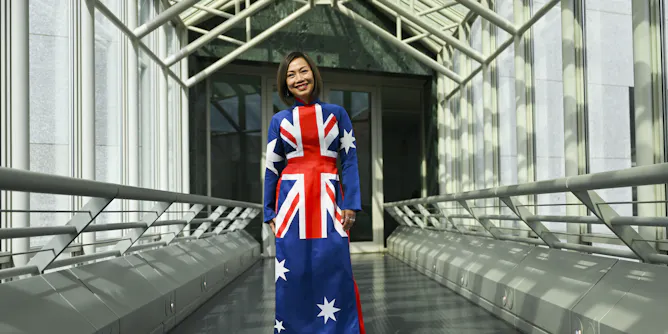
In this podcast, Le canvasses the challenges her constituents are facing with the cost of living crisis and the aftermath of the curfew placed on her electorate during the COVID-19 lockdowns.
Articles on Voice to Parliament referendum
Displaying 41 - 60 of 70 articles
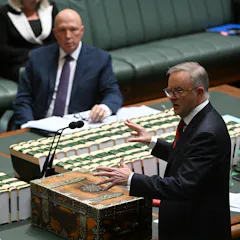
While a loss would have a negative impact for the opposition leader, especially in teal seats he needs to win, it would have more serious challenges and consequences for Albanese

We need a richer account of democracy within which to locate the Voice, to lift the quality of public debate about it.
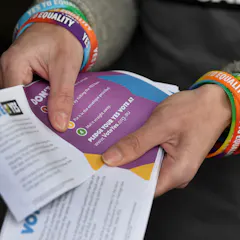
In order to combat racism and misinformation, it is vital for non-Indigenous people to have informed conversations about the referendum with those around you.

It’s important to understand that a First Nations consultative body such as the Customary Senate doesn’t pose a ‘threat’ to democracy or the rule of law.
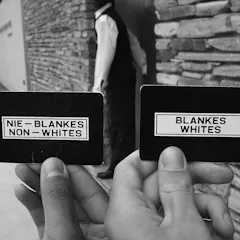
Some media and politicians have been comparing the First Nations Voice to Parliament to apartheid. However, ensuring First Nations peoples have their views heard by parliament is not the same thing.
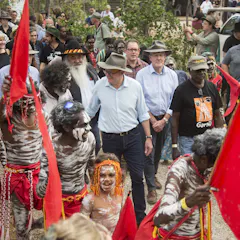
Anthony Albanese’s attention is laser-like on the Voice, and trying to get up a yes vote. Peter Dutton, for a mix of motives, is focusing on the NT situation, as he campaigns against the Voice.

The Coalition’s position on the Voice is entirely consistent with their partisanship in this area of Aboriginal policy since the 1980s.
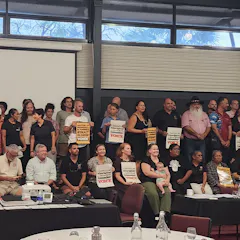
One crucial question about the Voice to Parliament is how it will ensure voices from regional and remote communities, such as those in the Kimberley, are truly heard in Canberra.
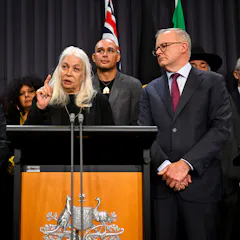
In this podcast, Michelle Grattan and Professor Marcia Langton discuss the Voice to Parliament and constitutional recognition for First Nations Australians
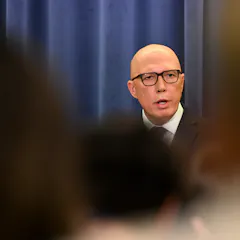
Voters will justifiably ask why they should vote for a form of recognition opposed by the people who are to be recognised.
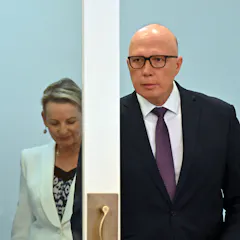
We are not the nation we were when we voted ‘no’ for a republic – but this seems to be the nation the Liberal Party insists on speaking to.
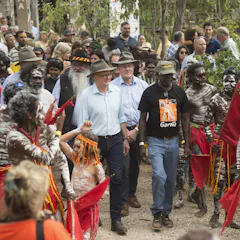
We now know the wording of the Voice referendum and proposed constitutional amendment. But what may have been forgotten is how we got here in the first place – and why it matters.
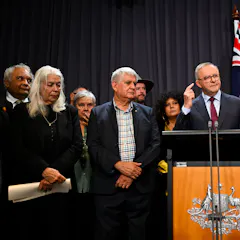
Here’s what the question says, what’s new and what happens next.
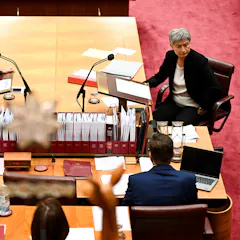
The bill that has passed through the Senate provides for a robust referendum, although there is still room for improvement.

What Yorta Yorta leader William Cooper was asking for was a means by which Australia’s lawmakers could be informed of the views of Aboriginal people.
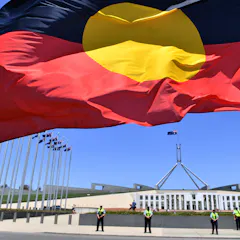
The current draft wording is the model most consistent with Australia’s current and historical constitutional practice.

The sad reality is that if the demands of these early activists had been met nearly a century ago, we would not be suffering the severe disadvantage that hovers over Aboriginal lives still today.
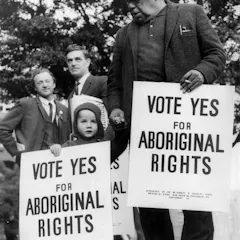
If the 2023 referendum fails, it will at least in part be due to the shortcomings and spoiled hopes of 1967.
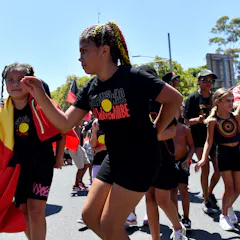
With less adherence to party politics and a broadly progressive viewpoint, young people will play a key role in the outcome of the Voice to Parliament referendum.
Top contributors
-

Professorial Fellow, University of Canberra
-
Professor Emerita in Constitutional Law, University of Sydney
-
Associate Professor, Faculty of Law & Justice, UNSW
-
Professor of Law, UNSW Law School, UNSW
-
Senior Lecturer of Indigenous Studies, Indigenous Education and Research Centre, James Cook University
-
Professor of Political Communication; Director CAJII, The University of Melbourne
-
Honorary Professor, University of Sydney
-
Professor in Human Rights and International Law, University of Newcastle
-
Director, La Trobe Centre for Global Security, and Professor of International Relations, La Trobe University
-
Election Analyst (Psephologist) at The Conversation; and Honorary Associate, School of Mathematics and Statistics, The University of Melbourne
-
Principal Research Fellow, James Cook University
-
Translational Fellow Nulungu Research Institute, University of Notre Dame Australia
-
Lecturer, Griffith Law School, Griffith University
-
Associate Professor, Macquarie University
-
Senior Lecturer, School of Humanities and Social Sciences, Deakin University