

Among the common but lesser-known consequences of intimate partner violence is a heightened risk for cardiovascular disease.
Articles on Violence against women
Displaying 41 - 60 of 304 articles

Past research has looked at the objectification of women and violence against them. Our new study makes it personal.

Stalking rates have remained stubbornly consistent in Australia, but there is one relatively simple thing governments could do right now to help.

One recent analysis of almost 100,000 deepfake porn videos found South Korean women and girls featured in more than half.

Kathryn Joy’s father murdered their mother. A new Australian documentary traces eight years of a journey of self-discovery, through Kathryn tracing their family’s violent history.

The rise of misogynist attitudes among Australian boys occurs alongside an existing crisis — endemic levels of gender-based violence and murder perpetrated against women.

Exposure to extreme content does not guarantee radicalisation. Extremist messaging is most effective when it taps into real and perceived grievances young people may be experiencing.

Around the world, violence against girls and women is on the rise. Researcher Stephanie Lamy has investigated misogynistic online subcultures to find out why.

Incarcerated women need trauma-informed support and mental health services.

All of us have lost loved ones. Each of us know First Nations women and children who have been murdered and disappeared. This inquiry was welcome – but its recommendations fall far short of justice.
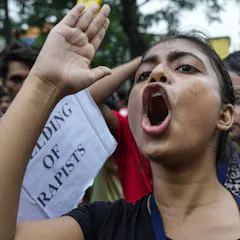
The rape and murder of a medical trainee in a hospital in Kolkata, India has sparked a string of nation-wide protests on the eve of India’s 78th anniversary of Independence from British occupation.

Marketed as a romance novel, between its pink, floral covers, It Ends with Us is a novel about domestic violence. The film attempts to rectify the issues of its deceptive categorisation.

Programs to help men to stop using violence are crucial, but are men meaningfully engaging with them? Our new study found opportunities to increase engagement, and in doing so, better protect women.
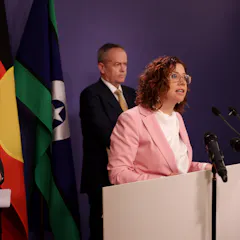
The federal government has only fully accepted 13 recommendations of 172 for which it has primary or shared responsibility with the states.

Missing from the conversation is what’s behind the emergency: the misogyny and male violence that underpins these stark figures.

The way media reports on domestic abuse must be more sensitive.

By exploiting their victim’s disability, perpetrators increase their power and coercive control, thereby intensifying the abuse.

Data from the Australian Institute of Criminology shows alarmingly high rates of sexual violence perpetration. Here’s what is shows.

Women who have moved to Australia, particularly from traumatic settings, are particularly at risk of gendered violence. Here’s what our research found helps them to speak up.

Some countries closer to achieving gender equality still have high rates of domestic violence, but look a bit closer and you’ll see the full story.
Top contributors
-

Professor of Family and Sexual Violence, RMIT University
-
Professor (Practice), Faculty of Business and Economics, Monash University
-
Professor of Social Work; Leneen Forde Chair in Child & Family Research, Griffith University
-
Professor, Department of Sociology & Anthropology, University of Guelph
-
Professorial Fellow, University of Canberra
-
Professor of Criminology, Durham University
-
Associate Professor in Criminology, The University of Melbourne
-
Chief Investigator for the Australian Research Council Centre of Excellence for the Elimination of Violence against Women (CEVAW), School of Philosophical, Historical & International Studies, School of Social Sciences (SOSS), Monash University
-
Associate Professor of Social Work, The University of Melbourne
-
Professor, Center for Research on North America, Universidad Nacional Autónoma de México (UNAM)
-
Managing Director, Her Story Consulting & Postdoctoral fellow, Australian National University
-
Eleanor Rathbone Chair of Sociology, University of Liverpool
-
Professor in Criminal Law, Durham University
-
Professor of Communication Studies; Research Chair on Intersectionality, Violence and Resistance, Concordia University
-
Professor of Cybercrime and Gender, University of Portsmouth