
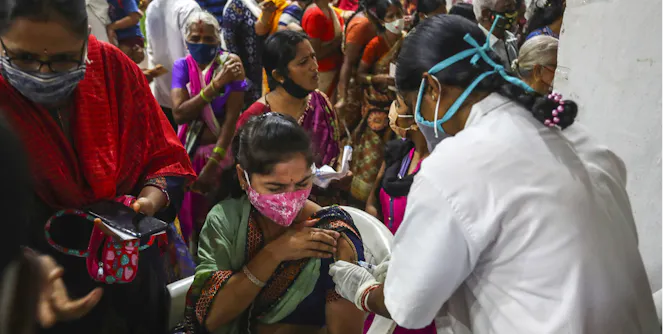
A public health scholar based in New Delhi explains how India has emerged from the massive spike in COVID-19 cases, even as the country braces for a new wave.
Articles on Vaccination
Displaying 301 - 320 of 686 articles

People with weakened immune systems are at a high risk of severe and prolonged COVID-19 infections. An extra vaccine dose can bolster protection.

The federal government has announced the Pfizer vaccine will be available to all Australians from August 30. Though there may well be long waits.

With the reality of the COVID situation in Australia, particularly in New South Wales, some older adults could literally die waiting.

For the one in 10 people with a significant fear of needles, getting a vaccination is distressing. This can disrupt vaccination campaigns, but there are effective ways to manage pain and fear.

New Zealand has been free of COVID-19 community infection since February, but a single confirmed case in Auckland has seen the government again adopt the ‘go hard, go early’ approach.

Coverage of Russian vaccination rollout has focused largely on concerns about ethics of development and inconsistent messaging. But Russian-language research complicates this picture.

While emergency use authorization gets vaccines out to the public more quickly, it doesn’t skip any steps that full approval requires.
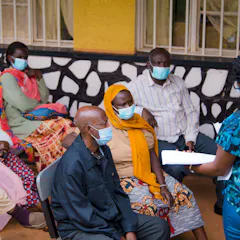
In Africa, it’s more rational to prioritise vaccine access, rapid rollout and community engagement, than pushing the narrative of vaccine-induced population immunity.

After the CDC changed course in late July, recommending universal masking indoors, Nevada became the first state to adopt a flexible masking policy that can quickly adjust to changing COVID-19 rates.

14% of Australians aged 18-49 are unwilling to get vaccinated, and almost 15% are unsure.

Vaccine efficacy is usually expressed as a percentage, but what is it actually measuring? Statisticians explain what the numbers mean, and what they say about how well a vaccine can protect us.

A discussion is long overdue on how immune-insecure people have to deal with COVID-19.

It seems things have shifted slightly since earlier in the pandemic. A growing proportion of people hospitalised with the Delta strain are aged in their 30s or 40s.

Coordinate, motivate, deliver. That’s only the start of the jargon in Australia’s plan to vaccinate the nation.
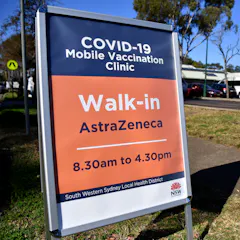
Cash incentives are likely to be effective for people who are willing to get vaccinated, but haven’t done so yet. Freedom incentives could shift those who are unsure or unwilling.

It is bad practice to compensate people who choose not to do the right thing, and it can create expectations.

Having been protected by geography early in the pandemic, Pacific nations are now battling serious outbreaks and struggling to get their people vaccinated.
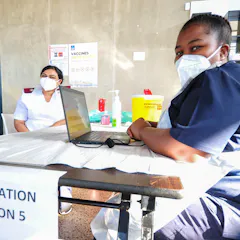
Any vaccine rollout plan that does not place the needs of people first, whether it involves the public or private sector or both, is bound to fail.

Research shows small rewards can make all the difference.
Top contributors
-

Professor, Discipline of Paediatrics and Child Health, University of Sydney
-
Professor, The Children's Hospital at Westmead Clinical School and Sydney Infectious Diseases Institute, University of Sydney
-
Professor, School of Public Health, University of Sydney
-
Professor of Infectious Diseases, Monash University
-
Extraordinary Professor, Global Health, Stellenbosch University; South African Medical Research Council
-
Hon Prof, Dept of Child & Adolescent Health, University of Sydney
-
Professor of Infectious Diseases and Global Health, University of Sydney
-
Assistant Professor of Pediatrics, University of Colorado Anschutz
-
Paediatrician and Infectious Diseases Specialist; Clinical Researcher, University of Sydney
-
Honorary Research Fellow, Macquarie University
-
Professor of Global Biosecurity, NHMRC L3 Research Fellow, Head, Biosecurity Program, Kirby Institute, UNSW
-
Professor, School of Social Sciences, The University of Western Australia
-
Associate Principal Research Fellow, Burnet Institute
-
Professor of Biostatistics and Epidemiology, Adelaide University
-
Professor in Applied Mathematics, University of Canterbury