
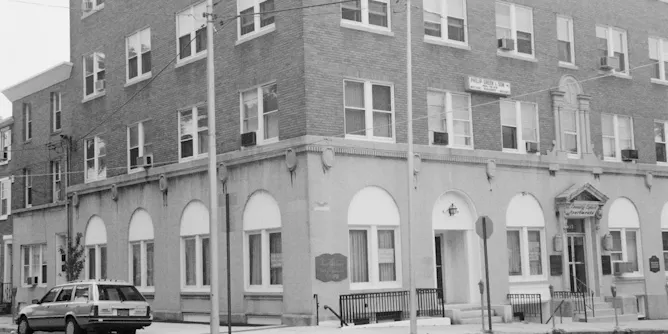
Donald Trump has a partisan ally running the FBI. He’s urged retribution against his perceived enemies. Will today’s FBI repeat the vast, unconstitutional persecutions of the J. Edgar Hoover era?
Articles on US history
Displaying 61 - 80 of 577 articles

These sites of national significance hold surprising treasures no less wondrous than the big-name destinations, potentially right around the corner from your home.
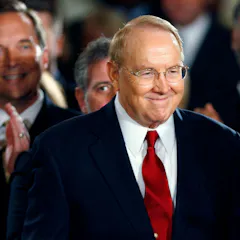
For Americans who do not follow evangelical Christian media, James Dobson may not have been a household name. Yet the views he promoted shaped US society for more than 50 years.
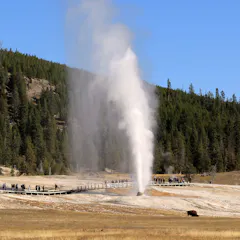
Native American groups were aware of the region’s dramatic features. Since the national park’s creation, other faiths have also been inspired by its beauty, from Christians to New Age groups.

A 1952 law that President Harry S. Truman opposed, calling it a step backward, now underpins many actions by the Trump administration against noncitizens in the US.
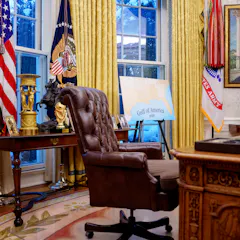
A nation’s history is told by its records. The White House no longer publishing Trump’s full remarks makes this history less complete.

How has white Christian nationalism changed since the Gilded Age? A religion scholar compares the Social Gospel with the Christian right today.

Hailed as a returning hero, the Marquis de Lafayette made a grand tour of the US in 1824-25, just before the country’s 50th birthday.
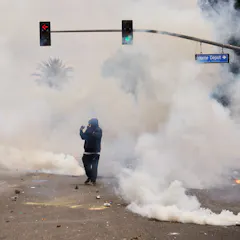
As President Trump sends National Guard troops to Los Angeles, a military historian explains why crowd control is one of the Guard’s most challenging and dangerous missions.
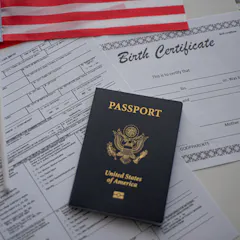
Three federal judges have struck down Trump’s executive order on birthright citizenship since he signed it in January 2025. Now, the Supreme Court will hear arguments in the case.

Americans often expect former presidents to not talk about current ones. But it’s not really a surprise that several are criticizing Donald Trump.
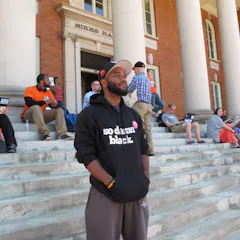
There’s an impulse by universities and media to inaccurately document hip-hop’s history. The genre is, in part, a response to that imprecision, a professor of hip-hop writes.
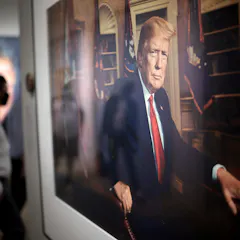
Most recent debates center on how much attention should be given to the history of the nation’s accomplishments over its darker chapters.
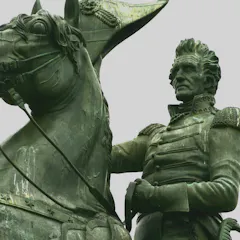
Andrew Jackson was the first president to defy the US supreme court. The question is whether Donald Trump will take a leaf out of his book.

Trump wants Ukraine to repay the US for the military aid it sent Kyiv. Once upon a time, the US was more generous: It rebuilt Western Europe after World War II.

John Adams signed the Sedition Act in an attempt to silence dissent. Some other Founding Fathers thought that muzzling the press would mean the end of the republic.
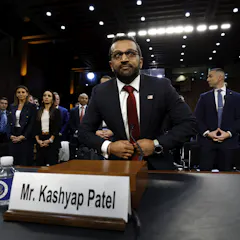
Some observers compare FBI Director Kash Patel to J. Edgar Hoover. A better historical match is the politically motivated William J. Burns.
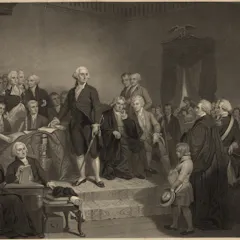
The first president realized that working with Congress – not alone or against it – was the best way to actually create an efficient federal government.
The early 1920s in the US offers historical lessons on how current pessimism about the state of the country can manifest in dangerous, discriminatory ways.
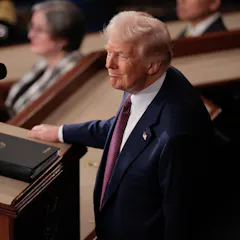
When the US Constitution was written, many people − from those who wrote the document to those on the outside who read it − believed that endowing the president with kinglike powers was dangerous.
Top contributors
-

Professor of History, Penn State
-
Associate Professor of Instruction, The University of Texas at Austin
-
Distinguished Professor and Professor of the Humanities, USC Dornsife College of Letters, Arts and Sciences
-
Professor of Urban Policy and Planning, Hunter College
-
Visiting Assistant Professor of History, Miami University
-
Distinguished Professor of History and Environmental Studies, Penn State
-
Professor of Journalism, Indiana University
-
Professor of History and Provost Emeritus, Binghamton University, State University of New York
-
Emeritus Professor of Life Sciences, Arizona State University
-
Associate Professor of History, Deakin University
-
Professor of History, University of New Hampshire
-
Chester D. Tripp Professor of History, Yale University
-
William Nelson Cromwell Professor of Jurisprudence and Political Science, Amherst College
-
Professor of History, The Ohio State University
-
Professor of Earth Science, University of Connecticut