
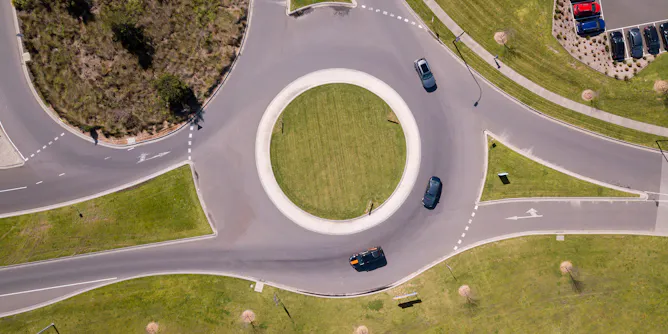
There’s more spending on small local projects, so does it follow that it’s ‘pork-barrelling’? A new report shows what really matters is if the money is allocated under objective, transparent criteria.
Articles on Urban transport
Displaying 21 - 40 of 101 articles
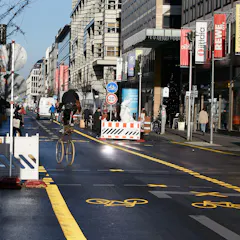
Residents across the world have seen how the pandemic has ushered in changes – shall and big – to the way their cities look and function.
London was rated 2021’s most congested city.
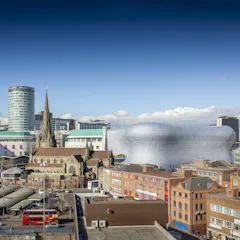
When it comes to ring roads, Birmingham has a poor track record. Can the city’s new transport plan buck that trend and benefit both its inhabitants and the environment?
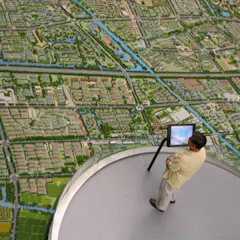
The pandemic has accelerated some urban trends and reversed others, while focusing attention on the vulnerabilities of cities. The old planning certainties will have to be revisited.
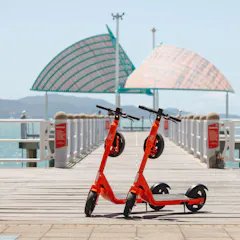
A new study shows e-scooter hire schemes increase the number of tourism destinations visitors can reach. And once at these destinations, e-scooter users spend more.

A global study of 117 cities finds Australian capitals have fairly poor access by car. Public transport, cycling and walking access is better than in the US, but not as good as in Europe and China.
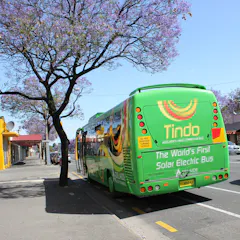
Transport is the one sector where Australia hasn’t reined in the growth in greenhouse gas emissions. Electric cars will cut emissions but still leave us with all the other problems of car use.
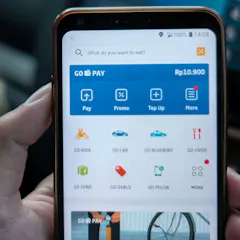
It has happened with software, computing and entertainment, but we’re still waiting for the platform needed for mobility as a service to reach its full potential.

Electric scooter rides soared from zero to 88 million a year between 2017 and 2019. But launching e-scooters in cities without safe infrastructure or clear rules of the road can be deadly.

In many cities contemplating new light rail systems, bus rapid transit offers a cheaper, faster and more flexible solution.

Green hydrogen produced using New Zealand’s mostly renewable electricity sounds like a great idea, but a high-tech smart rail and urban tram network is a more obvious and sustainable option.
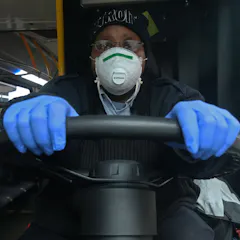
Recent federal mask mandates on all public transit have burdened bus drivers with difficult and sometimes dangerous duties to reduce the spread of the coronavirus.

And the winner is … e-bikes? A new entrant is set to overtake Brisbane’s CityCycle scheme in the race for the shared mobility market.
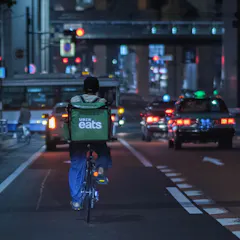
Delivery riders are paying the ultimate price for the fact that our cities, their infrastructure and the rules governing them make cycling much more dangerous than it should be.
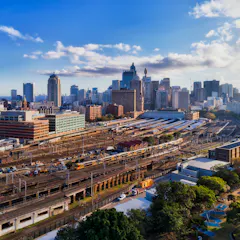
Coronavirus has changed population projections and behaviours across society. With fewer commuters we need to shift transport planning based on a hub-and-spoke network to focus on more local travel.
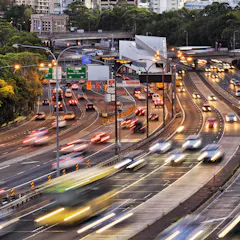
Car use and cycling have soared to above pre-pandemic levels in our biggest cities (Melbourne is an obvious exception). Walking is not far behind, but public transport is being shunned.
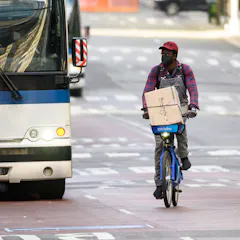
Low-income and minority groups are often reliant on cheaper modes of transport, but many find cycling to work problematic.
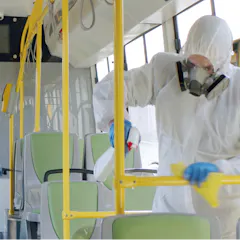
Some new habits we’ve seen emerging during the pandemic could help us solve tricky problems like traffic congestion, which have challenged our cities for a long time.
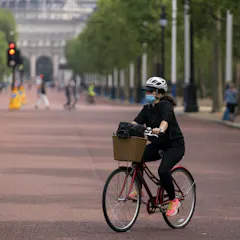
As lockdowns ease off, there is a danger that the old city traffic jams will soon be back with a vengeance.
Top contributors
-

Honorary Professor of Planning, The University of Queensland
-
Professor of Sustainability, Curtin University
-
Professor of Transport Technology and Sustainability, Swinburne University of Technology
-
Adjunct Researcher, Cities Research Institute, Griffith University
-
Associate Professor in Urban Planning, The University of Queensland
-
Transport and Cities Program Director, Grattan Institute
-
Senior Research Fellow, Cities Research Institute, Griffith University
-
Adjunct Professor, Institute of Transport and Logistics Studies, University of Sydney Business School, University of Sydney
-
Assistant Professor, National Yang Ming Chiao Tung University, Taiwan, Griffith University
-
Adjunct professor, School of Media and Communications, RMIT University
-
Professor of City Planning and Transport, Curtin University
-
Honorary Senior Fellow in Transport Planning, The University of Melbourne
-
Associate Professor of Urban Planning, The University of Melbourne
-
Professor and Head of the School of Civil and Environmental Engineering, UNSW
-
Senior Research Fellow, Curtin University