

Black academics can mourn a young colleague while also anticipating the burden his case may place on scholars who may find their own qualifications subjected to renewed suspicion.
Articles on university education
Displaying 1 - 20 of 38 articles

For experiential learning to remain vital, it must engage communities to improve social outcomes.

Alternative educational movements offer insights about how to help university students find purpose and hope as they navigate an increasingly complex world.
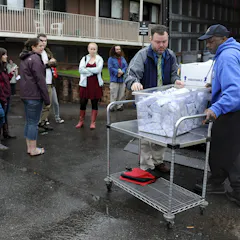
Universities need to move away from competing over rankings, and instead focus on building a collaborative educational system that puts collective well-being first.

Personalized role-play simulations, grounded in student experiences, can pave the way for more equitable, empowering education.
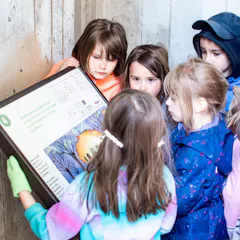
Who belongs at university? Fostering connections between a downtown campus and families facing social, cultural and economic barriers can begin early with literacy and community-building programs.
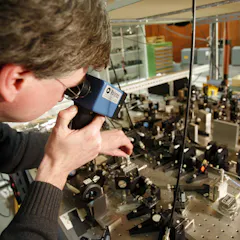
Universities and colleges nationwide are beginning to investigate quantum education to develop a workforce ready for quantum technology.

Don’t feel you need to rush out and enrol in a degree on how to become an AI engineer (unless, of course, that is where your interest and passion lie).

Canada needs the arts, with its insights into human behaviour and thinking, more than ever. But governments and funding agencies should shift funding models for arts graduate education.
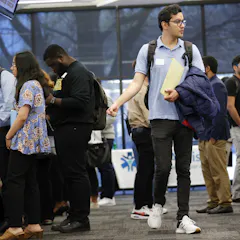
Students should know that a key part of the value of their undergraduate degree lies in taking advantage of all the opportunities for learning that universities offer.

Encouraging men to take the risk of expressing tender feelings for others is part of relying on love as a tool of anti-racist and decolonial education.
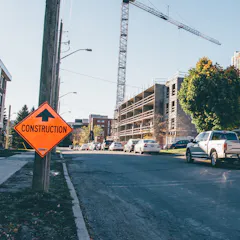
Local governments have far too often been let off the hook for approaches that discreetly limit where students may live.
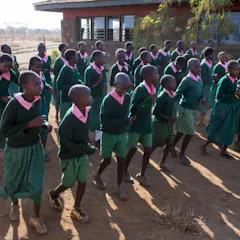
Kenya’s budgetary allocation misses opportunities to improve basic education and address unemployment.

Globally, mothers’ educational status has a greater influence over the level of education their children attain today than was the case for people born mid-century.
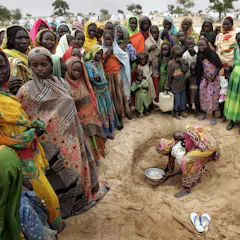
Many genocide classes review the Holocaust or Cambodia’s Killing Fields. A scholar wanted to show that genocide, war crimes, crimes against humanity and ethnic cleansing still happen today.
Seeing grit as a panacea among historically disadvantaged students can be a dangerous distraction from other barriers to student retention.

Four-fifths of the first-generation Turkish men who came to Europe as guest-workers and ended up settling there lived below an income poverty line.

Universities should look to democratic innovations seen in society like ‘mini publics’ where citizens deliberate about critical issues in representative forums.
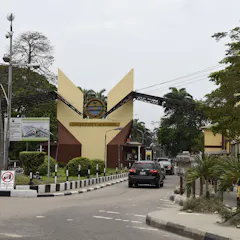
Creating more universities in Nigeria has serious implications for quality of graduates.

Australian media have and do unfairly report on Indigenous affairs and toxic environments are leading to fewer First Nations journalists. Should universities put cultural safety in journalism courses?
Top contributors
-

PhD Candidate, University of Canberra
-
Professor, Human Development and Family Science, The Ohio State University
-
Professor of Natural Sciences & Humanities Director of the MFA program in Creative Writing, Department of Philosophy, University of Wyoming
-
Academic Lead, Ethics and Professional Practice, Griffith University
-
Professor of English Language Teaching and Literacy Development, Rhodes University
-
GP and Clinical Skills Educator, Griffith University
-
Professor Emerita of Linguistics, American University
-
Assistant Professor, International Studies, University of Canberra
-
Senior Researcher, University of South Africa
-
Professeur de logement et dynamiques urbaines, Institut national de la recherche scientifique (INRS)
-
Founder of the DISE Collective & Associate Professor, Global Development & Political Economy, University of Toronto
-
Associate Professor, Department of Educational Studies, University of British Columbia
-
Professor, Department of Educational Studies, University of British Columbia
-
Associate Professor in Sociology, UCL
-
Professor of Philosophy of Science, Durham University