

New Zealand was mostly stable in key international rankings and domestic socio-economic measures. But there are signs of slippage in some areas and not enough progress in others.
Articles on Unemployment
Displaying 121 - 140 of 789 articles
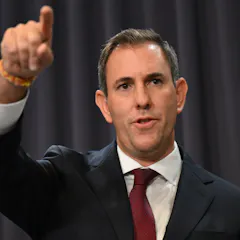
The economy is expected to grow and there are other positive signs ahead but the mid-year economic update has revealed the government will need to keep inflation in check.
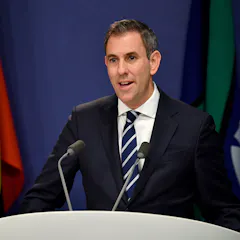
The Mid-Year Economic and Fiscal Outlook (MYEFO) shows the federal budget is headed for a small $1.1 billion deficit this financial year, according to the update.
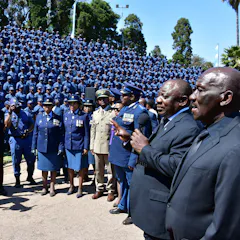
Government departments, civil society groups and the private sector should pool resources and work together in a co-ordinated manner to prevent violent crime.

Relax: keeping your sense of humour and taking regular breaks will go a long way in helping you land a job.

Laid-off Supie staff were paid by an anonymous donor – but many employees never get what they’re owed when a company fails. New Zealand should follow overseas examples to better protect workers.

Unrealistic criteria and poor communication are causing people who need it most to lose an important income support.
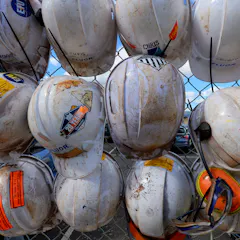
Four years after being made redundant, workers in coal-fired power stations made redundant make only one half of what they used to.

Paid domestic work has a low status in South Africa. The labour of domestic workers is often undervalued and unrecognised.

Trade unions want the Commonwealth Employment Service brought back, in part because the government manages contracts with private providers poorly. But it might also manage the service poorly.

People on benefits are borrowing from the government to pay for essentials like power bills and car repairs. But repayments leave them with even less than before.

30 years ago, Labor Prime Minister Paul Keating adopted an ambitious official target for Australian unemployment. The Albanese government just passed up a historic opportunity to go even further.
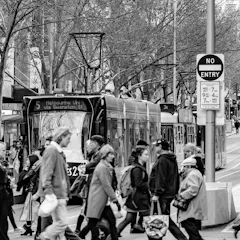
Put to the test in the past two years, the idea of a “natural” rate of unemployment has failed. There’s no need to push unemployment up to any particular rate to bring down inflation.

Efforts have been made to change the patterns of inequality in South Africa. But not enough has been done. Race-based inequality is still a real problem.

Armed police interventions are unconstitutional and incapable of addressing housing and safety in the inner city.
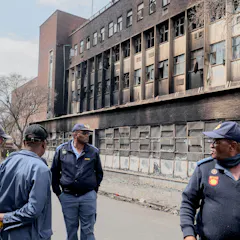
Inner city occupations and shack settlements alike are the inevitable consequence of the fact that huge populations of people have to get by without a living wage.
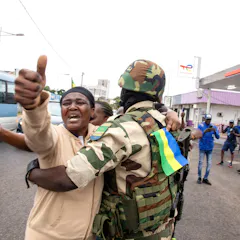
Failed developmental promises, ever shifting domestic elite alliances and popular demand for better living conditions contributed to the military removal of Gabon’s Ali Bongo Ondimba.

COVID-19-related support only reduced the negative impact of the pandemic on financial capital, and not on the other forms of capital
The Treasury and RBA believe Australia’s sustainable rate of unemployment is above 4%, but Australia’s leading economists think 3.75% is possible long-term, and have ideas about how to achieve it.
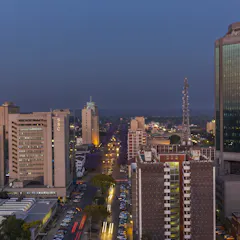
Without governance reforms, Zimbabwe will continue to face an economic crisis.
Top contributors
-

Visiting Fellow, Crawford School of Public Policy, Australian National University
-
Scientia Professor of Economics, UNSW
-
Professor of Economics, The University of Melbourne
-
Professorial Fellow, University of Canberra
-
Professor, Crawford School of Public Policy, Australian National University
-
Professor of Social Development Studies, University of Johannesburg
-
Professor of Economics & Business, Allegheny College
-
DSTI/NRF Research Chair in Welfare and Social Development, University of Johannesburg
-
Professor of Economics, University of Canberra
-
Pro Vice-Chancellor, Climate, Sustainability and Inequality and Director, Southern Centre for Inequality Studies, University of the Witwatersrand
-
Professor, Economics, University of the Western Cape
-
Associate professor, University of Johannesburg
-
Research Associate, School of Social Sciences, Monash University
-
Professor, School of Economics, The University of Queensland
-
Associate Professor, Research School of Economics, and Research Associate, Centre for Applied Macroeconomic Analysis, Australian National University