

To develop meaningful solutions, sexual harassment needs to be seen as an organizational issue and not just an interpersonal one.
Articles on Toxic masculinity
Displaying 41 - 60 of 129 articles

A new wave of research shows how working-class young men are changing their behaviour. But some remain hostile to the term “toxic masculinity” and see it as a vehicle for shaming men.
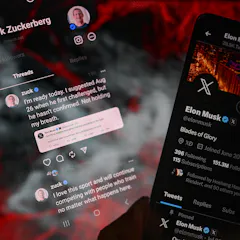
‘Performances of virility’ tend to coincide with beliefs that masculinity is either in crisis or under attack.

Examining the understandings of what ‘toxic femininity’ means to people can reveal insights about gender, power and the impact of language on health.

Efforts to disrupt online misogyny need to focus on stopping online forums from becoming misogynistic echo-chambers.

This is an intuitive finding, but we had little empirical evidence of it until now. It highlights the critical role fathers play in steering boys towards healthier expressions of masculinity.

Interviews with women officers show the extent of misogynistic culture within police forces.

The manosphere may not strictly be centred on misogyny, but in young men’s search for connection, truth, control, and community at a time where all are increasingly uncertain and ill-defined.

With sexism embedded into today’s social media landscape, it’s easy to ignore that conversations about equality can benefit both men and women.
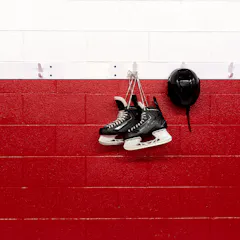
Sexual abuse allegations in Canadian hockey reveal the toxic masculinity that has permeated across sport culture.

Andrew Tate’s content offers a toxic blend of self-improvement and male supremacism.

Online personalities like Andrew Tate are using social media to amplify their misogynist and anti-woman rhetoric. Social media companies deplatforming them can cut them off from followers and revenue.

“Toxic masculinity” has been used to explain everything from the election of Donald Trump to why Ross from Friends is awful. But what does it actually mean?

Research into 70 new Taliban policies to control women and girls shows the extremist, misogynistic group might be using different tactics, but it still poses grave dangers to Afghan society.
The truth is that there are no easy and quick fixes, such as the governing party’s recent castration idea, which falls short on a range of scores.

Hockey Canada has fallen short of its mission to ‘Lead, Develop and Promote Positive Hockey Experiences’ in its handling of sexual violence perpetrated by and against Hockey Canada players.

A recent jury examining murders of women urged the federal government to add the term femicide and its definition to the Criminal Code.

Is Hockey Canada sincere in their quest for reform? Or has a freeze on federal funding and an exodus of major sponsors forced their hand?

This brainy feminist romp of a novel, loved by Rachel Cusk and Maria Semple, is often compared to Brideshead Revisited. But Carol Lefevre says it’s more like a sexy, sweary version of Nancy Mitford in 1960s London.
New research shows how threats of self-harm and suicide are a tactic of coercive control men use against female partners.
Top contributors
-

Professor Emeritus, Masculinities Studies, Faculty of Education, Western University
-
Professor of Sociology, School of Justice, Queensland University of Technology
-
Professor of Communication Studies, Colorado State University
-
Masculinities Scholar, Cardiff Metropolitan University
-
Professor of Sociology, University of British Columbia
-
Honorary Fellow in Sociology, Australian National University
-
Senior Lecturer, Discipline of English and Writing, University of Sydney
-
Insights Researcher, University of Bristol
-
Assistant Professor of Psychology, University of Richmond
-
Professeure associée au département des sciences sociales, Université du Québec en Outaouais et à l'Institut de recherches et d'études féministes, UQAM, Université du Québec en Outaouais (UQO)
-
Professeur, Université du Québec à Montréal (UQAM)
-
Associate Professor, School of Health Studies, Western University
-
Associate Professor, Organizational Behaviour, Athabasca University
-
Professor of Cybercrime and Gender, University of Portsmouth
-
Assistant Professor of Psychology, Villanova University