
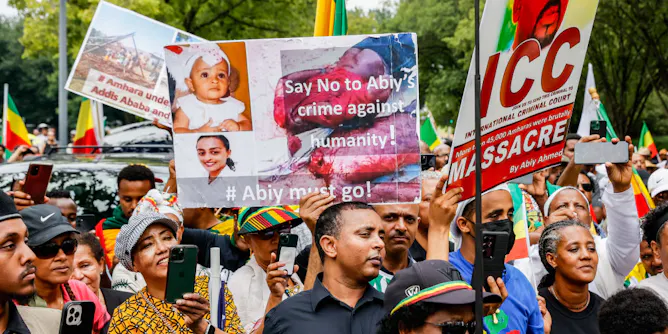
Abiy Ahmed’s use of the military to address a critical challenge is likely to fail.
Articles on Tigray war
Displaying 21 - 40 of 43 articles
There is increased demand to join BRICS in the emerging world order, partly as a countervailing power to “the west”.
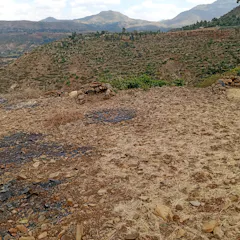
Typically, humanitarian concerns are prioritised following a war. But the environment must also get attention so that societies can produce food and goods to rebuild their lives.
Parties to the conflict in Ethiopia’s Tigray region have agreed to end hostilities after two years. Here is a selection of previously published articles on its devastating consequences.
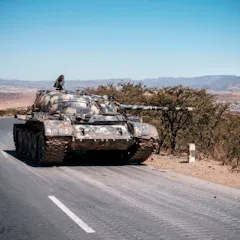
The African Union needs to launch a credible, robust mediation process with mutually accepted mediators.
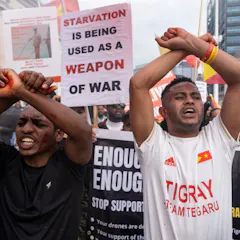
Leaders at the centre of the Ethio-Tigray war don’t believe in equal partnership. In their political cultures, winners take all.
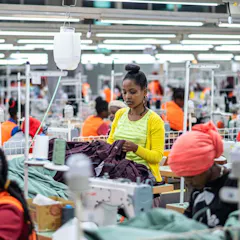
In democratic contexts, getting women into work empowers them. In autocracies like Ethiopia’s, this doesn’t hold. We found out why.
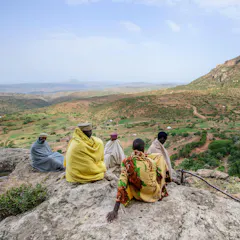
We used satellite imagery to track the decline of vegetation since the civil war began.

The 2022 summit between the European Union and the African Union seeks to renew the intercontinental partnership with massive investments. However, structural patterns of inequality persist.

Despite the recognition of risk, it’s clear that the scope and severity of the Ethiopian crisis has caught many by surprise.
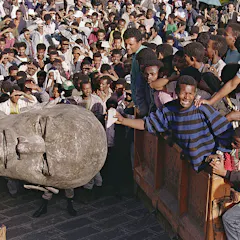
Prevailing political attitudes, security actors, alliances and geopolitics differ starkly from the final days of the hated Ethiopian military regime.
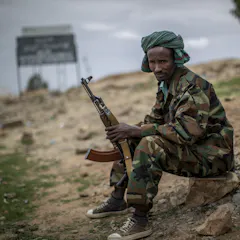
Violence in Ethiopia could cause ripples across the Horn of Africa, destabilizing the region.
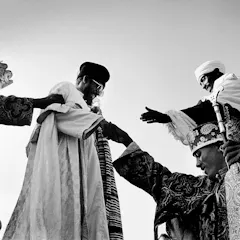
Ethiopia’s main religions need to take an emotional distance from politics and find a neutral space so they can get moral clarity.
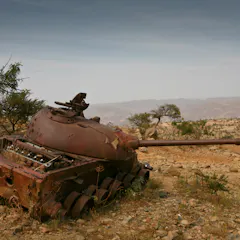
CC BY-NC-ND11.7 MB (download)
Where will an end to the conflict come from?
CC BY-NC-ND9.46 MB (download)
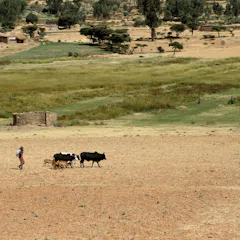
Unless the blockade by Ethiopia is lifted, Tigray will be in a very bad famine situation.
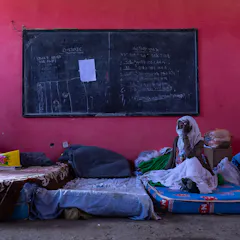
Plus, why reusable food containers aren’t always better for the environment than disposable ones. Listen to The Conversation Weekly.
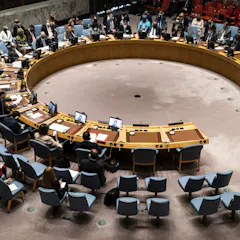
The UN Security Council resolution adopted to address the Yemeni crisis ended up constraining its efforts to bring peace.
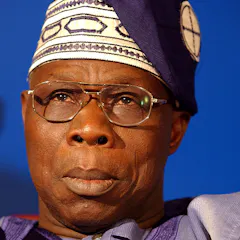
The AU’s choice of Olusegun Obasanjo as chief mediator raises even more questions about its partiality in Ethiopian conflict.
In principle, most conflicts end with peace negotiations. In the Ethiopian situation, it is a matter of when, not if.
Domestic and geopolitical factors mean that the Ethiopian conflict has enough fuel to burn for some time.
Top contributors
-

Senior Fellow, World Peace Foundation, Fletcher School of Law and Diplomacy at Tufts, Tufts University
-
Lecturer in Environment and Development, University of Manchester
-
Visiting Lecturer, University of Roehampton
-
Professor Emeritus in Global Health & Humanitarian Affairs, University of Manchester
-
Adjunct Professor and Ph.D. Fellow, Center for Constitutional Democracy, Indiana University
-
Senior Lecturer of Political Science, Georgia Gwinnett College
-
Researcher, Ghent University; Oregon State University
-
Professor of Sociology and Global and Africana Studies, University of Tennessee
-
Associate Professor of Politics and International Relations, Florida International University
-
Global Scientist, Center for International Forestry Research – World Agroforestry (CIFOR-ICRAF)
-
Honorary Research Associate, Zoological Society of London
-
Research Professor, Political Science, Chr. Michelsen Institute
-
Associate professor, International Development, Roskilde University
-
Research and Policy Director at the Conflict and Environment Observatory, and Visiting Research Fellow, Dept of Geography, King's College London
-
Climate Scientist and Assistant Professor of Earth and Environmental Systems, Georgia State University