
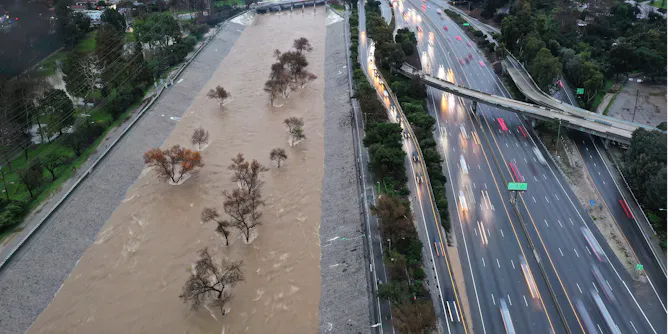
A new study connects early winter heat high up on the plateau to the jet stream and, ultimately, storms headed for the US coast. The results could mean better forecasts.
Articles on Tibetan Plateau
Displaying all articles
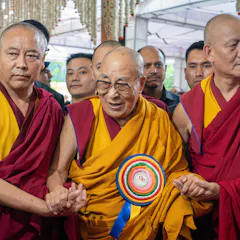
Access to water is one reason why China sees control over Tibet as increasingly important.
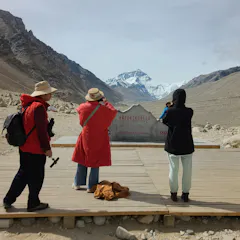
A century after the disappearance of explorer George Mallory, his photos and diary offer a valuable baseline for investigating impacts of tourism and climate change on the Tibet side of Everest.
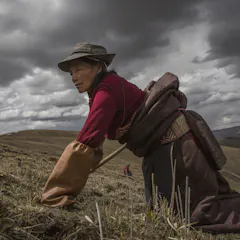
The parasitic fungus sometimes called ‘Himalayan gold’ can provide a good living to villagers who collect it. But rugged terrain and a high risk of lightning strikes make it a dangerous option.

From ice cores extracted from the Tibetan Plateau, scientists recovered the equivalent of 1,705 virus species. Reading their genomes tells the story of 41,000 years of climate change.
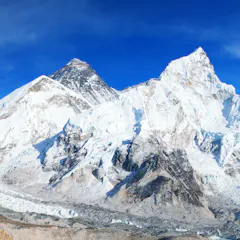
The Himalayas are a beautiful and fragile ecosystem that both humans and non-humans have relied upon for millennia. Protecting them will require careful conservation efforts.

Researchers looked at the skeletal remains of 40 people, and found evidence of dairy consumption across a wide swathe of early Tibetan society.
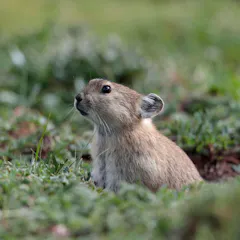
The electric Pokemon’s real-life muse is charged with degrading the vast meadows of the Tibetan Plateau.

The Su-re site has provided a historical connection between local Tibetans in the highlands with Nepali Sherpas in the Himalayan lowlands.
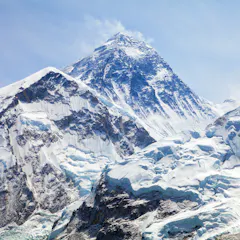
Everest didn’t become the highest mountain overnight. This process was excruciatingly slow; a result of complex interactions between the solid earth, the atmosphere and the biosphere.
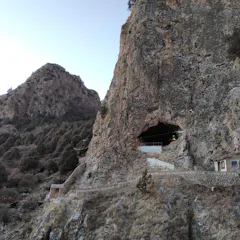
Early humans called Denisovans lived in a remote mountain cave between 100,000 and 60,000 years ago, and possibly longer still, raising intriguing questions about their relationship to modern humans.
Top contributors
-

Associate Professor, Institute of Tibetan Plateau Research, Chinese Academy of Sciences
-
Professor, University of Wollongong
-
Senior Lecturer, School of Geography, Earth & Atmospheric Sciences, Faculty of Science, The University of Melbourne
-
Director, ARC Centre of Excellence for Transforming Human Origins Research, Griffith University
-
Assistant Professor of Landscape Ecology, Xi'an Jiaotong-Liverpool University
-
Associate professor, The University of Melbourne
-
Research Fellow, School of Earth, Atmospheric and Life Sciences (SEALS), University of Wollongong
-
Professor, Environmental Futures Research Centre, School of Science, University of Wollongong
-
Honorary Fellow in Structural Geology and Tectonics, The University of Melbourne
-
Doctoral researcher, Max Planck Institute of Geoanthropology
-
Honorary Professor, Archaeology, The University of Queensland
-
Professor, Institute of Vertebrate Paleontology and Paleoanthropology, Chinese Academy of Sciences
-
Professor, Département des Sciences Fondamentales, Université du Québec à Chicoutimi (UQAC)
-
Researcher at the Institute for Evolutionary Medicine, University of Zurich
-
Post-doctoral fellow, Département des Sciences Fondamentales, Université du Québec à Chicoutimi (UQAC)