
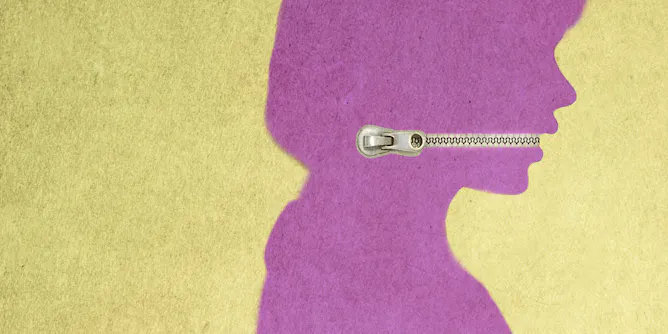
The McCarthy era in the 1950s was another politically contentious time that raised questions about how politics influences what gets taught in the classroom.
Articles on The politics of freedom of speech
Displaying all articles
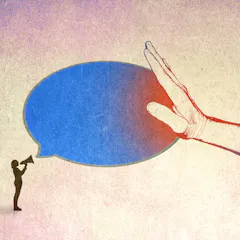
Americans agree that democracy requires freedom of speech. But a large minority also thinks it’s acceptable to bar certain subjects or speakers from public debate.
Refugee legislation introduced after the end of apartheid was lauded as being progressive. But implementation has fallen short of international standards.

The Institute for Public Affairs’ audit of academic freedom pits people either for or against universities. This prevents us from having thorough conversations about real threats to academic freedom.

New media platforms have changed the way people create, consume and relate the news.
Universities should very rarely prevent controversial speakers from spreading their message.

If we’re serious about freedom of speech, we need a more open and respectful discussion about words that cause insult and offence.

Defamation law poses a considerable threat to freedom of speech in Australia, especially where social media is concerned.

The ‘good old days’ when we could make racist comments without legal recourse were not that good at all – especially for those on the receiving end.
While the debate around Section 18C has raged, a host of other laws that impinge on freedom of speech have been quietly introduced.
The Australian media are all for free speech – until it clashes with their politics.
The concept of ‘free speech’ is devilishly difficult, and depends greatly on a person’s political and philosophical viewpoint.
Top contributors
-

Senior Lecturer in Linguistics, Monash University
-
Professor of Media Industries, University of Nottingham
-
Redmond Barry Distinguished Professor, Kathleen Fitzpatrick Australian Laureate Fellow, Director, Centre for Comparative Constitutional Studies, The University of Melbourne
-
Senior Research Fellow, Centre for Advancing Journalism, The University of Melbourne
-
Professor of Law, University of Sydney
-
Associate Professor in Political Science and International Relations, The University of Western Australia
-
Professor in Faculty of Law and Justice, UNSW
-
Deputy Executive Dean and Associate Dean (Academic), Faculty of Humanities, Arts and Social Sciences, The University of Queensland
-
Senior Lecturer, Wits School of Governance, University of the Witwatersrand
-
Senior Lecturer in Politics, La Trobe University
-
Lecturer, Australian National University
-
Senior Advisor to the Chancellor, Head of Vanderbilt's Project on Unity and American Democracy, and Co-Director of Vanderbilt Poll, Vanderbilt University
-
Research Professor of Political Science and Executive Director of The Future of Free Speech, Vanderbilt University
-
Ed.D. Candidate in Educational Organizational Learning and Leadership, Seattle University