

When worker protection laws were passed across the US, in-house R&D staff began to take fewer risks.
Articles on The Conversation Europe
Displaying 41 - 60 of 1158 articles

The Portuguese, Dutch and British empires all vied for control over these vital shipping lanes.

Google Discover often shows us content we never actually searched for – but it’s anything but random.
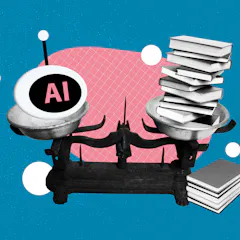
Understanding the technological shift from a literary to a post-literary society is crucial for rethinking AI’s place in learning environments.

With multiple elections coming in 2027, Pedro Sánchez has missed a vital chance to set the political agenda.

Meta has been forced to roll out new measures, but many can be easily circumvented.
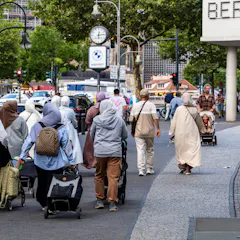
The AfD won Saxony-Anhalt without migrant voters, but it cannot ignore them in Berlin.

Paris’ International Space Summit was an opportunity to understand what and who Europe needs to reliably sustain its launch ambitions and become a world-class leader in Space.

Your muscles can’t tell the difference between a dumbbell and a push-up
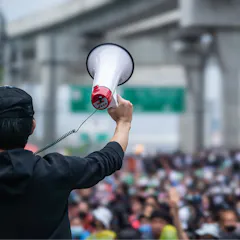
“The people” is a slippery, vague concept – and this is precisely what makes it so powerful.

Childhood cancer affects different tissues and has different causes. We need to treat it as a separate disease.

Constant urban noise causes chronic stress, and poorer areas are exposed to more of it.
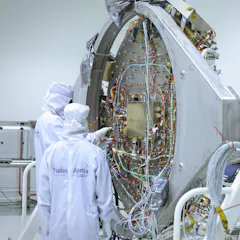
Europe’s leading aerospace industry players have no choice but to work hand in hand to further its space missions and develop critical infrastructure for security and climate protection.
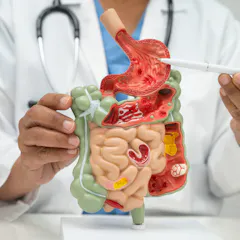
The tubular salivary glands, the interstitium and the mesentery are a reminder that nutrition involves the whole body.
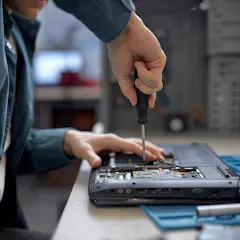
From phones and laptops to coffee machines and earbuds, new legislation is making it easier to fix tech products.

Saying ‘sorry’ to someone in authority evokes more guilt and shame in your first language.

My new study poses nine vital questions for children growing up in the ‘brain-as-interface era’.

Bringing employees back to work in person and smart office-based people management drives companies forward and is conducive to engineering change. Here’s how.
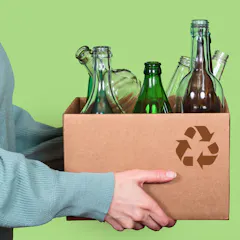
Learning communities are supporting circularity across Europe by rethinking processes for recycling waste or reconditioning clothing and vehicles, and navigating policy U-turns.

Migrant workers are vital to Spain’s vast agriculture sector, but they are often hidden from view.
Top contributors
-

Adjunct Professor, IE University; California State University San Marcos
-
Catedrático de Nutrición y Bromatología del Departamento de Medicina Preventiva y Salud Pública, Universitat de València
-
Profesor Agregado de Economia, Universitat de Barcelona
-
Catedrático en instalaciones y sistemas energéticos en arquitectura y urbanismo, Universidad de Navarra
-
Professor of Practice of Gobal Governance and Development, IE University
-
Associate professor, Universidad Nebrija; UCL
-
Adjunct Professor of Globalization, Business and Media, IE University
-
Catedrático de Microbiología. Miembro de la Sociedad Española de Microbiología (SEM), Universidad de Navarra
-
Profesor de Ciencia Política, Universitat de València
-
Associate Professor of Quantitative Analytics, ESCP Business School
-
Associate Professor of European and comparative Labour Law, IE University
-
Director del Centro de Investigación Nebrija en Cognición (CINC) y Director de la International Chair in Cognitive Health (ICCH) en la Universidad Nebrija, Universidad Nebrija
-
Reader in Politics, Co-Director, Aston Centre for Europe, Aston University
-
Catedrático de Geografía Física, Universitat de Barcelona
-
Investigador científico del CSIC, Centro Nacional de Biotecnología (CNB - CSIC)