

Research using the records of offenders shows a shift online but also towards less committed adherence to extremist causes among offenders.
Articles on Terrorism
Displaying 241 - 260 of 1180 articles

As the year ends, how has New Zealand fared on global and domestic measurements, from social and economic freedoms to tackling poverty and homelessness?

A historian counters the popular view that the 1989 collapse of the Berlin Wall set in motion talks to end apartheid. The process was unstoppable by then.
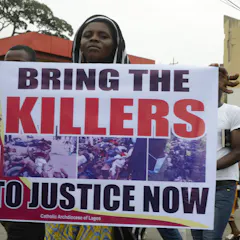
Through articles written by academic experts in the course of the year, The Conversation Africa takes a second look at Nigeria in 2022.
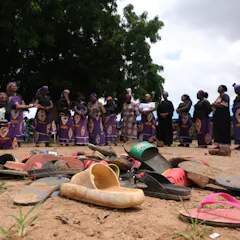
To stem the tide of violent extremism across the Sahel region, especially northwest Nigeria, the vulnerabilities and grudges of border communities need to be properly addressed.
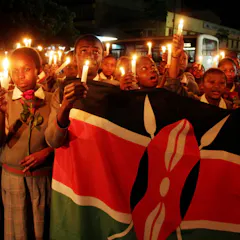
Kenyan families with access to mass media are significantly more afraid of terrorism than those without access.

Tensions between the US and South Africa – this time over the terror alert – are nothing new. Their relations have always had highs and lows since South Africa became a democracy in 1994.

South Africa has long been seen as deficient in dealing with terrorism financing.
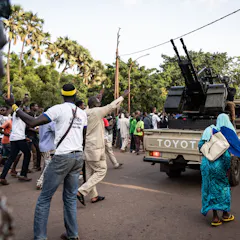
To understand the latest coup in Burkina Faso, one must appreciate the internal power struggles in the country, their links with violent extremism as well as the role of external state actors.
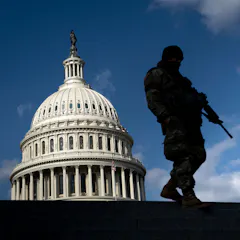
The rise in contemporary right-wing political extremism – and violence – can be traced back to events in the 1990s.
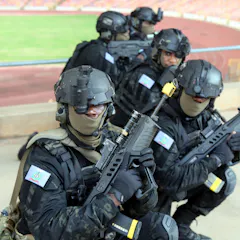
Terror alerts, such as the one recently issued by the US and UK embassies in Abuja, should be taken seriously by the Nigerian government as well as citizens.
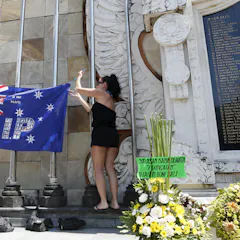
The bombings sparked unprecedented political, security and aid cooperation between Australia and Indonesia. But this gradually waned as new tensions arose.

Losing a loved one in traumatic circumstances can lead to persistent grief that does not ease over time.
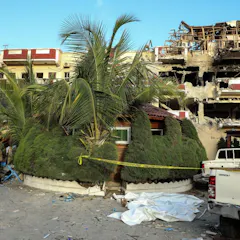
Al-Shabaab’s evolution over nearly two decades has been centred around three major goals.

In my research into the Bali bombings and their aftermath, I have spoken to many people who were there or lost someone in the attack.
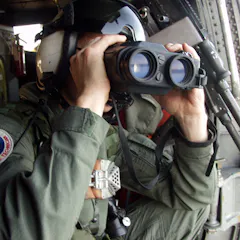
Those who seek to cause harm are as capable of generating creative ideas as anyone else. Two psychologists and counterterrorism scholars suggest how not to overlook a new danger.
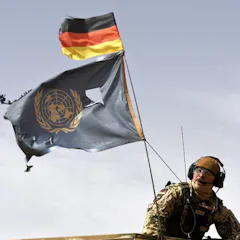
Mali’s ruling junta, which has already secured the end of France’s Barkhane operation and has largely moved closer to Moscow, is now targeting the UN mission in the country, the Minusma.

Rather than ban motorcycles, the Nigerian government must intensify its military campaigns and address socioeconomic causes of insecurity.

Incidents of terror attack on churches in Nigeria don’t happen in a vacuum. They are driven by jihadism, pastoral conflicts and related criminality.
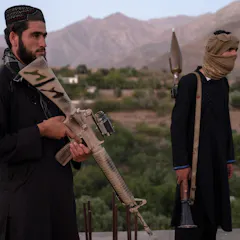
The Taliban promised not to allow Afghanistan to be used by groups seeking to attack the US, yet terrorist groups have only become more emboldened under its rule.
Top contributors
-

Professorial Fellow, University of Canberra
-
Chair in Global Islamic Politics, Alfred Deakin Institute for Citizenship and Globalisation, Deakin University
-
Associate Professor, Griffith Criminology Institute, Griffith University
-
Reader (Associate Professor) Department of Political Science, Federal University of Lafia, Nigeria, Federal University Lafia
-
Visiting Fellow, Department of Political and Social Change, The Philippines Institute, Australian National University
-
Senior research Fellow, Leeds Beckett University
-
Associate professor in Politics and International Relations, Leeds Beckett University
-
Senior Lecturer in Politics and International Relations, University of Notre Dame Australia
-
Assistant Professor of Political Science, Clemson University
-
Associate Professor in North American History, University of Birmingham
-
Assistant Professor in Public Law and Human Rights, Durham University
-
Research Fellow in Counterterrorism, George Washington University
-
Associate Professor of Disaster and Emergency Management, York University, Canada
-
Professor of Law, University of Waikato
-
Associate Professor, Law School, The University of Western Australia