
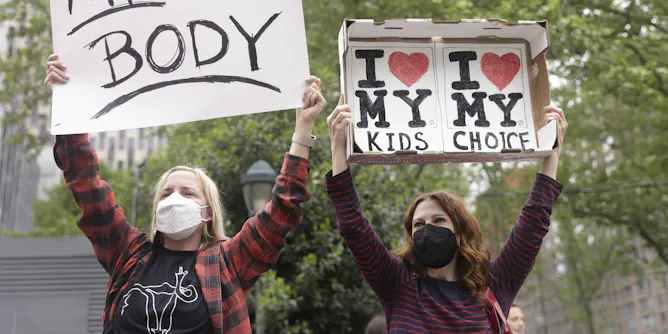
The potential reversal of Roe v. Wade should serve as a stark warning to the power the high courts hold to transform societal conditions.
Articles on Supreme Court of Canada
Displaying 21 - 40 of 41 articles

Legislating a woman’s right to timely access to abortions, rather than simply ensuring she’s not punished for having one, is the first step to striking the balance between physician and women’s rights.

By paying greater attention to the originally intended application of the Canadian Constitution’s notwithstanding clause, along with the diversity of lawmakers in Canada, there’s a better path forward.
Pitting the representation of historically marginalized groups on the Supreme Court against another constitutionally protected minority — Canada’s francophones — is a misguided race to the bottom.
In its decision, the Supreme Court of Canada recognized the gravity of climate change and upheld the idea that Parliament has the authority to act on matters of “peace, order and good government.”
The Supreme Court of Canada’s recent ruling against a company that claimed a fine against it constituted cruel and unusual punishment will quell fears of weakening corporate law.

The message from commercial fishers is that fishing in St. Marys Bay outside the commercial season is illegal and a conservation concern. In fact, it is neither.

The coronavirus pandemic has forced courtroom proceedings online, and what is now missing are most of the non-verbal cues used to determine whether or not those taking the stand are being truthful.
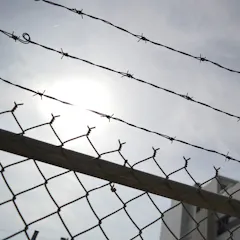
Canadians should know more about how our government co-operates with other countries in criminal cases. Are we unwittingly risking the lives or rights of those accused of crimes?
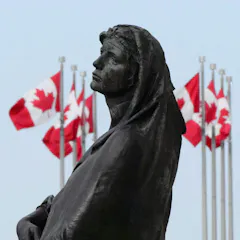
A Québec company is asking for a Charter right usually reserved for people. There could be unintended consequences if it wins its challenge to the Supreme Court of Canada.
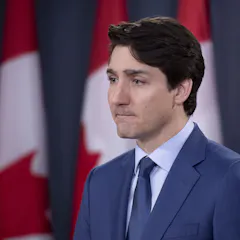
The prospect of political interference is at the heart of the SNC-Lavalin controversy. But it raises more issues related to identifying and preventing inappropriate interference.

Rather than the duty to consult, governments should proactively engage with Indigenous treaties or other locally relevant treaties, agreements, laws and relationships at all stages of law-making.

The headlines suggest the Supreme Court of Canada has ruled against Indigenous consultation. But its recent ruling is much more nuanced and complex than that.

Contrary to what some have suggested, the uncertainty over the Trans Mountain pipeline expansion will be drawn out.
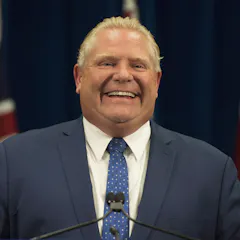
Doug Ford’s wielding of the notwithstanding clause is part of a broader opposition to judicial activism that has developed among right-wing politicians and academics in the post-Charter era.

The Gérard Comeau case was never just about beer. It was essentially about enabling Canada’s domestic economy across the country to thrive. Here’s how the Supreme Court of Canada got it so wrong.
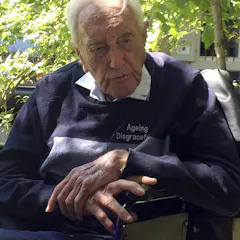
Recent stories in the media highlight the idea of suicide tourism to Switzerland. But what does that mean? How is the Swiss view of assisted dying different from the Canadian one?

Prostitution is now illegal in Canada. Is prostitution harmful and exploitative? Or is sex work a legitimate form of labour?
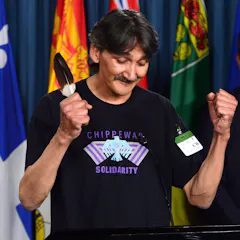
The Supreme Court of Canada’s recent decisions on Clyde River and Chippewas contain key lessons to ensure that Indigenous rights are recognized and respected in the future.

The Inuit town of Clyde River has won a long battle to stop Arctic seismic testing. The Supreme Court ruled the Inuit weren’t adequately consulted. What does that mean for future consultations?
Top contributors
-

Associate Law Professor, University of New Brunswick
-
Full Professor, Research Chair in Language Rights, Faculty of Law | Professeur titulaire, Chaire de recherche Droits et enjeux linguistiques, Faculté de droit, L’Université d’Ottawa/University of Ottawa
-
Associate Professor & Vice-Dean Research, Civil Law Section, Faculty of Law, L’Université d’Ottawa/University of Ottawa
-
Professor, School of Public Policy and Administration, York University, Canada
-
Associate professor, Faculty of Law, Queen's University, Ontario
-
Adjunct professor, Environment and Sustainability, University of Saskatchewan
-
Associate professor, Department of Political Science / Professeure agrégée, Département de science politique, Queen's University, Ontario
-
Adjunct professor, U of T Faculty of Law, University of Toronto
-
Professor of Law and Canada Research Chair in Indigenous Rights in Constitutional and International Law, University of Saskatchewan
-
Associate Professor specializing in criminal law, Western University
-
Sessional Instructor, Political Science, University of Guelph
-
Associate Professor, Canada Research Chair, Integrated Ocean and Coastal Governance, Dalhousie University
-
Full Professor, Faculty of Law, L’Université d’Ottawa/University of Ottawa
-
Professor of Political Science, Concordia University
-
PhD researcher in sovereignty and rhetoric, Carleton University