
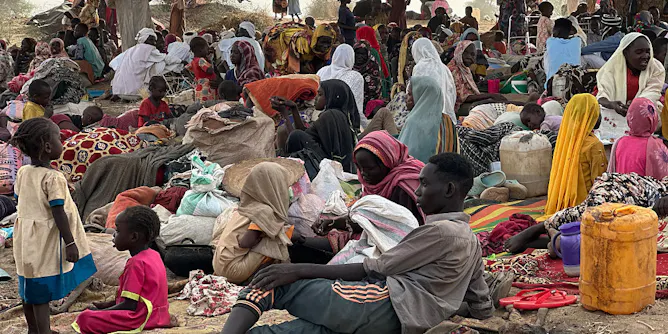
International involvement must be limited to building up Sudan’s capacity to solve its governance problems.
Articles on Sudan Armed Forces (SAF)
Displaying all articles
Conflicts that have riven Sudan for decades have prompted some observers to predict the country will fall apart. But signs of popular resilience are emerging.
Sudan’s conflict didn’t break out because of the UAE and Saudi Arabia – but local actors felt able to go to war because of external support.

There are no shortcuts to peace in Sudan, but a Marshall Plan-like investment and UN peacekeepers can help local actors diversify the economy and implement reforms once the fighting ends.
While the gravity of the need in Sudan is clear, there are barriers to deploying a peacekeeping mission.
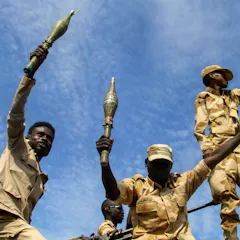
The United Arab Emirates is emerging as the foreign player most invested in Sudan’s conflict.
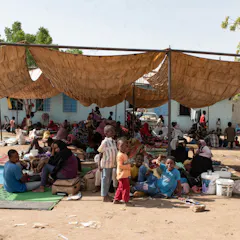
Sudan is the site of one of the world’s worst humanitarian crises, with around 25 million people in need of urgent assistance.

Armed groups looking to infiltrate the state to influence policy first pursue their objectives without openly antagonising the government.
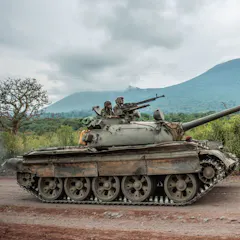
High military spending can sap resources meant for education, healthcare and infrastructure.
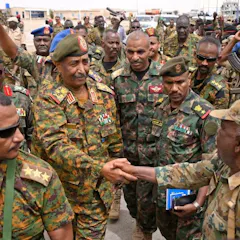
Sudan Armed Forces have made a series of military and political blunders that could hasten the collapse of the state.
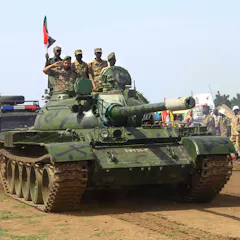
An expert on civil conflicts explains why the international community has so far failed to create peace in Sudan, and what new opportunities lie ahead.
The Sudanese state today betrays its history as a plunder state on the margins of the global order.
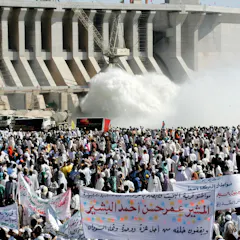
The Sudanese crisis is the culmination of three decades of contentious energy politics among rival elites.
Top contributors
-

Lecturer in Political Science, American University School of International Service
-
Senior Research Scholar at the Center on Global Energy Policy, Columbia University
-
Associate Professor of Political Science, Texas A&M University
-
Professor Emeritus in Global Health & Humanitarian Affairs, University of Manchester
-
Senior Research Fellow and Program Leader for the Sudan Strategy Support Program, International Food Policy Research Institute (IFPRI)
-
Senior Research Fellow, International Food Policy Research Institute (IFPRI)
-
Research Analyst, Sudan Strategy Support Program (SSSP), International Food Policy Research Institute (IFPRI)
-
Research Fellow, International Food Policy Research Institute (IFPRI)
-
Associate Professor of Urban & Environmental Design, University of Khartoum
-
Senior Research Associate, Development Strategies and Governance Unit, International Food Policy Research Institute (IFPRI)
-
Senior Scientist, Foresight and Policy Modeling Unit, International Food Policy Research Institute (IFPRI)
-
Associate Professor of International Relations of the Middle East, University of Birmingham
-
Researcher and lecturer, City University of New York
-
Professor of Economics and André Hoffman Chair in Political Economics and Governance, Geneva Graduate Institute, Graduate Institute – Institut de hautes études internationales et du développement (IHEID)
-
Associate Professor of International Relations, University of Trieste