

Voice, physical touch and face-to-face interactions make people more trusting, compliant and willing to share sensitive information.
Articles on Spying
Displaying 1 - 20 of 107 articles
‘Honey traps’ have long been used to gain an advantage over a rival. In China, it is a tactic documented in stories that go back 2 millennia.

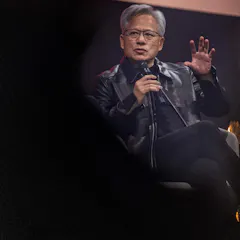
Nvidia CEO Jensen Huang is under fire following allegations that he had an affair with a suspected Chinese spy.
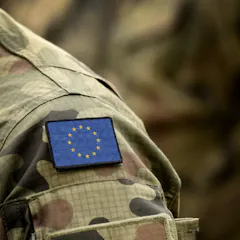
The EU may not yet have a common army but via its citizens, member states can foster a culture of resilience and solidarity if all levels of society can pull together.

Spying is getting easier as the technology needed gets cheaper and cheaper.
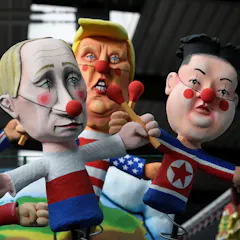
China has traditionally viewed North Korea as a security buffer and an ideologically aligned neighbor it can dominate.

By 1660, the British government had come to rely on a shadowy trade of secrets for gathering intelligence.

Modern cars made in most countries have remote control and online data features. What matters is who can access that data – and the vehicle itself.

This incident potentially impacts the nation’s international reputation and trust in Canadian athletes and raises questions about Canada’s commitment to ethical standards in sports.

The couple are the first to be charged under Australia’s new espionage act, which was revamped in 2018.

Nato member countries are facing a number of security threats including sabotage.

If Canada’s political leaders want the public to trust them, they need to trust citizens with foreign interference information contained in a recent security and intelligence report.
The consequences of cyber conflict are primarily felt by civilians, who call for retaliation, fueling cycles of violence.

Framing the Petrov affair as a thrilling spy drama may have helped Australians manage their anxiety about the threat posed by Soviet espionage.

The fact that the presidency is attempting to get away with minimal regulation of bulk interception raises doubt about its commitment to ending intelligence abuse.
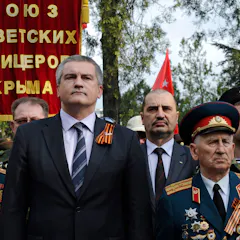
Smersh was originally set up to trace German spies in the Soviet Union during the Second World War.

The bill seeks greater intelligence powers but neglects oversight.

Cuba gets less attention as an espionage threat than Russia or China, but is a potent player in the spy world. Its intelligence service has already penetrated the US government at least once.

The curious case of the Danish spy chief and former minister may be over, but key questions about secrecy and democracy remain.

The revised law is targeting not only Westerners working in China, but also Chinese nationals who work for foreign companies or organisations or interact with foreigners in any way.
Top contributors
-

Assistant Professor, School of Politics and International Relations, University of Nottingham
-
Director of UWA Centre for Software Practice, The University of Western Australia
-
Lecturer, Cyberintelligence and Cybercrime Investigations, University of the Sunshine Coast
-
Professor of Digital Society, University of Glasgow
-
Senior Lecturer in Politics and International Relations, University of Notre Dame Australia
-
Research Fellow, Leiden University
-
Senior Research Fellow, RAND Europe; Middlesex University
-
Professor of Intelligence and National Security & Dean of Faculty, University of Hull
-
Professor, Strategic and Defence Studies Centre, Australian National University
-
Adjunct Professor, Griffith Asia Institute, Griffith University
-
Assistant Professor, Women’s and Gender Studies, University of Oklahoma
-
Research Fellow, Griffith University
-
Lecturer in Intelligence Studies, Macquarie University
-
Associate professor of international history, Utrecht University
-
Ph.D. Candidate in Political Science, Auburn University