
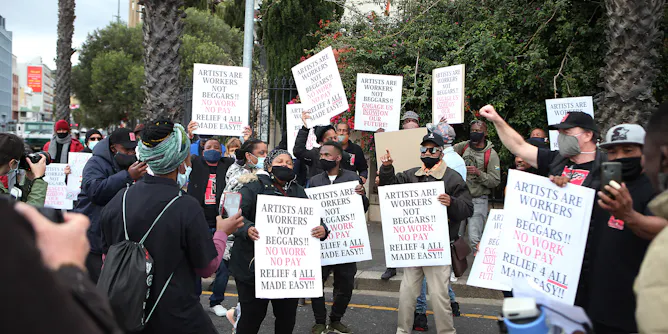
Emergency relief measures were operational for six months and are due to end soon. But the impacts of COVID-19 will be felt long after.
Articles on South Africa's economy
Displaying 41 - 53 of 53 articles
An EU-UK trade deal will reinforce the certainty and continuity that South Africa, Botswana, Lesotho, Namibia, and Eswatini – plus Mozambique are seeking in their relationship with the UK.

The taxi industry carries 75% of commuters daily, yet, unlike bus and train operators, does not benefit from government subsidies.

Employment programmes cannot replace economic growth in improving youth employability, but they play a crucial role in helping them find work.
It is rare for a post-authoritarian society to get two chances to reconcile. This may be just that, for white South Africans in particular.
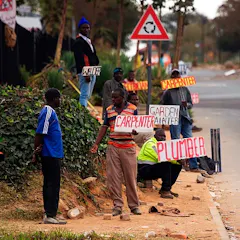
Economic distress was the norm for many before the coronavirus outbreak. The pandemic is an opportunity to provide an economically secure future for all.
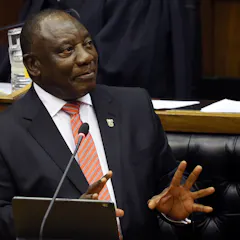
President Ramaphosa’s state of the nation speech showed his preference for less contentious matters that attract praise, rather than catalytic decisions.
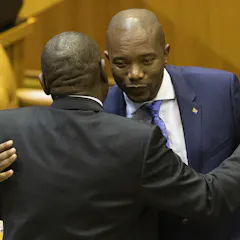
South Africa’s parliamentary system would make it difficult to achieve a fusion of parties.
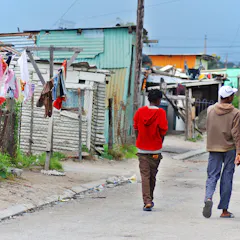
Government policies need to acknowledge individual agency as a mechanism for change, while reducing barriers to income-producing activities.
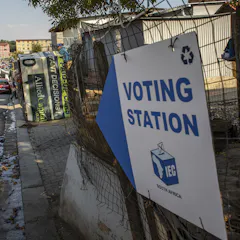
The election’s result endorses other evidence that trust in South Africa’s constitutional settlement and its political institutions is steadily declining.
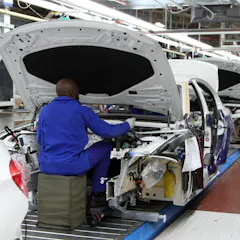
South Africa’s economic reforms of the 1990s were overdone, destroying some industries and thus impacting economic growth and job creation. A re-balancing of industrial policy is called for.
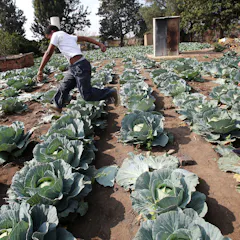
The abandonment of crop farming fields isn’t new. But some researchers say it’s accelerated in the last two decades.
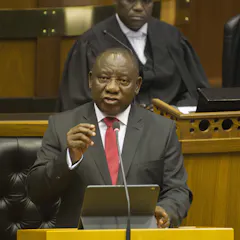
Ramaphosa offered five simple yet bold goals for the next ten years that cut across the social and economic structural constraints that inhibit South Africa’s potential.
Top contributors
-

Professor of Social Development Studies, University of Johannesburg
-
Professor of Sociology, University of the Witwatersrand
-
DSTI/NRF Research Chair in Welfare and Social Development, University of Johannesburg
-
Senior Researcher, UNESCO 'Oliver Tambo' Chair of Human Rights, University of Fort Hare, University of Fort Hare
-
Professor of Political Studies, University of Johannesburg
-
Research Fellow, Institute of Development Studies
-
Professor: International Business & Strategy, Wits Business School, University of the Witwatersrand
-
Lecturer on Sociology, Harvard University
-
Associate professor, University of Johannesburg
-
Professor in Political Science, University of South Africa
-
Senior Fellow, Department of Agricultural Economics, Stellenbosch University
-
Senior lecturer in Taxation, University of Pretoria
-
Research Associate, Stellenbosch University
-
Senior lecturer, School of Economics, University of Cape Town, University of Cape Town
-
National Director, Black Sash