
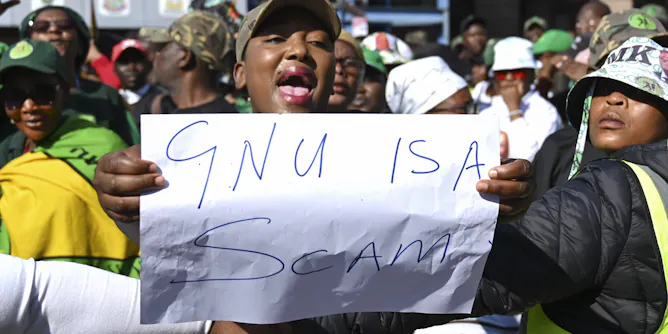
Poor governance and incompetence plague South Africa’s public administration, particularly at the local level.
Articles on South Africa election 2024
Displaying all articles
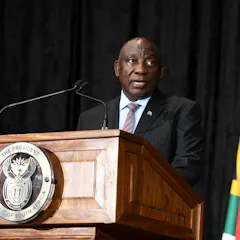
The ANC leads the unity government. If it leads South Africa back to happier times, that is most likely to benefit the ANC, rather than the DA.
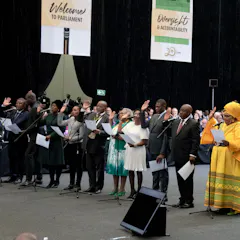
What lies ahead for South Africa’s new government of national unity?
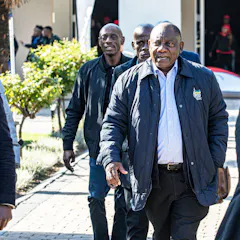
In the wake of South Africa’s electoral surprises and their aftermath, a new dawn of hope may just be possible.
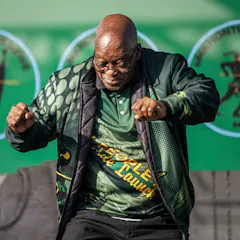
There’s confusion in South Africa about what’s driving the popularity of Jacob Zuma and his uMkhonto weSizwe party.
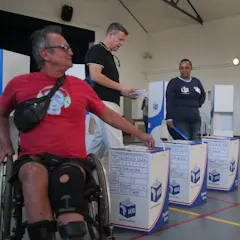
Racial identities continue to shape voter behaviour in post-apartheid South Africa.
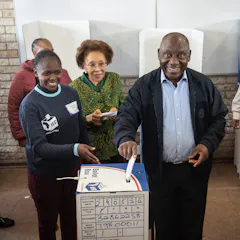
Having dominated South Africa’s political landscape for 30 years, the ANC now faces having to do a deal with its rivals.
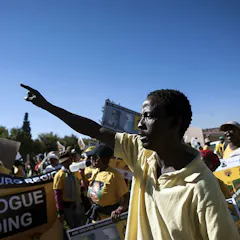
Solutions driven by the private sector are only for those who can pay, and also end up driving public priorities.
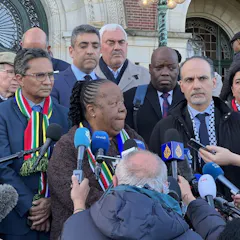
The country will see more foreign policy continuity if the ANC partners with smaller parties that share its world view.
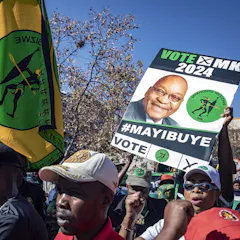
Former president Jacob Zuma’s MK Party borrows the slogan “mayibuye” from the liberation party to make a point about the ruling African National Congress.
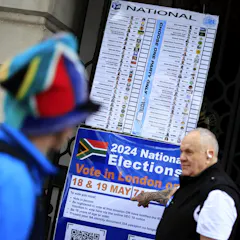
The growing loss of support for the governing ANC raises the possibility of South Africa having its first national coalition government since 1994.

Social media platforms need to open up data to Africans and researchers in the global south.
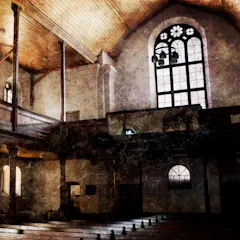
Political secularism in South Africa is shaping into a tense contest between the relative ambitions of state and religious actors.
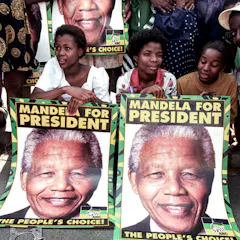
The electoral commission had only four months for work which normally takes two to three years. In the end, the election succeeded because the nation wanted it to succeed.
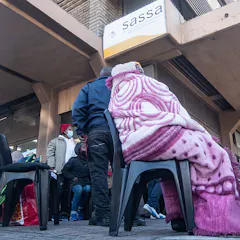
Many grant recipients are young, unemployed, and not necessarily loyal to the governing ANC like older generations.
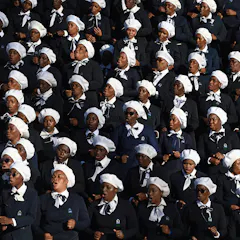
Christianity is evolving. Mainstream churches like the Methodists and the Catholics are losing ground to indigenous and pentecostal groups.

South Africa’s civil service has failed to implement policies to eradicate poverty, inequality and unemployment.
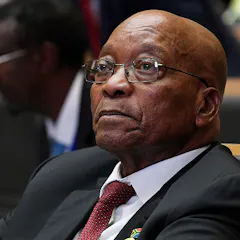
Zuma’s uMkhonto weSizwe is now the largest party in KwaZulu-Natal and the fourth biggest nationally.
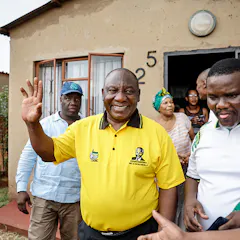
The 2024 elections may be the tipping point that enables opposition parties to portray themselves as viable contenders in forming a national coalition government.
Top contributors
-

Professor of Sociology, University of the Witwatersrand
-
Professor of Demography, University of Cape Town
-
Senior lecturer, University of Edinburgh
-
Professor of Public Theology in the Department of Beliefs and Practices, Faculty of Theology, at the Vrije Universiteit Amsterdam (Free University of Amsterdam), Vrije Universiteit Amsterdam
-
SA UK Bilateral Research Professor in Political Theory, Wits and Cambridge, University of the Witwatersrand
-
Professor Emeritus, University of Cape Town
-
Senior Fellow, Department of Agricultural Economics, Stellenbosch University
-
Professor Emeritus, Rhodes University, Rhodes University
-
Professor of World Politics, SOAS, University of London
-
Professor (International Relations), University of Johannesburg
-
Senior Lecturer in Interdisciplinary Theology, University of the Free State
-
Professor of Public Affairs, Tshwane University of Technology
-
Professor of the Practice of International Development, Johns Hopkins University
-
Professor, Department of Political Sciences, University of South Africa
-
Lecturer, University of the Western Cape