

Strong religious beliefs often shape disapproval of abortion – in the abstract. But when young women are actually deciding whether to terminate a pregnancy, faith’s role is more complex.
Articles on Sociology
Displaying 21 - 40 of 170 articles

The religion gap between American men and women may be narrowing, a scholar explains – reflecting a seeming ‘God gap’ in US politics.
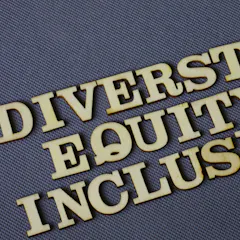
There’s no evidence of widespread, systematic discrimination against white Americans. Just ask them.

College students need to learn how to talk about religion with people of different faiths, two scholars write.

What if airport security checks were more of a security spectacle, whose effectiveness was primarily symbolic and social?

Do you love using the laughing-crying emoji? If so, you’re probably a Millennial.

In the 1930s, when iconic vet James Herriot was practicing, almost all vets were male.

The recent spate of executive orders around sex and gender impact nonbinary Americans, as well as trans Americans who identify as a man or a woman.
More than a century of evidence suggests that bureaucrats, at their best, stand for expertise, fairness and public service.
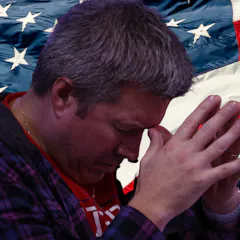
What is the gut-level appeal that saw Trump win two elections? One progressive researcher spent six years in America’s whitest, second-poorest district to find out.

For the more than 3 million Americans on probation or parole, rules and regulations often serve as hidden traps to reincarceration.
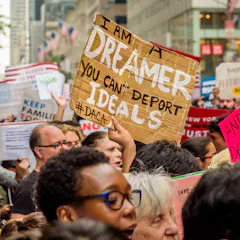
Pushback works.
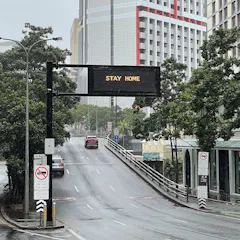
As climate change accelerates and trust in authority declines, natural disasters trigger waves of easy – but false – explanations.

Disparaging people who get government benefits to make ends meet, especially if they’re Black, is no longer a recipe for political success in America.

Vibes – ambiguous as they are – have become part of the cultural zeitgeist. Studying them could help us better understand human relationships and experiences.

As online communication replaces face-to-face meetings in the workplace, the need for clarity, respect and professionalism has intensified.

Ideas about softness and weakness, hardship and strength, have been central to reactionary politics since the beginning of human history.

Two professors explain why and how their approach creates a richly textured understanding of the American Dream.

Famous musicians and artists aren’t necessarily more likely to die at 27. But the story that they do shapes how we perceive history and reality.

The War Against the Past is sometimes convincing, but prompts larger questions about history, culture, education and morality.
Top contributors
-

Distinguished Professor Emeritus of Sociology, University of South Carolina
-
Senior Lecturer, The University of Melbourne
-
Associate Dean and Associate Professor in Social Sciences, University of Canberra
-
Reader (Associate Professor) in Sociology, City St George's, University of London
-
Professor of Sociology, Ball State University
-
Professor of Psychology, The University of Melbourne
-
Professor of Sociology & Director, Sydney Centre for Healthy Societies, University of Sydney
-
Professor of Media, Culture and Communications, Brunel University of London
-
Professor of Sociology, University of York
-
Professor of Sociology, Temple University
-
Professor, Durham University
-
Associate professor, University of Divinity
-
Director of Postgraduate Research, Anglia Ruskin University
-
Professor of Systems Engineering, University of Manchester
-
Senior Lecturer in Sociology, University of Manchester