
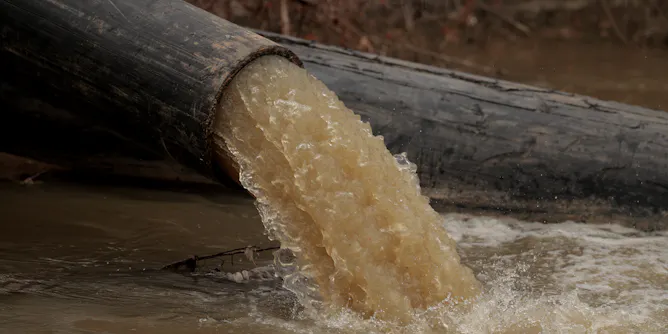
The largest sewage spill in US history wasn’t the first, and it won’t be the last.
Articles on Sewage monitoring
Displaying all articles

Much like our gut microbes, the community of microbes used to process human waste must be healthy to do the job well. Monitoring the DNA in waste sludge can help us ensure the system stays healthy.

Thames Water has mapped its discharges in near real time. But we still need data on the volume of sewage dumped in rivers.

Public health officials monitor sewage in local communities to track COVID, polio, flu and more. But no one asks the people being monitored for their permission – raising some questions and concerns.
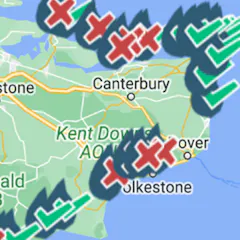
These maps have gone viral – here’s what they owe to 19th century cholera campaigns.
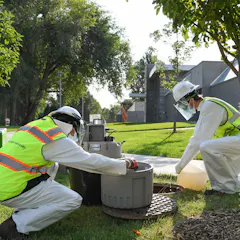
Over 800 sites across the US report coronavirus data from sewage to the CDC. Here’s how this kind of surveillance system works and what it can and can’t tell you.
If you live in an area where virus fragments have been found in wastewater samples, the most important thing to do is follow your state health department’s advice.
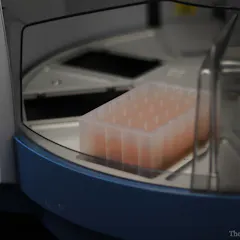
A community’s wastewater can predict coronavirus cases that haven’t yet been diagnosed. The quicker that information is known, the better.
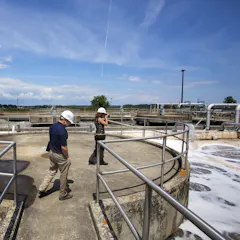
Sewage surveillance is one technique that can alert authorities to the presence of a pathogen in the community. An environmental engineer explains the state of the science when it comes to SARS-CoV-2.
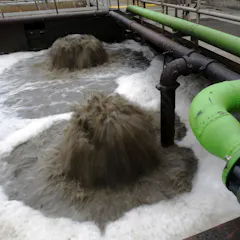
Polio can be circulating through a community long before anyone is paralyzed. Monitoring sewage for the virus lets public health officials short-circuit this ‘silent transmission.’
Top contributors
-

Assistant Research Scientist in Epidemiology, University of Michigan
-
Professor and Chair of Epidemiology, University of Michigan
-
Associate Professor of Complex Systems, Epidemiology and Mathematics, University of Michigan
-
Professor of Physical Geography, University of Manchester
-
Professor of Pediatrics and Computer Science and Engineering, University of California, San Diego
-
Associate Professor, Adelaide University
-
Postdoctoral Research Associate in Pediatrics, University of California, San Diego
-
Associate Professor of Civil and Environmental Engineering, Colorado State University
-
Associate Professor of Environmental Engineering, University of Notre Dame
-
Associate Professor of Medicine, University of Louisville
-
Professor of Microbiology, Immunology and Pathology, Colorado State University
-
Professor of Geographic Information and Cartography, Department of Geography, UCL
-
Postoctoral Researcher, School of Science, RMIT University
-
Associate Professor of Urban Studies and Environmental Planning, University of Maryland