
Australian households contribute way more to the costs of children’s schooling than the OECD average. This is due to the numbers of students attending private schools and paying high fees.
Articles on Secondary education
Displaying 121 - 140 of 198 articles

In the first research of its kind in Australia, our new study tracked almost 3,000 young people from age 15 to 25 to see if there are longer-term benefits to attending a selective school.
The Victorian Auditor-General has just released an audit of $1.2 billion tutoring program designed to help struggling students post-COVID.
Since COVID there has been an expansion in online options for school students. This includes individual classes and complete distance education.
Students with disability are experts in themselves and their needs. But we found they are often not consulted by their teachers about what helps them at school.

In our new research we looked at what impact breakfast has on students’ motivation to learn and their academic achievement.
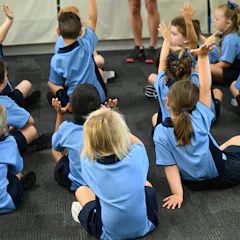
We believe no other intervention has been so thoroughly tested in Australian schools or amassed such a comprehensive body of evidence.
Research on streaming maths classes shows we need to think much more carefully about this very common practice.

Unlike the traditional method of comparing Indigenous students with non-Indigenous students, a new approach compares Indigenous students with their Indigenous peers.

Imagine if you enrolled your child in swimming lessons but instead of a qualified swimming instructor, they were taught freestyle technique by a soccer coach.
New research finds teachers tend to have tailored approaches to help students performing below standard, but not for their gifted peers.
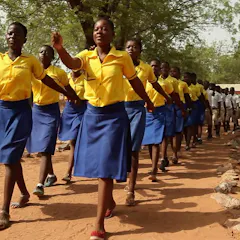
Free secondary educational policy in Ghana is worthwhile but struggles to keep up with quality.
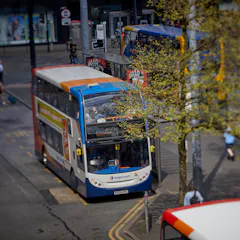
Homeless families rehoused in temporary are bearing the brunt of the high travel costs and policies ill-designed to accommodate their specific needs.
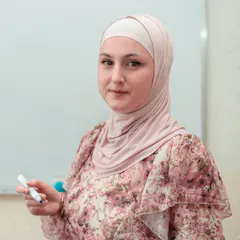
Australia’s teachers are predominantly Australian-born, female, and non-Indigenous. Most hail from middle-class backgrounds with urban upbringings, and are less likely to have disabilities.
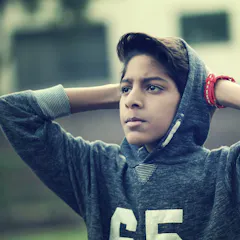
In a series of research forums young people talked about their fears around going to high school. And what kind of support they want.
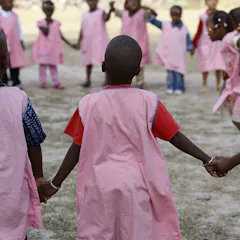
Deep-seated cultural practices – such as female genital mutilation and child marriage – prevent girls from making progress in school.
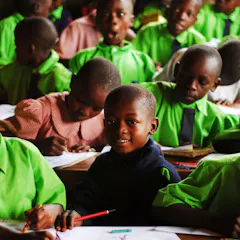
Parents are enablers, motivators and facilitators of their children’s education.

Grouping of high schools in Ghana into categories perpetuates inequalities.

A survey of high school students highlighted the tensions they faced when classes moved online during COVID-19 lockdowns.
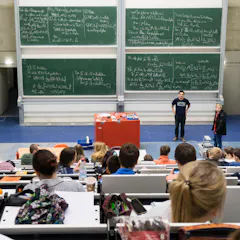
New research shows that secondary pupils who take maths past 16 have higher levels of a chemical that boosts brain plasticity and learning in general. What other teaching can provide this?
Top contributors
-

Associate Professor in Educational Leadership, Australian Catholic University
-
Scientia Professor and Professor of Educational Psychology, UNSW
-
Associate Professor of Education, Charles Sturt University
-
Postdoctoral Research Fellow, Centre for Inclusive Education, Queensland University of Technology
-
Senior Lecturer in Health and Physical Education, University of Tasmania
-
Professor and Director of the Centre for Inclusive Education, Queensland University of Technology
-
Lecturer in Mathematics Education, University of Sydney
-
Research Scientist, African Population and Health Research Center
-
Professor of Educational Psychology, University of Wollongong
-
Associate Professor, Institute for Learning Sciences and Teacher Education, Australian Catholic University
-
Senior Lecturer in Education, Edith Cowan University
-
Lecturer (Curriculum & Pedagogy – Educational Psychology & Wellbeing)., University of Southern Queensland
-
Associate Professor of Education Policy, Australian Catholic University
-
Senior Lecturer in Education, University of New England
-
Associate Professor in Education, Deakin University